
Search Results

212(e) - The Two-Year Home Residency Requirement for the J-1 Visa
The 212(e) requirement can be a bit complex, but in this article, we will help you understand it.
General Immigration Information
If you’ve ever been an Exchange Visitor on the J-1 visa, you may have heard of the “Two-Year Home Residency Requirement” or 212(e). If you have entered the US on a J-1 visa in the past and now wish to apply for a green card, it’s important to understand that if you were ever subject to this requirement, it could impact your eligibility to apply. The 212(e) requirement can be a bit complex, but in this article, we will help you understand if you are subject to this requirement and what to do.
What is the 212(e) requirement?
The Two-Year Home Residency Requirement, also known as 212(e), promotes cultural exchange by encouraging J-1 Exchange Visitors to return to their home country for two years after they complete their J-1 program. However, this rule only applies to certain categories of people currently in the US on a J-1 visa or who have previously been on a J-1 visa. If someone is subject to 212(e), they are required to return to their home country of citizenship or legal permanent residence and reside there for a cumulative period of two years before they are eligible to:
- Return to the US as a Legal Permanent Resident (green card holder) or
- Return to the US on an H-1B, K, or L visa.
Being subject to 212(e) also prohibits changing status in the US to any of those visas or applying for Adjustment of Status to Legal Permanent Residency until the conditions of the requirement have been met or a waiver has been issued.
Who is subject to 212(e)?
The J-1 visa has many different categories - examples of these categories include au pair, exchange student, visiting scholar, visiting physician, work-travel programs, and many more. Some of these categories, like visiting physicians, can automatically cause someone to be subject to 212(e). In contrast, those in other categories may be subject based on meeting at least one of the conditions below during their J-1 program:
- Receiving government funding: Funding directly or indirectly from either your home country’s government or the U.S. Government. In some situations, funding through a University could count as government funding.
- Receiving funding from an International Organization or Binational Commission: Funding from organizations that receive money from government sources such as the United Nations, NATO, etc.
- Specialized Knowledge or Skill: Having skills or expertise that your country has deemed essential and necessary to the country's development as identified on the Exchange Visitor Skills List.
- Graduate Medical Education (GME) or Training: Visiting the US to obtain graduate medical education or training.
NOTE: It is possible to be subject to the 212(e) in more than one of the above categories.
How do you know if you’re subject to 212(e)?
The visa stamp in your passport and/or a US Consular note on the bottom-left of your original DS-2019 may indicate whether or not you are subject to the 212(e) requirement.
Please note: It is possible to be subject to 212(e) even if it is not indicated on your visa and/or DS-2019. It is also possible that the information on your DS-2019 or visa stamp may be inaccurate. If you have questions about whether you are subject, you can submit a request for an Advisory Opinion to the US Department of State.
What is a waiver of the 212(e) requirement, and can I apply for one?
In some situations, someone subject to 212(e) may be eligible to apply for a waiver of this requirement. When approved by the US Department of State, this waiver removes the 212(e) requirements – this means that someone who was previously subject to 212(e) who is approved for the waiver would no longer be barred from applying for Legal Permanent Residency or any of the other visa types that 212(e) prohibits.
However, please keep in mind that the waiver process can be lengthy, and it may take up to a year or more before a decision is made on your request. Please see the Department of State website for more information about applying for a 212(e) waiver, and click here to see the 212(e) waiver eligibility requirements.
Applying for the 212(e) waiver process can vary depending on your country of citizenship or legal permanent residence and is quite complex. Because SimpleCitizen is a self-service tool and not a law firm, we suggest you contact a licensed immigration attorney about applying for the waiver. The American Immigration Lawyers Association (AILA) is an organization of immigration attorneys. A good way to find an immigration attorney is to use the AILA website. To find an immigration attorney in your area, you can use AILA's lawyer search here.
For some, 212(e) can be seen as a significant barrier to becoming a Legal Permanent Resident in the US. However, with the guidance of an experienced immigration attorney, many can apply for a waiver of this requirement and pursue their goal of immigrating to the US. For those approved for the waiver already, SimpleCitizen is happy to help you with the next steps of your immigration journey!
Please note: If you are subject to 212(e) and would like to use SimpleCitizen’s services when applying for a green card, your waiver must be approved when you submit your application for review by the network partner attorney. We will unfortunately not be able to review your application if you have only submitted your 212(e) waiver, but it has not been approved yet.
We’re happy you’re here!
SimpleCitizen is here to help you achieve the American dream. Safely and accurately apply, submit, & stay on top of your immigration status, from your visa to your naturalization.
Click here to learn more about what we do, our application assistance timeline, and what customers say about SimpleCitizen’s services.
Do you have a question about SimpleCitizen’s application packages? Let’s chat!
Frequently Asked Questions
I would like to fulfill the 212(e) requirement before I apply for a green card. Am I allowed to leave my home country during my two-year home residency?
Yes! Being subject to 212(e) does not prevent you from traveling from or spending time away from your country of citizenship or legal permanent residence. Remember, 212(e) only prevents you from returning to the US as a Legal Permanent Resident (green card holder) or on an H-1B, L, or K visa until you fulfill the requirement or are approved for a waiver.
If I’m subject to 212(e), can I leave the US and return on another nonimmigrant visa type?
Yes, you can depart the US and return on another non-immigrant visa type (such as F-1 or B-2). However, this does not remove the 212(e) requirement. Remember, 212(e) only prevents you from returning to the US as a Legal Permanent Resident (green card holder) or on an H-1B, L, or K visa until you fulfill the requirement or are approved for a waiver.
If I’m subject to 212(e), is my J-2 dependent also subject to 212(e)?
Yes. J-2 dependent status is directly related to the status of the principal J-1 visa holder. If you are on the J-1 visa and subject to 212(e), then your spouse and/or children on the J-2 visa would also be subject to that requirement.
I came to the US on a J-1 visa more than 5 years ago and was subject to 212(e) for that J-1 program. However, I did not depart the US. Am I still subject to 212(e)?
Yes. If you did not reside in your country of citizenship or legal permanent residence for two (cumulative) years, and you do not have an approved 212(e) waiver, you are still subject to 212(e). No matter how long ago you were on a J-1 program subject to 212(e), this requirement will stay in place until you fulfill the requirement or are approved for a waiver.
My visa stamp says I am subject to 212(e), but my DS-2019 doesn’t. Am I subject to 212(e)?
It can be subject to 212(e) even if it is not indicated on your visa and/or DS-2019. It is also possible that the information on your DS-2019 or visa stamp may be inaccurate. If you have questions about whether you are subject, you can submit a request for an Advisory Opinion to the US Department of State.
Cálculo de los ingresos anuales actuales - Múltiples empleos en un año
Cálculo de los ingresos anuales actuales - Múltiples empleos en un año
En Español
Al revisar su ingreso anual, USCIS considerará no sólo el ingreso actual de un patrocinador/sponsor, sino también cuánto tiempo ha estado con su empleador actual y cuánto ganará durante el año en curso. Por ello, si un patrocinador/sponsor ha tenido varios empleadores durante el año actual, muchas personas tienen más éxito con USCIS cuando informan no sólo los ingresos de su trabajo actual, sino también de sus ingresos proyectados para el año en curso, basándose tanto en los trabajos anteriores como en los actuales. Esta previsión de ingresos debe ser lo más exacta posible y debe estar respaldada por pruebas.
IMPORTANTE: Esta información está en español para mayor comprensión pero la carta y los cálculos deben estar en español.
Nota: A la hora de determinar los ingresos anuales, USCIS sólo tiene en cuenta el salario base de la persona. Las horas extras, las bonificaciones, los estipendios, las propinas, las comisiones u otras fuentes de ingresos irregulares no tienen garantía de ser pagadas y no serán consideradas por el USCIS.
Sabemos que esto puede ser complicado, así que estamos aquí para ayudarle a dar ejemplos y guiarle a través del proceso.
¿Cómo calcular los ingresos anuales previstos de un patrocinador/sponsor?
Para calcular sus ingresos anuales, el patrocinador hará una lista de todos los trabajos que ha tenido durante el año calendario en curso y determinará cuáles han sido sus ingresos del año hasta la fecha en cada uno de sus trabajos. Si tiene varios empleos actualmente, puede añadir todos en esta lista de empleos. A continuación, calculará cuánto prevé ganar con su trabajo actual desde la fecha de inicio hasta el final del año.
Aquí se muestra un ejemplo para ver cómo podría ser esto:
Sarah ha tenido 3 trabajos diferentes durante el año calendario actual.
Trabajo nº 1: Sarah estuvo en este trabajo de enero a abril: Su último talón de pago (pay stub) mostró un ingreso anual (Year To Date earnings) de $7,040.
Trabajo nº 2: Sarah estuvo en este trabajo de junio a agosto: Su último talón de pago (pay stub) mostraba unos ingresos anuales (Year To Date earnings) de $5.600
Trabajo nº 3 (actual): Sarah comenzó este trabajo en septiembre. Gana 15 dólares por hora y trabaja una media de 15 horas a la semana. Desde el momento en que Sarah comenzó su trabajo hasta el final del año hay 17 semanas en el año. Sarah puede calcular sus ingresos previstos en este trabajo multiplicando sus ganancias medias semanales ($15 x 15 horas = $225 semanales) por las 17 semanas que trabajará en este trabajo en el año. Esto hace que su proyecto de ingresos sea de $3825.
Para calcular los ingresos anuales, Sarah sumará esos puestos de trabajo para calcular sus ingresos anuales actuales.
$7,040 + $5,600 + $3,825 = $16,465
Ejemplo de carta de proyección
Aquí hay un ejemplo de carta de proyección que se puede utilizar para trazar claramente este ingreso para el USCIS para que puedan ver cómo se calculó este ingreso. En la parte inferior de este artículo hay enlaces a versiones en PDF y Docx de este modelo de carta.
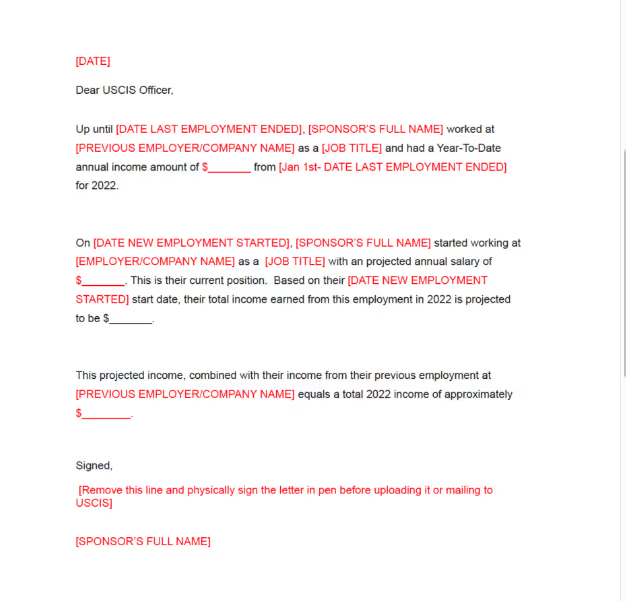
Además de crear una carta que proyecte sus ingresos siguiendo la muestra anterior, el patrocinador también puede añadir pruebas de ingresos para todos los trabajos añadidos del año.
Documentación
USCIS quiere ver la prueba de los ingresos anuales reportados. Esto es lo que nuestros abogados asociados recomiendan:
- Los últimos 6 meses de talones de pago (pay stubs). Si el patrocinador ha cambiado de trabajo durante ese tiempo se recomienda añadir todos los talones de pago de ese período de tiempo, incluso si es de un empleador anterior.
- Los últimos 2 talones de pago de cualquier empleador anterior que el patrocinador haya tenido en el año calendario. Esto es para que USCIS pueda ver sus ganancias YTD de esos trabajos y verificar los ingresos anuales.
- Carta del empleador del patrocinador con el membrete de la empresa. Debe indicar su título, fecha de inicio y salario anual. Si se les paga por hora, se recomienda que informen de la tarifa por hora, el promedio de horas semanales trabajadas y lo que supone el ingreso anual del patrocinador. Muchas empresas tienen procesos automatizados para generar estas cartas. A menudo pueden consultar con su Departamento de Recursos Humanos para que emitan esa carta.
- Si han tenido varios empleos, incluya una declaración de ingresos proyectada siguiendo la plantilla comentada anteriormente.
Understanding Consular Processing for Family-Based Immigration
Learn about applying for a K-1 visa or family-based green card through the consular process.
Green Card Application
Last Updated May 25, 2023.
The main goal of this article is to provide you with the framework for the basic steps involved when applying for a K-1 fiancé(e) visa or a family-based green card through the consular process. For those seeking to bring their fiancé, spouse, or immediate family to the United States, the process can seem daunting. However, obtaining a fiancé(e) visa or a family-based green card through the consular process is possible with the right information. In this article, we will discuss the basic steps involved in applying for a K-1 visa or family-based green card through the consular process. By understanding these steps, you can increase your chances of success and reuniting with your loved ones in the United States.
What is Consular Processing?
The consular process is a way for people from other countries to apply for a US visa from outside the US. The term consulate refers to petitions that originate through a US Embassy or Consulate located in countries outside of the United States. The consular process can differ based on the type of visa you're applying for and your unique situation. Our team at SimpleCitizen is here to help guide you through the process, whether you're applying for permanent residency or a K visa.
The consular process for a family-based green card or fiancé(e) visa is a multi-step process that involves coordination between different government agencies. Those are the US Citizenship and Immigration Services (USCIS) which is a division under the Department of homeland security, and the National Visa Center (NVC), which is a division under the US Department of State. Let’s take a look into what processing looks like for each application type!
Applying for Permanent Residence Through the Consular Process
If you live outside of the United States and are eligible to apply to become a lawful permanent resident, you may be able to do so through the consular process. This process involves applying for an immigrant visa at a US embassy or consulate in your home country or country of residence. If you are approved for an immigrant visa, you can then travel to the United States and become a lawful permanent resident. The green card obtained through the consular process is similar to a green card obtained through adjustment of status within the United States, but the application process is different. In this section, we will provide an overview of the green card application process through the consular process, including the forms and documents required, the interview process, and important considerations for applicants.
- File Petition through USCIS: The US citizen spouse must file a Form I-130, Petition for Alien Relative, with USCIS to establish the relationship between the foreign national spouse and the US citizen. On average, it can take anywhere from 8-12 months for USCIS to process the I-130. Processing times depend on the number of applications that USCIS has at any given time, and their capacity to review them.
- The petition is Approved: USCIS will review the I-130 petition and, if approved, will notify the petitioner and send the approved petition to the National Visa Center (NVC) for further processing.
- USCIS Transfer Petition to NVC: Once the I-130 petition has been approved, it will be forwarded to the National Visa Center (NVC) for further processing. The NVC will review the application and any necessary supporting documents that have been submitted. Once all required documentation has been received, the NVC will forward the application to the US consulate or embassy in your home country.
During this process, the NVC will also contact the petitioner with instructions on how to set up an account on the Consular Electronic Application Center (CEAC) website. This account will allow the petitioner to keep track of the application status and complete any necessary forms and fees. The NVC will also provide details on which additional steps are needed to proceed with the application.
The timeline for this process can vary, and it may take approximately 1-2 months for USCIS to transfer the petition to the NVC. If you have any questions or concerns about this process, please do not hesitate to contact us for further assistance. - NVC Forms: Using the online account provided by the NVC, the petitioner must file Form DS-260 and Form I-864 as well as pay the associated fees.
- Schedule Interview and Complete Medical: The interview is scheduled by the US consulate or embassy. The foreign national will be required to attend the consular interview and will need to prepare for the interview by gathering all necessary documents and information, such as a valid passport, police certificates, and evidence of the bona fide nature of the marriage or relationship with the family member. They will also need to complete a medical exam through an approved doctor and bring the results to the interview.
The consulate or embassy will provide instructions on when, where, and how to complete the medical exam. The specifics of what needs to be brought to the interview can vary depending on the consulate/embassy, so be sure to become familiar with the specific requirements of the office conducting the interview.
Note: Processing times can vary greatly depending on which Embassy or Consulate is processing the application.
- Complete Interview: The foreign national will attend a consular interview at the US consulate or embassy in their home country OR in the country where they currently hold residence. During the interview, a consular officer will review the foreign national's application documentation and ask questions to determine the validity of the relationship and the eligibility for a green card.
- Decision Issued: After the consular interview, the consular officer will make a decision on the green card application. If approved, the foreign national spouse will be instructed on how to pay the visa issuance fee and how to obtain the green card. If denied, the foreign national spouse will be notified in writing of the reasons for the denial. Here is what to expect going forward if your visa is approved:
- The consulate or embassy will place the visa inside your passport. Please verify the information contained both on the visa and on the letter stapled to the package to ensure that the information is correct. If not, please contact the embassy or consulate you are working with. A visa does not guarantee entry into the United States. The Department of Homeland Security, U.S. Customs and Border Protection (CBP) officials have the authority to grant or deny admission.
- If you receive a sealed packet with your passport, do not open the sealed visa packet. You must carry it unopened to an immigration officer at a port of entry with your passport and valid visa.
- If your visa has the annotation “IV Docs in CCD,” you will not receive a sealed packet.
- The consulate or embassy will place the visa inside your passport. Please verify the information contained both on the visa and on the letter stapled to the package to ensure that the information is correct. If not, please contact the embassy or consulate you are working with. A visa does not guarantee entry into the United States. The Department of Homeland Security, U.S. Customs and Border Protection (CBP) officials have the authority to grant or deny admission.
- Pay Immigration Fee: Once the immigrant Visa has been granted, the applicant should pay a $220 Immigrant Fee BEFORE entering the US. This fee can also be paid after entering the US but can delay the speed at which the green card is issued.
Note: Government fees are subject to change.
- Enter the United States: When entering, give the CBP officer the sealed Visa Packet (if available). CBP will inspect and admit you. If admitted, you will have Legal Permanent Resident status. You must arrive in and apply for admission to the United States by the visa expiration date printed on your visa. An immigrant visa is usually valid for up to six months from the date of issuance unless your medical examination expires sooner, which may make your visa valid for less than six months.
- Receive Green Card in Mail: Green card will be sent in the mail as long as you have paid your immigrant fee. It usually takes several months for DHS to process and send the legal permanent resident card to you. In the meantime, the passport stamp permits employment and travel until the card arrives.
Refer to the NVC website for more information on what happens after the interview for those seeking an immigrant visa through the consular process.
K-1 Fiance Visa Steps
The K-1 fiancé(e) visa is a nonimmigrant visa that allows a foreign national fiancé(e) of a US citizen to enter the United States for the purpose of getting married. Here are the general steps in the K-1 fiancé(e) visa process:
- File Form I-129F: The US citizen sponsor must file a Form I-129F, Petition for Alien Fiancé(e), with the US Citizenship and Immigration Services (USCIS). On average, it can take anywhere from 8-12 months for USCIS to process the I-129F, though the wait can be longer or shorter at times. Processing times depend on the number of applications that USCIS has at any given time and their capacity to review them.
- USCIS Review: USCIS will review Form I-129F and, if approved, will send the approved petition to the National Visa Center (NVC) for processing. The NVC will provide an application number and send the petition to the US Embassy or Consulate where the fiancé(e) lives. It can take about 1-2 months for USCIS to transfer the petition to the NVC.
The NVC will send a Welcome Letter by e-mail or physical mail. With the information in this letter, applicants can log in to the NVC Consular Electronic Application Center (CEAC) to check their status, receive messages, and manage their application.
- NVC Processing: The NVC will review the approved I-129F and, once all necessary documentation has been received, will forward the application to the US consulate or embassy in the foreign national fiancé(e)'s home country.
- NVC Forms: Next, the sponsored fiancé must complete the State Department’s online DS-160 Online Nonimmigrant Visa Application and the I-134 Affidavit of Support may be requested.
- Interview Preparation: The embassy will reach out to the applicant with the scheduled interview time, location, etc. AND instructions on how to complete a medical exam. The foreign national fiancé(e) will be required to attend a consular interview and will need to prepare for the interview by gathering all necessary documents and information, such as a valid passport, police certificates, and evidence of the bona fide nature of the relationship.
- The US Embassy or Consulate will provide instructions regarding medical examinations, including information on authorized panel physicians. See Medical Examination for more information.
- Consular Interview: The foreign national fiancé(e) will attend a consular interview at the US consulate or embassy in their home country (or country of current legal residency). During the interview, a consular officer will review the foreign national's application and ask questions to determine the validity of the relationship and the eligibility for a K-1 visa.
- Decision Issued: After the consular interview, the consular officer will make a decision on the K-1 visa application. If approved, the foreign national fiancé(e) will be instructed on how to pay the visa issuance fee and how to obtain the visa. If denied, the foreign national fiancé(e) will be notified in writing of the reasons for the denial.
- Application for Permanent Residency: After the marriage, the foreign national spouse needs to apply for permanent residency by filing Form I-485, Application to Register Permanent Residence or Adjust Status, with USCIS.
Here is what to expect going forward if your visa is approved:
- If you are issued a K-1 visa, the Consular Officer will give you your passport containing the K-1 visa and a sealed packet containing the civil documents you provided, plus other documents prepared by the US Embassy or Consulate.
- With your visa, you can apply for a single admission at a US port-of-entry during the validity of the visa, which will be a maximum of 6 months from the date of issuance.
- Enter the United States: Upon arrival in the US, the foreign national fiancé(e) must marry the US citizen fiancé(e) within 90 days of entering the country.
Please be aware that K-1 and K-2 nonimmigrant status automatically expires after 90 days and cannot be extended. However, if married after the 90-day period, the couple may file a Form I-130, Petition for Alien Relative.
Conclusion
The consular process is a key part of the journey for those who are eligible and wish to come to the United States. The process includes several important steps, like filling out a visa application, having a consular interview, and getting your visa. Depending on the type of visa you're applying for, and your personal circumstances, the steps involved may vary. But don't worry; the consular process is designed to make sure you're eligible for a US visa and that your time in the US follows all immigration laws. With the help of helpful organizations like SimpleCitizen, the consular process can be a breeze!
Planning to apply for a K-1 visa to bring your fiancé to the United States through the consular process? Consider using SimpleCitizen to help you prepare your application.
Already have a K-1 visa and now looking to file a green card application? We can help with that too! Learn more about our package offerings here!
Form I-751
Learn more about Form I-751, Petition to Remove Conditions on Residence
Green Card Renewals, Replacements and Removal of Conditions
What is Form I-751?
Form I-751, Petition to Remove Conditions on Residence, applies for a 10-year green card when a permanent resident’s 2-year conditional green card expires. A conditional green card is a type of green card explicitly given to people who are married to US citizens who were married for less than two years at the time of green card approval. When filing Form I-751, a couple must provide evidence that the marriage is genuine and they are still living together. Failure to file Form I-751 or remove the conditions can result in USCIS terminating the green card and placing the individual in removal proceedings.
When to file Form I-751:
Typically, unless the form’s joint filing requirement is requested to be waived, it can be submitted up to 90 days before their conditional green card expires. USCIS states, “If this petition is not filed, you will automatically lose your permanent resident status two years from the date you were granted conditional status. You will then become removable from the United States. SPECIAL NOTE: If your failure to file was through no fault of your own, you may file your petition late with a written explanation and request that USCIS excuse the late filing. Failure to file before the expiration date may be excused if you demonstrate when you file the petition that the delay was due to extraordinary circumstances beyond your control and that the length of the delay was reasonable.”
If Form I-751 is filed with a request to waive the requirement of joint filing under the approved USCIS reasons, the petition can be filed at any time between green card approval and its expiration.
Connected Forms
Generally, this form is filed separately from other forms and doesn’t require any other forms to be filed simultaneously.
We’re happy you’re here!
SimpleCitizen is here to help you achieve the American dream. Safely and accurately apply, submit, & stay on top of your immigration status. Let SimpleCitizen guide you through filing Form I-751. With our easy-to-use platform and expert guidance, filing Form I-751 has never been simpler. Check your eligibility to Form I-751 with SimpleCitizen.
Learn more about what we do, our application assistance timeline, and what customers say about SimpleCitizen’s services.
Do you have a question about SimpleCitizen’s application packages? Let’s chat!
Connected Articles:
How to Apply to Remove the Green Card Conditions
Form I-751 & How to Prove Your Marriage is Legitimate
What happens after submitting your I-751 – Petition to Remove Conditions?
Calculating When to File for the Removal of Conditions
5 Tips for Removing Conditions After a Divorce
Understanding Which Green Card Renewal Process is Right For You
Form N-400
With our easy-to-use platform and expert guidance, filing Form N-400 has never been simpler.
USCIS Forms
What is Form N-400?
N-400, Application for Naturalization, if the application to apply for U.S. Citizenship through naturalization. What this means is that this form is used by U.S. permanent residents that meet the necessary criteria to apply for citizenship.
When to file Form N-400:
As a general rule, permanent residents over the age of 18 are eligible to apply for naturalization after they have been held and maintained permanent resident status for 5 years. Some exceptions exist, such as spouses of U.S. citizens who obtained their permanent residency through that spouse. In that case, they can apply after 3 years as a permanent resident. There are also some exceptions for members of the U.S. military.
Connected Forms
Generally, this form is filed separately from other forms and doesn’t require any other forms to be filed simultaneously.
We’re happy you’re here!
SimpleCitizen is here to help you achieve the American dream. Safely and accurately apply, submit, & stay on top of your immigration status. Let SimpleCitizen guide you through filing Form N-400. With our easy-to-use platform and expert guidance, filing Form N-400 has never been simpler. Check your eligibility to Form N-400 with SimpleCitizen.
Learn more about what we do, our application assistance timeline, and what customers say about SimpleCitizen’s services.
Do you have a question about SimpleCitizen’s application packages? Let’s chat!
Connected Articles:
What Happens After Submitting Your Form N-400?
4 Common Reasons Citizenship Applications are Denied
What is “Good Moral Character?”
How to Apply for Citizenship while Serving in the United States Military
Form I-864 and I-864A
Form I-864, Affidavit of Support, is the application for financial sponsorship.
USCIS Forms
What is Form I-864?
Form I-864, Affidavit of Support Under Section 213A of the INA, is the application for financial sponsorship. For many applicants who file Form I-485, Application to Register Permanent Residence or Adjust Status, Form I-864 is required to prove the ability to support an intending immigrant financially. Form I-864 is a contract between the person who files the form (the sponsor) and the United States Government. Anyone who fills, signs, and submits the state on behalf of an intending immigrant becomes a sponsor and is held to this contract.
Form I-864A, Contract Between Sponsor and Household Member, is a form that can be used together with Form I-864 if the income of a household member is being added to support the intending immigrant.
When to file Form I-864:
If Form I-864 is required, it must be submitted at the same time as Form I-485.
Connected Forms
This form is filed along with Form I-485 for many applicants. Form I-485 applications for whom this is a requirement it is required to form the Form I-864 concurrently, or USCIS will reject their application.
We’re happy you’re here!
SimpleCitizen is here to help you achieve the American dream. Safely and accurately apply, submit, & stay on top of your immigration status. Let SimpleCitizen guide you through filing Form I-864. With our easy-to-use platform and expert guidance, filing Form I-864 has never been simpler. Check your eligibility to Form I-864 with SimpleCitizen.
Learn more about what we do, our application assistance timeline, and what customers say about SimpleCitizen’s services.
Do you have a question about SimpleCitizen’s application packages? Let’s chat!
Connected Articles:
I-864 Affidavit of Support and Financial Sponsor for Green Card
Tax Documents for the Green Card Application
Calculating Current Annual Income for a Sponsor or Joint Sponsor
Form I-765
Form I-765, is used to request employment authorization in the United States.
USCIS Forms
What is Form I-765?
Form I-765, Application for Employment Authorization, is used to request employment authorization in the United States. While this form can be used by various groups of people in the U.S., such as eligible international students, the information in this article will focus specifically on individuals who are filing for employment authorization with a pending adjustment of status.
When to file Form I-765:
Form I-765 can be filed at the same time as Form I-485, Application to Register Permanent Residence or Adjust Status. If filed at a different time than Form I-485, it can be submitted to USCIS later if a copy of the I-485 receipt notice is included.
Connected Forms
For advanced parole through a pending adjustment of status, this form cannot be filed before filing Form I-485. As mentioned above, it can be filed either at the same time as or following the filing of Form I-485.
We’re happy you’re here!
SimpleCitizen is here to help you achieve the American dream. Safely and accurately apply, submit, & stay on top of your immigration status. Let SimpleCitizen guide you through filing Form I-765 along with your adjustment of status application. With our easy-to-use platform and expert guidance, filing has never been simpler. Check your eligibility to Form I-765 and I-485 with SimpleCitizen.
Learn more about what we do, our application assistance timeline, and what customers say about SimpleCitizen’s services.
Do you have a question about SimpleCitizen’s application packages? Let’s chat!
Connected Articles:
Form I-821D and I-765WS
Renewal of DACA status can be filed as early as 150 days before the expiration of their current status
USCIS Forms
What is Form I-821D?
I-821D, Consideration of Deferred Action for Childhood Arrivals, is the form used by individuals with Deferred Action for Childhood Arrivals (DACA) status. Established in 2012, DACA allows certain children who arrived in the United States as children and now meet other requirements to be eligible. DACA’s temporary relief from deportation allows eligible recipients to remain in the United States and obtain work authorization.
It is important to note that currently, USCIS does not accept new, initial applications of the I-821D, and only individuals filing to renew their status as DACA recipients are eligible to apply.
When to file Form I-821D:
Renewal of DACA status can be filed as early as 150 days before the expiration of their current status. USCIS instructions state, "USCIS encourages Renewal requestors to file as early in the 150 days as possible - ideally, at least 120 days before the DACA expiration date.”
If DACA status has expired, a renewal can be filed within a year of expiration. However, if an applicant’s status expires by more than a year without a renewal being filed, they will no longer be eligible to file a renewal and will be considered a new applicant. Due to the current government pause on initial DACA applications, they would be ineligible to file at this time.
Connected Forms
USCIS requires Form I-765 and I-765WS to be filed together with Form I-821D. Form I-765WS is an additional worksheet required to be filed along with the I-821D and I-765 for DACA recipients. Failure to include those forms along with the application will result in rejection by USCIS.
We’re happy you’re here!
SimpleCitizen is here to help you achieve the American dream. Safely and accurately apply, submit, & stay on top of your immigration status. Let SimpleCitizen guide you through filing Form I-821D and Form I-765. With our easy-to-use platform and expert guidance, filing for DACA Renewal has never been simpler. Check your eligibility to Form I-821D with SimpleCitizen.
Learn more about what we do, our application assistance timeline, and what customers say about SimpleCitizen’s services.
Do you have a question about SimpleCitizen’s application packages? Let’s chat!
Form I-131
Form I-131 can be used to apply for a re-entry permit, refugee travel document, or advance parole.
USCIS Forms
What is Form I-131?
Form I-131, Application for Travel Document, is the travel authorization form used by green card holders, applicants for adjustment of status, and refugees. Form I-131 can be used to apply for a re-entry permit, refugee travel document, or advance parole travel document.
What are the documents that can be applied for using Form I-131?
- Re-entry Permit- Enables a lawful permanent resident or conditional permanent resident (Green Card Holders qualify for both of these categories) to apply to be admitted into the United States after returning from extended travel abroad, without the need to obtain a returning resident visa from a U.S. Embassy or U.S. Consulate.
- Refugee Travel Document- Can be allotted to an individual in valid refugee or asylee status or to a lawful permanent resident who obtained refugee or asylee status in the United States.
Notes: Individuals with asylee or refugee status that are not lawful permanent residents must have a Refugee Travel Document to return to the United States after traveling abroad unless they possess an Advance Parole Document. You should apply for a Refugee Travel Document before leaving the United States.
- Advance Parole- This allows you to physically enter the United States for a specific purpose without applying for a visa.
- This document can authorize you to appear at a port of entry to seek parole in the United States. However, someone who has been “paroled” has not been permanently admitted to the United States and remains an “applicant for admission” even while paroled.
- Although the document may be accepted by a transportation company instead of a visa as permission to travel to the United States, an Advance Parole Document cannot replace a required passport. Most Advance Parole Documents are issued for multiple entries; however, some are issued for single entries.
When to file Form I-131:
The timing for filing Form I-131 will vary depending on the purpose of the travel. It is important to note that this form must be filed for all applications before traveling outside the US.
In most cases, the ability to travel is only authorized once Form I-131 has been approved.
Connected Forms
Often, Form I-131 is filed along with or in connection to other immigration forms. Temporary Protected Status (TPS) applications, asylum applications, or applications to adjust status to permanent residence are the most common.
Lawful permanent residents or conditional permanent residents applying for re-entry permits are not required to file any additional forms along with their application.
We’re happy you’re here!
SimpleCitizen is here to help you achieve the American dream. Safely and accurately apply, submit, & stay on top of your immigration status. SimpleCitizen includes the ability to file the Advance Parole application with all I-485 applications. Let SimpleCitizen guide you through filing Form I-131. With our easy-to-use platform and expert guidance, filing Form I-131 has never been simpler. Check your eligibility to Form I-485, Adjustment of Status, with SimpleCitizen.
Learn more about what we do, our application assistance timeline, and what customers say about SimpleCitizen’s services.
Do you have a question about SimpleCitizen’s application packages? Let’s chat!
Connected Articles:
Form I-131 Travel Application Guide
How to Travel After Submitting Form I-131
Form I-131, Application for Travel: Everything You Need To Know
Form I-130 and Form I-130A
Understanding the basics of Form I-130, Petition for Alien Relative
USCIS Forms
What are Forms I-130 and I-130A?
Form I-130, Petition for Alien Relative, is the form used by a U.S. Citizen or Lawful Permanent Resident to petition for their relative who wants to immigrate to the United States. This form is the first step in a two-part immigration process for individuals looking to bring relatives into the United States. Unlike many immigration forms which are filed by an intending immigrant, this form is completed by the U.S. Citizen or Permanent Resident for their relative themselves.
Form I-130A is an associated form that collects more required information if a spouse is petitioning the intending immigrant.
Since this Form(s) is just part of a more extensive process, submission and approval of this form alone does not confer any status, work authorization, or permanent residence in the United States. Instead, the Form’s approval confirms that you have a qualifying familial relationship that your relative can use to apply for permanent residence.
When to file Form I-130:
Regardless of whether the intending immigrant is inside or outside of the United States, the first step in beginning their journey to permanent residence is to have their family member file Form I-130.
After your I-130 is received, it will be reviewed. USCIS prioritizes the review of petitions from Immediate Relatives. USCIS does not limit the number of immigrant visas (green cards) granted annually to immediate relatives. Because of this, the processing time is faster for Immediate Relatives than other relatives. Congress permits a limited number of Family Preference visas per year. Therefore, people in this category often wait longer for a visa number to become available. Priority depends on when the I-130 was submitted. The wait time can range from 6 months to 6 or more years.
Connected Forms:
Filing for a relative living inside the United States: If the relative is considered an immediate relative of a U.S. Citizen (spouses of citizens, unmarried children (under age 21) of citizens, and parents of citizens 21 years of age or older), they may be eligible to file Form I-485, Application to Register Permanent Residence or Adjust Status, at the same time as the Form I-130.
Filing for a relative living outside the United States: If the intending immigrant lives outside the US, they will file just Form I-130. Then, following the I-130 Approval, Form DS-260 will be filed with the National Visa Center.
We’re happy you’re here!
SimpleCitizen is here to help you achieve the American dream. Safely and accurately apply, submit, & stay on top of your immigration status. Let SimpleCitizen guide you through filing Form I-130. With our easy-to-use platform and expert guidance, filing Form I-130 has never been simpler. Check your eligibility to Form I-130 with SimpleCitizen.
Learn more about what we do, our application assistance timeline, and what customers say about SimpleCitizen’s services.
Do you have a question about SimpleCitizen’s application packages? Let’s chat!
Connected Articles:
What Happens After Submitting the Form I-130?
Understanding the Different Paths to Permanent Residency for Marriage-Based Applications