
Green Card Application
Learn more about green card applications and their associated forms and processes.
Understanding the New USCIS "Public Charge" Rules
USCIS's new financial rules for green card applicants begin in September 2026.
On July 20, 2026, the government announced major changes to how U.S. Citizenship and Immigration Services (USCIS) decides if an immigrant might become a "public charge." A public charge is someone who relies too much on government money or benefits to survive. The new rules begin on September 18, 2026, and they focus on making sure immigrants can support themselves financially.
The biggest takeaway from this new rule is a major increase in officer discretion—meaning immigration officers now have much more power to make their own choices about your case. This matches other big USCIS changes this year, like the May Adjustment of Status (AOS) memo and the new rule that allows officers to deny an application right away without asking you for more information (issuing an RFE or NOID). Because officers are looking at your "totality of circumstances" (your whole life situation) and can deny cases faster, you need to make sure your application is strong from the start.
Here is how officers will look at different parts of your life under the new rules.
The Five Main Factors
By law, USCIS officers must look at five basic things to guess if you will need government help in the future:
Officers will look at these five things alongside other factors, like any government benefits you have used.
When You Received Benefits Matters
The September 18, 2026 start date is very important for how officers look at government benefits.
How Your Family's Benefits May Affect You
In the past, if your family members used government benefits, it didn't hurt your application. Under the new rules, it can.
If you are financially responsible for someone (like a child) and they get government help based on your low income, the officer might see that as a bad sign. The rules give a specific example about school lunches:
Because the standard application forms do not ask about your family's benefits, officers might ask you about this during an in-person interview or via a Request for Evidence (RFE).
Stricter Rules for Sponsors (Form I-864)
In the past, having a sponsor sign a Form I-864 (Affidavit of Support) was a great way to strengthen your application. The sponsor was promising to support you financially.
Now, officers will look much closer to see if your sponsor is actually reliable.
- The new version of Form I-864 (updated August 24, 2026) now includes a call-out about credit checks for sponsors.
- Officers may check if your sponsor has ever asked USCIS to wave an application fee, if they have ever declared bankruptcy, or if they have used government benefits themselves.
- Officers may also look at how close you and your sponsor actually are. For example, they might look at whether you live together to decide if the sponsor will truly help you.
Public Charge Bonds
If an officer thinks you might become a public charge, they now have the power to ask you for a "public charge bond" (Form I-945).
- A bond is a cash deposit you pay to the government. It acts as a promise that you will not use public benefits.
- To figure out the bond amount, the officer will guess how much government money you might use over the next five years.
What This Means for You
All of these changes mean immigration officers have more tools to check your finances and more power to deny your case based on financial criteria. Because they no longer have to give you a warning or ask for more evidence before denying you, it is more important than ever to provide thorough evidence in your initial application.
The Real Cost of Getting a Green Card (Government Fees + Hidden Costs)
Government Fees, Hidden Costs, and the Difference Between AOS and Consular Processing
If you’re thinking about applying for a green card, one of the first questions that comes up is simple and honest: “How much is this really going to cost?”
That’s a wise question to ask early. The word “application” can make the process sound straightforward, but in reality, getting a green card involves government filing fees, medical exams, document preparation, and sometimes professional support.
The total cost depends on many factors, but the most important factor is:
Are you applying from inside the United States or from outside?
Those two paths are called:
- Adjustment of Status (AOS) – for applicants inside the U.S.
- Consular Processing – for applicants outside the U.S.
Understanding the difference between these two options makes the financial picture much clearer. Let’s walk through both, side by side, and then talk about the less obvious costs families often overlook.
Please note that fees are subject to change. The fee amounts listed below are current as of the date this article was published. You can verify all current fees using either this USCIS fee page or the USCIS fee calculator.
This content is for informational purposes only and does not constitute legal advice. For advice about your specific situation, consult a licensed immigration attorney.
First: What a Green Card Actually Means
A green card is the informal name for a Permanent Resident Card. It shows that you are a lawful permanent resident of the United States.
Permanent residence generally allows you to:
- Live in the U.S. long-term
- Work legally for most employers
- Travel internationally (with certain limits)
- Apply for U.S. citizenship later if eligible
You can read more directly from USCIS here.
For many families, this is more than paperwork. It’s stability. It’s career flexibility. It’s finally feeling settled. However, this important milestone doesn’t come cheap. There are multiple fees and expenses associated with becoming a permanent resident. Additionally, prices vary depending on which path is taken. Let’s break down the costs associated with the two most common paths to a green card.
The Two Main Paths: AOS vs. Consular Processing
The biggest cost difference comes from where the immigrant is located.
Adjustment of Status (AOS)
Used when the immigrant is already inside the United States and is eligible to apply for permanent residence without leaving.
Consular Processing
Used when the immigrant is outside the United States and will attend an immigrant visa interview at a U.S. embassy or consulate abroad.
These paths involve different forms, different agencies, and different fee structures.
Let’s look at each one more closely.
Adjustment of Status (AOS) – Applying From Inside the U.S.
If you’re applying from inside the United States, your case is handled primarily by U.S. Citizenship and Immigration Services (USCIS).
Most family-based AOS cases include:
- Form I-130 (Petition for Alien Relative)
- Form I-485 (Application to Register Permanent Residence or Adjust Status)
According to the USCIS fee schedule (Form G-1055), the required fees for requesting a green card are:
- Form I-130: $625 if filed online, $675 if filed on paper
- Form I-485: $1,440 for most applicants age 14+
That means many Adjustment of Status cases start around: Approximately $2,065 in government fees (if filing I-130 online), before adding the medical exam or other costs.
Work and Travel Authorization While You Wait
Many AOS applicants also file optional forms with their green card application:
- Form I-765 (Work Permit / EAD): commonly $260
- Form I-131 (Advance Parole travel document): commonly $630
If you file all four forms together (I-130, I-485, I-765, I-131), government fees alone may total approximately $2,955 for one applicant.
The benefit of AOS is that you may remain in the U.S. while waiting and, in many cases, receive work authorization during the process.
Consular Processing – Applying From Outside the U.S.
If the immigrant is living abroad, the process works differently. Instead of filing through the Adjustment of Status method, they file through Consular Processing.
Step 1: USCIS Petition
The U.S. sponsor files:
- Form I-130: $625 online or $675 paper
Source:
https://www.uscis.gov/sites/default/files/document/forms/g-1055.pdf
After approval, the case moves to the National Visa Center (NVC) and then to a U.S. embassy or consulate.
Step 2: Department of State Visa Stage
Consular applicants pay visa-related fees to the U.S. Department of State.
Unlike AOS, there is no I-485 fee, and no separate I-765 or I-131 filing is required at this stage.
Instead, the applicant completes:
- Form DS-260: $325
- Form I-864: $120
During this phase, they will also need to pay for:
- A certified medical exam (price varies)
- Cost of travel to a consulate or embassy for an interview (price varies)
Step 3: Entering the US
If the applicant is approved at their consulate interview, they will then be able to move to the United States
Upon entering the United States, they will be required to pay:
- USCIS Immigrant Fee: $225
This fee covers the processing of the immigrant visa packet and the production of the Permanent Resident Card
Government fees for consular processing are often lower than a full AOS package that includes work and travel permits. However, the applicant must remain outside the U.S. until the immigrant visa is issued.
That trade-off is important when budgeting.
The Medical Exam – Required for Both Paths
Every green card applicant must complete a medical exam and outisde of the USCIS filing fees, is often one of the largest expenses associated with applying for a green card. Like much of the green card application process, medical exams vary for AOS applicants versus consular applicants.
For AOS applicants:
- The exam is done by a USCIS-approved civil surgeon in the U.S.
- USCIS provides a civil surgeon lookup tool so that you can access the list of civil surgeons closest to you
For consular applicants:
- The exam is done by a panel physician approved by the U.S. embassy.
- The consulate/embassy will provide you with a list of approved physicians from which to choose.
USCIS does not set the price. Each doctor or clinic sets its own fee. Costs vary widely depending on location and whether vaccines or additional tests are needed. Immigrants should anticipate exam costs of approximately $250-950, plus the cost of any additional treatments or vaccinations needed to pass the exam, as well as any transportation expenses. This exam is rarely covered by insurance, but it can be FSA/HSA eligible for those living in the United States.
Be sure to plan ahead and call around to different offices to compare timelines and prices. The offices with lower prices typically have longer appointment wait times.
The “Hidden” Costs Many Families Forget
Government fees are just one part of the real total.
Here are additional expenses that frequently surprise people:
Passport Photos
Many applications require passport-style photos. Some applicants end up needing 8–10 photos total between different forms and stages.
Professional passport photos typically cost $10–$20 per pair, which can add up to $40–$100 or more over time.
Printing and Copying
If you file by paper, you may print hundreds of pages, including:
- Forms
- Supporting evidence
- Copies of passports and civil documents
Printing, binders, dividers, and copies can easily cost $25–$75 or more.
Shipping
Secure mailing through USPS, FedEx, or UPS is strongly recommended. Trackable shipping can cost $20–$60 per packet, especially for large submissions.
Document Translations
If any documents are not in English, certified translations are required. Translation fees vary but often range from $20–$50 per page.
Travel to Interviews or Medical Exams
For both AOS and consular applicants, travel costs can include:
- Gas, airfare, or other transit
- Hotels
- Time off work
- Childcare
These are real costs, even though they do not appear on a USCIS receipt.
Document Requests
Sometimes applicants will need to request specific documents, such as specialized birth certificates, marriage certificates, court documents, etc. Requesting original copies of these documents can involve fees, especially if the document needs to be shipped internationally. Prices for this can vary from country to country and depending on shipping needs. Applicants should anticipate budgeting $50-100 for this, just in case.
Conditional Green Cards and the I-751 Fee
If your marriage was less than two years old at approval, you may receive a 2-year conditional green card. If this is the case, you will have an additional application to complete.
Approximately 2 years after receiving your initial green card, you must file:
- Form I-751 (Petition to Remove Conditions on Residence)
Current filing fee: $750
Source:
https://www.uscis.gov/sites/default/files/document/forms/g-1055.pdf
https://www.uscis.gov/i-751
This applies whether your case started with AOS or consular processing.
Planning ahead for this second-stage filing can prevent financial stress later.
Attorney Fees: What Many Families Pay
Hiring an immigration attorney is optional, but many families choose to do so for added confidence.
Typical attorney fees for a single family-based green card case often range from:
$1,500 to $4,000 or more
Costs vary depending on location, complexity, and whether additional filings (like I-751 or waivers) are required.
Some attorneys charge flat fees. Others charge hourly rates, which can increase costs if the case becomes complicated.
For many families, this is the single largest non-government expense.
What Does the Total Often Look Like?
Because every case is different, it is more helpful to think in ranges.
Adjustment of Status with work and travel permits:
- Government fees: around $2,955
- Medical exam: $250+
- Photos, printing, shipping, misc.: $100–$300+
- Attorney (if used): $1,500–$4,000+
Consular Processing:
- I-130 filing fee: $625 online or $675 paper
- Department of State visa fees: $445
- USCIS Immigrant Fee: $225
- Medical exam abroad: $250+
- International travel: variable
- Attorney (if used): $1,500-$4000+
For many families, the total investment for a single applicant can reach several thousand dollars.
Seeing that number can feel overwhelming. But remember: these costs are often spread out over many months.
A Cost-Effective Way to Save Time and Money
If hiring a traditional attorney feels too expensive, but filing completely alone feels stressful, there is a “best of both” option.
SimpleCitizen provides a guided, do-it-yourself immigration platform that helps applicants prepare their immigration applications with structure, support, and care.
Through the SimpleCitizen platform, applicants can:
- Complete a guided questionnaire that fills out immigration forms automatically
- Upload supporting documents in one organized place
- Receive help understanding what evidence is needed
- Track their application preparation step by step
One of the biggest advantages of SimpleCitizen is that applications can also receive review by a licensed immigration attorney through SimpleCitizen’s network of independent immigration attorneys.
Green Card packages currently start at $529 and include:
- Attorney review of your application
- Document translation support
- Live chat assistance
- A complete digital application packet
Higher-tier packages can also include:
- Printing and shipping of your completed application
- Support responding to Requests for Evidence (RFEs)
- Consultation calls with a licensed immigration attorney
- Interview preparation resources
You can explore the full package details here.
For many families, this approach offers a cost-effective way to receive immigration guidance while saving both time and money compared to traditional attorney services.
Final Thoughts
The real cost of getting a green card depends largely on one key question:
Are you applying from inside the U.S. or outside?
Adjustment of Status typically involves higher USCIS filing fees, especially if you apply for work and travel permits. Consular processing may involve lower USCIS fees but includes Department of State visa fees and international travel. On top of that, there are medical exams, passport photos, printing, shipping, translations, and possibly attorney fees.
Understanding the full picture early helps you budget wisely and avoid surprises. This process is not just an expense. It’s an investment in stability, opportunity, and your family’s future.
We’re Happy You’re Here.
What Happens After Your Marriage Green Card Is Approved
A Beginner-Friendly, Step-by-Step Guide to Your Next Chapter in the U.S.
Congratulations!
Getting your marriage-based Green Card approved is a huge milestone. For many people, it marks the end of years of paperwork, waiting, and uncertainty. It also marks the beginning of something exciting: building your life in the United States with far more stability, freedom, and opportunity.
At the same time, approval comes with new rules, responsibilities, and future steps that are important to follow. This guide walks you through what happens after approval, what your new status really means, and how to protect it.
Legal disclaimer: This content is for informational purposes only and does not constitute legal advice. For advice about your specific situation, consult a licensed immigration attorney.
What Does “Marriage Green Card Approved” Actually Mean?
When your marriage Green Card is approved, U.S. Citizenship and Immigration Services (or a U.S. consulate abroad) has officially decided that:
- Your marriage is legally valid for immigration purposes, and
- You are allowed to live in the United States as a Lawful Permanent Resident (LPR)
Your Green Card is formally called a Permanent Resident Card (Form I-551). It is proof that you are legally allowed to live and work in the U.S. long-term.
Important Early Detail: What Type of Green Card Did You Get?
Knowing which type of green card you were given is one of the most important things to understand right away, because it affects what you must do next.
Two-Year Conditional Green Card
If you were married less than two years on the date your Green Card was approved, you typically receive a conditional Green Card.
- It is valid for 2 years only
- USCIS uses this as a “follow-up period” to reconfirm the marriage is real
- You must file another application (Form I-751, Removal of Conditions) after 2 years to remove the conditional status of your green card and receive a 10-year, non-conditional green card.
Filing to remove conditions on time is extremely important since failing to do so can result in the loss of legal permanent residence status.
Ten-Year Permanent Green Card
If you were married two years or more at the time of approval, you typically receive a 10-year Green Card.
- Your status as a permanent resident does not expire
- The physical card must be renewed every 10 years to maintain evidence of legal permanent resident status.
- Renewals are requested by filing Form I-90, Application to Replace Permanent Resident Card (Green Card).
What Happens Immediately After Approval of your Green Card?
Please note that the steps below apply specifically to applicants who applied for and were granted a green card from within the United States. These steps differ slightly for applicants who filed through the Consular Process method from outside the United States.
1. You Receive an Approval Notice (Form I-797)
Shortly after approval, USCIS mails you Form I-797, Notice of Action. This letter confirms that your application was approved but cannot be used on it’s own as proof of Legal Permenant Resident status.
Think of it as your official receipt from the government. Keep it somewhere safe—you may need it later.
2. Your Physical Green Card Arrives by Mail
Your actual Green Card usually arrives within a few weeks after approval. This is your evidence of being a lawful permanent resident. This card is proof that you are legally able to work and live in the United States and is the documentation used to reenter the country after a period of travel.
Very important:
If you move, you must update your address with USCIS immediately. A lost Green Card can take months (and extra fees) to replace.
3. Your Social Security Number (If Needed)
Your social security card is an important legal document needed to do many things in the United States, such as work, pay taxes, build credit, etc.
If you did not already have a Social Security number and requested one during your application, the Social Security Administration usually mails it automatically within a couple of weeks of your green card being approved.
If it does not arrive within 2-4 weeks, you may need to apply in person through your local social security office.
Please note: The Enumeration Beyond Entry (EBE) program - the program that allowed immigrants to apply for social security cards through their immigration filings - has been temporarily frozen. Only social security number requests in immigration filings received prior March 18, 2025, will be processed. If you requested a social security number in your application on or before this date you will need to request a social security number in person at a local Social Security Administration office.
What Can You Do as a Lawful Permanent Resident?
Becoming an LPR comes with big changes—many of which can feel life-changing.
You Can Live Anywhere in the U.S.
You are no longer tied to a visa sponsor, employer, or location. You can choose where you want to live — whether that’s closer to family, for a new job opportunity, or simply because you love a certain community.
You Can Work for Almost Any Employer
Once you become a green card holder, you do not need a separate work permit. You also do not need employer sponsorship to accept a job. No work permit needed. No visa sponsorship required.
You can:
- Change jobs freely
- Work full-time, part-time, or start your own business
- Pursue new career paths without immigration restrictions
This opens doors professionally in a way many temporary visa holders simply don’t have.
You Can Travel Internationally
Travel on a green card can be much simpler than travel on temporary visas. Permanent residents may leave and re-enter the United States using their green card and passport from their home country.
However, travel comes with responsibility. Extended trips outside the U.S. (especially six months or longer) can raise questions about whether you intend to maintain permanent residence.
As usual, be careful to ensure that your green card remains valid and that you avoid activities that could make it difficult for you to pass inspection by Border Control officers.
You Can Build Long-Term Stability
Permanent residency allows you to plant real roots. You can confidently make long-term financial and life decisions, such as:
- Buy a home
- Open financial accounts
- Build credit
- Attend school
- Qualify for many benefits and protections
Important Responsibilities (and Risks to Avoid)
While a Green Card gives you strong rights and long-term stability, it is not unconditional. Lawful Permanent Resident (LPR) status can be revoked in serious situations. Understanding your responsibilities early on helps protect the future you worked so hard to build.
Long Trips Outside the U.S.
Permanent residents are allowed to travel internationally. In fact, many green card holders continue to visit family abroad, manage property, or travel for work. But the key word in “permanent resident” is permanent. The U.S. government expects that the United States remains your primary home.
Here’s how travel length can affect your status:
Trips Shorter Than 6 Months
Generally, trips under 6 months do not disrupt your permanent resident status. When you return, Customs and Border Protection officers may ask routine questions, but these trips typically do not create major concerns.
Trips Between 6 Months and 1 Year
Once you are outside the U.S. for more than 6 months, things change.
USCIS may begin to question whether you truly maintained residence in the United States. At the airport, you could be asked:
- Where is your primary home?
- Do you work in the U.S.?
- Do you pay U.S. taxes?
- Why were you gone so long?
Keep in mind that even if you are allowed back in, an absence of more than 6 months can disrupt your “continuous residence” for naturalization purposes (more on that below).
Trips of 1 Year or More
If you remain outside the U.S. for 1 year or longer without special permission, the government may presume that you abandoned your permanent residency.
That can mean:
- You may not be allowed to re-enter using just your green card.
- You could be placed in removal proceedings.
- You may need to apply for a returning resident visa (SB-1), which can be difficult to obtain.
To prevent this, LPRs who know they will be outside the U.S. for an extended period can apply for a Reentry Permit (Form I-131) before leaving the United States. A reentry permit does not automatically protect you from abandonment claims, but it is strong evidence that you intended to maintain U.S. residency.
How Long Trips Affect Citizenship Eligibility
To apply for U.S. citizenship through naturalization under Form N-400, most green card holders must show:
- 5 years of continuous residence (or 3 years if married to a U.S. citizen)
- Physical presence in the U.S. for at least half of that time
- Ongoing residence in the U.S.
Extended trips can interfere with these requirements in two important ways:
- Continuous Residence
If you are outside the U.S. for more than 6 months but less than 1 year, USCIS may determine that you broke your “continuous residence.” You can try to rebut that presumption by showing strong ties to the U.S., such as:
- Maintaining a home or lease
- Continuing U.S. employment
- Filing U.S. tax returns as a resident
- Keeping bank accounts active
If USCIS decides your continuous residence was broken, your naturalization clock may reset. That means you may need to wait additional years before becoming eligible to apply for citizenship.
If you are outside the U.S. for 1 year or more, your continuous residence is generally considered automatically broken (with limited exceptions for certain government or military employees).
- Physical Presence
Even if your continuous residence remains intact, you must still meet the “physical presence” requirement. For most applicants, that means being physically inside the U.S. for at least:
- 30 months out of the last 5 years (standard rule), or
- 18 months out of the last 3 years (if applying through marriage to a U.S. citizen).
Long trips, or a high number of medium-length trips reduce the number of days you are physically present in the U.S., which can delay your eligibility.
Criminal Issues
Becoming a Lawful Permanent Resident gives you strong protections — but it does not make you immune from immigration consequences.
Certain criminal issues can place a green card holder at risk of removal (deportation), sometimes even many years after the conviction. In fact, some permanent residents are surprised to learn that immigration law treats certain offenses much more seriously than state criminal law does. If you ever face criminal charges, consulting an experienced crimmigration attorney (yes, this is a real thing - these are attorneys that have experience in immigration and criminal law) immediately can make a significant difference in protecting your permanent resident status.
Here’s what that means in practical terms.
Why Criminal Charges Affect Green Card Holders Differently
U.S. immigration law has its own definitions of deportable offenses. Even if:
- The charge seems “minor”
- The sentence was light
- The conviction happened years ago
- The record was sealed or expunged under state law
…it can still trigger immigration consequences.
Immigration authorities look at the underlying offense and how it is classified under federal immigration law, not just how the state court handled it.
Types of Crimes That Can Create Serious Risk
While every case is fact-specific, some categories can be particularly serious for permanent residents.
Crimes Involving Fraud or “Moral Turpitude”
Offenses involving theft, fraud, or dishonesty can fall under what immigration law calls “crimes involving moral turpitude.” These can make someone deportable depending on the timing and severity of the offense.
Examples may include:
- Credit card fraud
- Identity theft
- Certain theft offenses
- Filing false information with the government
Because fraud relates to honesty and intent, immigration authorities take it very seriously.
Domestic Violence–Related Offenses
Convictions involving domestic violence, stalking, child abuse, child neglect, or violation of a protective order can trigger removal proceedings.
Even misdemeanor-level domestic violence convictions can create immigration consequences. Immigration law does not always distinguish between felony and misdemeanor the way criminal courts do.
Drug Offenses
Drug-related convictions are especially risky.
With very limited exceptions (such as a single offense involving a small amount of marijuana), drug convictions can make a green card holder deportable.This includes possession, distribution, trafficking, drug paraphernalia offenses.
Even some diversion programs or plea agreements can still count as convictions for immigration purposes.
Aggravated Felonies (Immigration Definition)
Immigration law includes a category called “aggravated felonies.” This term is broader than many people expect and does not always match how state law labels an offense.
An aggravated felony conviction can make someone deportable, impact eligibility for most forms of relief, prevent reentry and bar naturalization.
Because this category is complex, any serious criminal charge should be reviewed by both a criminal defense attorney and an experienced immigration attorney before entering a plea.
How Criminal Issues Affect Citizenship Eligibility
Criminal history can also delay or prevent eligibility for naturalization under Form N-400.
To qualify for citizenship, applicants must demonstrate “good moral character” during the statutory period (typically 3 or 5 years before filing). Certain criminal offenses automatically prevent someone from showing good moral character during that time. Others can create permanent bars.
Even arrests without convictions may require disclosure during the naturalization process.
Plea Deals Still Matter
Many green card holders accept plea agreements believing the matter is resolved once probation or fines are completed. However, immigration law may still treat that plea as a conviction. This can be true even if jail time was avoided, the case was later dismissed, or the record was sealed.
Before accepting any plea, permanent residents should ask their attorney specifically about immigration consequences. The U.S. Supreme Court has recognized that criminal defense attorneys must advise noncitizen clients about immigration risks, but not all attorneys are deeply familiar with immigration law.
Filing Your Taxes Is Important as an LPR
As a Lawful Permanent Resident, you are generally required to file U.S. income taxes as a U.S. tax resident — even if you earn income abroad. The IRS makes clear that green card holders are treated as U.S. residents for tax purposes.
Filing your taxes consistently helps demonstrate that the United States is your permanent home. On the other hand, failing to file required tax returns, underreporting income, or claiming to be a “nonresident” for tax purposes can create serious immigration concerns. USCIS specifically notes that failing to file taxes or misrepresenting your tax status may affect naturalization eligibility.
Tax compliance also directly impacts citizenship eligibility under Form N-400. When you apply for naturalization, USCIS reviews whether you have demonstrated “good moral character” during the required statutory period (typically 5 years, or 3 years if married to a U.S. citizen). Failure to file taxes, unresolved tax debt without a payment plan, or tax fraud can prevent approval of U.S. Citizenship.
Carry Your Green Card
U.S. law requires permanent residents age 18+ to carry proof of status. This means that LPRs should carry their green card with them at all times. However, it is difficult, time consuming, and expensive to replace a lost or stolen card so be sure to carry it with great care.
Additionally, it is recommended that you store a clear photocopy or digital scan of the card’s front and back in a safe place for backup purposes. Copies do not replace the legal requirement to carry the original but it can help you as you try to get a replacement.
If You Have a Conditional Green Card: Watch the Expiration Date Carefully
If you received a 2-year conditional green card, your status is temporary until you take one very important final step. You must file Form I-751, Petition to Remove Conditions on Residence, before your card expires.
This is not optional — it is required to keep your permanent resident status.
Here’s what that means in practical terms:
- You must file jointly with your spouse (unless you qualify for a waiver).
- You must file during the 90-day window immediately before your card expires.
- Filing on time allows you to extend your status while USCIS processes your case.
If you miss the filing window, USCIS can terminate your conditional residency and begin removal (deportation) proceedings. While there are limited exceptions for late filings with good cause, relying on that is risky and stressful.
Staying organized, tracking the 90-day window, and preparing strong evidence that your marriage continued in good faith are key to a smooth transition from conditional to full permanent residence.
Many couples use SimpleCitizen to stay organized, monitor deadlines, and confidently prepare their I-751 filing.
Get started with SimpleCitizen to make sure you don’t miss this critical step — and move from conditional status to full permanent residency with clarity and confidence.
Looking Ahead: U.S. Citizenship
A marriage Green Card often leads to naturalization (U.S. citizenship) through the filing of Form N-400, Application for Naturalization.
If you remain married to and living with your U.S. citizen spouse, you may be able to apply for Citizenship after 3 years as a permanent resident instead of the usual 5.
Citizenship is optional—but many people choose it for voting rights, stronger travel protection, and full security in the U.S.
Final Thoughts
Approval of your marriage Green Card is worth celebrating. It means stability, freedom, and the ability to truly plan your future in the United States.
At the same time, the journey doesn’t end here. Understanding whether your card is conditional, knowing your rights as an LPR, and avoiding common pitfalls are all key to protecting what you’ve worked so hard for.
If you want help staying on track, SimpleCitizen offers guided tools, reminders, and support to help you move forward with confidence.
Learn more or get started today—and congratulations again on this exciting new chapter.
We’re happy you’re here!
Guide to Marriage-Based Green Cards: Consular Processing
Consular processing guide for marriage green cards: I-130, NVC, DS-260, interview steps explained.
If you are married to a U.S. citizen or Green Card Holder and live outside the United States, consular processing may be your best path to permanent residency. This process involves multiple government agencies and culminates in an interview at a U.S. embassy or consulate in your home country.
Note: While the steps below focus on marriage-based applications, the consular process is similar for other family-sponsored or employment-based immigrant visas, though specific forms and eligibility requirements may vary. Please note that the spouses of green card holders may be subject to “delays” in their processing while they wait for a visa to become available.
This content is for informational purposes only and does not constitute legal advice. For advice about your specific situation be sure to consult a licensed immigration attorney.
The Three Main Agencies
Applying for a marriage-based green card through consular processing involves moving through three distinct stages/agencies of the U.S. government. Each agency plays a different role, and your case is handed off from one to the next as you progress.
- USCIS (U.S. Citizenship and Immigration Services) USCIS reviews the initial petition to confirm that a qualifying relationship exists. Their job is to determine whether the marriage is legally valid and bona fide, meaning it is real and supported by sufficient evidence—not entered into solely for immigration purposes.
- National Visa Center (NVC) Once USCIS approves the relationship, the case is transferred to the NVC. The NVC collects your government fees, visa application, and supporting documents, organizes everything into a complete digital file, and ensures the case is ready for an interview. They do not make approval decisions but act as a critical gatekeeper before the final stage.
- U.S. Embassy or Consulate The embassy or consulate conducts the in-person interview with the foreign spouse and makes the final decision on whether to issue the immigrant visa. A consular officer reviews your documents, asks questions about the relationship and background, and confirms that all eligibility requirements are met.
Together, these agencies form the full consular processing pipeline. While it may feel like a single application, your case actually moves step-by-step through each of these agencies in a specific order.
Next, we’ll walk through what this process looks like in practice—starting with the first filing and moving through each stage in detail, so you know exactly what to expect at every step.
Step 1: Filing Form I-130, Petition for Alien Relative
The consular process begins when the U.S. spouse (the petitioner) files Form I-130 along with the I-130A supplement through USCIS.
Purpose:
The goal of this step is to prove that the marriage is bona fide, meaning it is a real, ongoing relationship and not entered into solely for immigration benefits.
What USCIS Reviews:
USCIS is focused on two questions:
- Is the petitioner eligible to sponsor a spouse?
- Is the marriage genuine?
Some Evidence to Include:
In addition to a valid marriage certificate, identity documents, and birth certificates USCIS expects evidence that shows a shared life together. This may include but is not limited to:
- Joint bank or credit accounts
- Lease or mortgage agreements
- Photos together over time (not just wedding photos)
- Travel records or itineraries
- Insurance policies or beneficiary designations
- Affidavits from friends or family who can attest to the relationship
The stronger and more consistent the evidence, the smoother this stage tends to be.
Step 2: The NVC “Welcome Letter”
Once USCIS approves the I-130 petition, they transfer the case to the National Visa Center (NVC) for the next phase of processing.
The Waiting Period:
It typically takes 30–60 days for the NVC to receive the file and create your case in their system.
The Welcome Letter:
When the case is ready, the NVC sends a Welcome Letter by email. This letter includes:
- Your Case Number
- Your Invoice ID Number
These credentials are essential — you cannot move forward without them. They allow you to log into the Consular Electronic Application Center (CEAC), where all remaining steps are completed.
Step 3: Paying Fees and Completing Form DS-260
After logging into CEAC, there are two required actions before document submission can begin.
Pay Government Fees
You must pay:
- Immigrant Visa Application Fee (approximately $325)
- Affidavit of Support Fee ($120)
Payments are made online. It usually takes 2–3 business days for the system to reflect the fees as “Paid,” and document uploads are locked until payment clears.
Complete Form DS-260
The DS-260 is the official immigrant visa application completed by the foreign spouse.
Some of What It Covers:
- Full address history
- Employment history since age 16
- Family information
Travel and immigration history
Accuracy is extremely important. The DS-260 becomes part of your permanent immigration record, and inconsistencies can cause delays or questions at the interview stage.
Step 4: Financial and Civil Document Submission
At this stage, the NVC requires two separate document “packages” to be uploaded through CEAC.
Financial Package (Form I-864)
The Affidavit of Support proves that the U.S. petitioner can financially support the immigrant spouse.
- Income must generally meet or exceed 125% of the Federal Poverty Guidelines based on the petitioner’s household size.
- If the petitioner does not qualify, a Joint Sponsor may be used
- Supporting tax returns and proof of income are required
Civil Documents
These documents establish identity, marital status, and eligibility. Common requirements include:
- Birth certificates
- Marriage certificate
- Passport biographic page
- Police clearance certificates from:
- Any country where the applicant lived more than 6 months
- Or 12 months in their country of nationality (since age 16)
All documents must be clear, legible scans, and any document not in English must include a certified translation.
Step 5: Medical Exam and Consular Interview
Once the NVC confirms that all fees and documents are accepted, the case is marked “Documentarily Qualified.” At that point, the interview is scheduled.
Medical Examination
Before the interview, the applicant must complete a medical exam with an embassy-approved Panel Physician. Typically the Embassy sends out information about how and when to schedule the medical exam.
- Regular doctors are not accepted, they must be an embassy-approved panel physician
- The physician reviews medical history and vaccination records
- Results are sent electronically or provided in a sealed packet, depending on the embassy
The Consular Interview
The foreign spouse attends the interview in person. The interviewing officer will ask questions and review submitted documents to ensure that everything has been provided and that the applicant is eligible for this green card benefit.
What to Expect:
- Questions about how the couple met and their relationship history
- Review of submitted documents
- Clarifying questions about the applicant’s background or travel history
Visa Decision
If approved:
- The officer keeps the passport to place the immigrant visa inside
- The passport is typically returned by courier within 1–2 weeks
- This immigrant visa, placed inside the passport is what the foreign spouse shows border and custom patrol when seeking entry into the United States.
Step 6: Paying the Immigrant Fee and Entering the U.S.
USCIS Immigrant Fee
Before traveling to the U.S., the applicant must pay the USCIS Immigrant Fee (currently $235) online. This fee covers the production and mailing of the physical green card.
Entry into the United States
Upon arrival at a U.S. airport:
- A CBP officer reviews the immigrant visa in the passport
- If admitted, the passport is stamped
This entry stamp serves as temporary proof of permanent residence for up to one year and can typically be used to work and travel while in the United States.
Green Card Delivery
The physical green card is mailed to the U.S. address on file, usually within 45–90 days after entry.
Comparison: CR-1 vs. IR-1 Visas
The government grants different "status" based on how long you have been married on the day you enter the U.S.:
Quick Tips for Beginners
- Scan Everything: Keep digital copies of every single document you mail or upload.
- Check Expiration Dates: Ensure your passport is valid for at least 6 months beyond your intended interview date.
- Be Patient: Consular processing currently takes anywhere from 12 to 24 months depending on the country and embassy backlogs.
Conclusion
Consular processing for a marriage-based green card can feel complex at first, but when broken down step by step, it follows a clear and predictable path. From proving the authenticity of your marriage to gathering financial and civil documents, completing the visa application, and attending the consular interview, each stage serves a specific purpose in helping the U.S. government evaluate eligibility for permanent residency.
We’re happy you’re here! If you’re looking to get your application off on the right foot, SimpleCitizen can help. Our Petition by Spouse application is designed to guide couples through the USCIS stage of the process, helping you prepare and submit Form I-130, Petition for Alien Relative, with clarity and confidence. This phase is the foundation of your entire green card journey.
SimpleCitizen focuses on helping you:
- Complete the I-130 and I-130A accurately
- Organize and upload strong relationship evidence
- Reduce common errors that can lead to delays or RFEs
- Submit a well-prepared petition to USCIS
Once USCIS approves the petition and your case is transferred to the National Visa Center (NVC), the remaining steps—such as paying NVC fees, completing the DS-260, uploading civil and financial documents, and attending the consular interview—are completed directly by the applicant through their NVC (CEAC) portal and assigned U.S. embassy or consulate.
By helping you start strong at the USCIS stage, SimpleCitizen sets you up for a smoother experience as your case moves forward. You’ll have a solid, well-documented petition in place—so when it’s time to take the next steps with the NVC and the embassy, you can move ahead with confidence knowing your foundation is already in great shape.
How to Build a Strong “Bona Fide Marriage” Evidence Packet
Guide to proving a bona fide marriage for a green card, including evidence types and USCIS review tips
When you apply for a green card through marriage, one of the most important questions immigration officials must answer is simple: Is this marriage real?
In immigration terms, a real marriage is called a bona fide marriage. Proving that your marriage is bona fide is not about submitting one perfect document or checking off a single requirement. Instead, it’s about showing a clear, believable story of two people who are building a life together as a married couple.
This guide explains what a bona fide marriage means, how U.S. Citizenship and Immigration Services (USCIS) evaluates marriage evidence, which types of documents matter most, and how to organize everything into a strong, easy-to-understand evidence packet.
Please note: This content is for educational purposes only and does not constitute legal advice. For advice about your specific situation, consult a licensed immigration attorney.
What Does “Bona Fide Marriage” Mean?
A bona fide marriage is a marriage entered into in good faith, with the genuine intention to live together as spouses and build a shared life. It is not a marriage entered into solely to obtain an immigration benefit.
USCIS does not expect couples to live identical lives or follow a specific formula. Every marriage looks different. Instead, officers look for reasonable proof that your relationship is genuine, ongoing, and consistent with how married couples typically live and make decisions together.
This is why a marriage certificate alone is not enough. While it proves that you are legally married, it does not show how you live your life as a couple. USCIS requires additional evidence that demonstrates shared responsibilities, emotional commitment, and long-term intent.
Source: https://www.uscis.gov/policy-manual/volume-12-part-g-chapter-2
How USCIS Evaluates Marriage Evidence
USCIS reviews marriage evidence using a flexible but structured approach. Officers are trained to look at the big picture, rather than focusing on any single document in isolation.
The Legal Standard: “Preponderance of the Evidence”
Marriage-based green card cases are evaluated under a standard called preponderance of the evidence. This means your evidence must show that it is more likely than not that your marriage is real.
You do not need to prove your relationship beyond all doubt. Instead, USCIS looks for enough credible and consistent evidence that, when considered together, supports the conclusion that your marriage is genuine.
Source: https://www.uscis.gov/policy-manual/volume-1-part-e-chapter-6
Your Evidence Is Reviewed Under the “Totality of the Circumstances” Presented
Once USCIS confirms that you submitted qualifying evidence, the officer reviews all documents together. This means that USCIS is reviewing your case under the totality of the circumstances presented by your evidence.
During their review, officers consider questions such as:
- Do the documents tell a consistent story?
- Do names, dates, and addresses align across records?
- Does the evidence show the relationship developed over time?
- Does the marriage appear integrated into everyday life?
Strong cases typically include evidence from multiple areas of life, rather than relying heavily on just one category. This means that officers are looking not only for quantity, but also for high quality pieces of evidence that demonstrate the bona fide nature of your relationship.
Source: https://www.uscis.gov/policy-manual/volume-12-part-g-chapter-2
Core Evidence That Forms the Foundation of Your Packet
Marriage Certificate
Your official marriage certificate establishes the legal relationship between you and your spouse and is required in all marriage-based cases. While essential, it serves only as the starting point of your evidence packet, not the deciding factor.
Joint Financial Evidence
Shared finances are one of the strongest indicators of a bona fide marriage because they show trust, cooperation, and long-term planning. They also demonstrate that both spouses are financially connected in meaningful ways that demonstrate you are building a life together.
Common examples include:
- Joint bank account statements
- Joint credit card statements
- Health, auto, or life insurance policies listing both spouses
- Joint tax returns
- Property deeds or vehicle titles in both names
Even modest financial sharing can be helpful. USCIS understands that couples manage money differently, but some level of financial connection is generally expected in a real marriage.
Source: https://www.uscis.gov/forms/explore-my-options/evidence-of-relationship
Proof of Shared Residence
Most married couples live together, so USCIS expects to see evidence of a shared address whenever possible.
Helpful documents include:
- Lease or mortgage agreements listing both spouses
- Utility bills showing both names and the same address
- Government-issued IDs showing matching addresses
If you do not live together due to work, schooling, military service, or another valid reason, that does not automatically harm your chances of approval. However, if you do not have future plans to live together soon, your application may be treated with higher scrutiny. It can be helpful to clearly explain the situation and provide strong alternative proof that the relationship is ongoing and genuine.
Source: https://www.uscis.gov/forms/explore-my-options/evidence-of-relationship
Personal Evidence That Brings Your Story to Life
Photographs Over Time
Photos help officers see your relationship as a real, lived experience. When it comes to photos, timing and variety matter more than quantity.
Strong photo evidence includes:
- Photos from different stages and milestones of your relationship
- Images with family members or friends
- Photos from everyday life, not only special events
A smaller number of photos spread across months or years is usually more persuasive than many photos taken at the same time.
Source: https://www.uscis.gov/forms/explore-my-options/evidence-of-relationship
Joint Travel and Experiences
Travel records show shared planning and meaningful experiences together, especially when couples spend time outside the home or spend money on making meaningful memories together.
Examples include:
- Flight itineraries listing both names
- Hotel or rental reservations
- Travel insurance or tour bookings
These records help demonstrate both emotional connection and practical coordination within the relationship.
Letters of Support (Affidavits)
Affidavits are written statements from people who know you as a couple and can describe your relationship in their own words.
Strong affidavits typically explain:
- How the writer knows you
- How long they have known you
- Specific examples of your life together
- Why they believe your marriage is genuine
While affidavits can strengthen a case, USCIS generally does not consider them sufficient on their own. They are most effective when combined with financial, residential, and documentary evidence. To learn more about these affidavits and for suggestions around how to write them, check out our article here.
Source: https://www.uscis.gov/policy-manual/volume-6-part-b-chapter-2
Why Evidence Variety Matters
USCIS prefers varied evidence over repeated documents of the same type. For example, submitting many bank statements but no personal or residential evidence may raise questions about the overall picture of the marriage.
A strong packet usually includes a mix of:
- Official demographic records
- Financial documentation
- Proof of living arrangements
- Personal and social evidence
- Proof of time spent together
Together, these materials help tell a complete, believable story of a real marriage. As a general rule of thumb, it can be helpful to aim for approximately 8-15 different types of evidence.
Source: https://www.uscis.gov/policy-manual/volume-1-part-e-chapter-6
Organizing Your Evidence Packet Effectively
Clear organization helps USCIS officers review your case efficiently and reduces the chance of confusion or delays.
Many applicants include:
- A short cover letter summarizing the evidence
- A table of contents
- Clearly labeled sections
- Documents arranged in chronological order
- Written explanations or dates accompanying certain documents
These strategies are technically not required by USCIS but can be helpful in telling your relationship “story” to USCIS. Don’t worry, SimpleCitizen’s software will help do all of this organizational work for you.
Please remember that any document not in English must include a complete English translation with a signed certification from the translator. To learn more about providing translations, check out our article here.
Additionally, remember that USCIS will keep whatever you send to them. Be sure to submit copies rather than originals, and always keep a complete copy for your records.
Source: https://www.uscis.gov/forms/filing-guidance/translations
Common Mistakes That Lead to Delays or RFEs
Providing strong, varied evidence can help avoid being issued a Request for Evidence (RFE), which is essentially just a letter from USCIS requesting additional information. While common, RFE’s can add stress and delays to application processing so they are nice to avoid, when possible.
Many applicants receive Requests for Evidence (RFEs) due to avoidable issues, such as:
- Relying on only one type of evidence
- Submitting documents with inconsistent dates or addresses
- Including vague or generic affidavits
- Failing to show the relationship over time
- Providing evidence that conflicts with the information provided in the application forms.
- Providing evidence that shows or implies illicit activity
Careful document collection, organization, and review before filing can significantly reduce the risk of delays.
Source: https://www.uscis.gov/forms/filing-guidance/how-to-avoid-common-mistakes
Final Takeaway
A bona fide marriage packet is not about proving that you exchanged vows and said “I do.” It is about proving a genuine relationship and a shared life. When your evidence shows consistency, variety, and a clear timeline, USCIS can more easily understand your marriage.
By focusing on the full story of your relationship and presenting it clearly, you give your application the strongest possible foundation.
How SimpleCitizen Can Help
Preparing a strong bona fide marriage evidence packet can feel overwhelming, especially if you are unfamiliar with USCIS expectations. SimpleCitizen helps guide couples step by step, making it easier to gather the right documents, organize evidence clearly, and avoid common mistakes.
We’re happy you’re here! If you’re ready to move forward with confidence, you can get started with SimpleCitizen today and take some of the stress out of your marriage-based green card application.
A Simple Guide to Family-Based Green Card Forms
Plain-English guide to family green card forms, sponsor status, and choosing I-130, I-485, or DS-260.
Applying for a family-based green card can feel like putting together a giant puzzle. Between confusing form numbers and multiple government agencies, it’s easy to feel overwhelmed at the start.
This guide breaks the process down into plain English, step by step, so you can understand what’s required and move forward with confidence.
This content is for informational purposes only and does not constitute legal advice. For advice about your specific situation be sure to consult a licensed immigration attorney.
Which Green Card Forms Matter Most?
Most family-based green card cases rely on just three key forms. You can think of them as answering three basic questions: Who is sponsoring? Where is the applicant? And how will the green card be issued?
- Form I-130 – Proves the family relationship
- Form I-485 – Used when the applicant is inside the United States
- Form DS-260 – Used when the applicant is outside the United States
Once you know which of these forms apply to your situation, the rest of the process becomes much easier to understand.
Sponsor Status Matters: U.S. Citizen vs. Green Card Holder
Your sponsor’s immigration status directly affects how your case moves through the government’s review process and which forms you can file.
If the Sponsor Is a U.S. Citizen
- Spouses, parents, and unmarried children under 21 are considered Immediate Relatives
- No visa waitlist applies
Eligible applicants may often file Form I-130 and Form I-485 at the same time (if inside the U.S.). This is often referred to as a “concurrent filing” - Typically the fastest family-based green card path
If the Sponsor Is a Green Card Holder (LPR)
- Spouses and unmarried children fall into Family Preference categories
- Visa limits apply, which can cause waiting periods
- Applicants usually must wait for a visa to become available before filing Form I-485 or DS-260
Processing times are often longer than for U.S. citizen sponsorships
Why this matters:
Filing too early—or choosing the wrong form based on sponsor status—can result in delays, rejected filings, or lost fees
1. Form I-130: The "Application Starter"
Every single family Green Card case starts here. Before the government gives anyone a Green Card, they want to make sure the family connection is real.
- Official Name: Form I-130, Petition for Alien Relative.
- The Goal: To prove that the sponsor (a U.S. citizen or Green Card holder) is actually related to the person who wants to move to the U.S.
- Who signs it: The Sponsor
- Proof needed: You’ll need evidence that the claimed relationship is legitimate. This includes but is not limited to: marriage certificates, birth certificates, adoption certificates, death certificates, and other relationship evidence.
Important: This form is just an "initiator." It does not let the relative work or live in the U.S. yet. It just puts them in the "waiting room" for the next step.
2. Choosing Your Path: The Fork in the Road
This is the most important part to remember: You will only ever file either the I-485 or the DS-260. You never file both, because they are for two different locations.
Path A: Form I-485 (The "Inside the U.S." Path)
If the person wanting the Green Card is already physically INSIDE the United States on a temporary visa (like a visitor or student visa), and they meet the necessary eligibility requirements, they would use Form I-485.
- Official Name: Adjustment of Status.
- The Goal: To "adjust" from a temporary visitor to a permanent resident without ever leaving the country.
- Perks: While this form is being processed, the applicant can often get a "Work Permit" (to get a job) and "Travel Parole" (to visit home and come back).
Path B: Form DS-260 (The "Outside the U.S." Path)
If the person wanting the Green Card is living OUTSIDE the United States at the time of filing, they skip the I-485 and use the DS-260 instead.
- Official Name: Immigrant Visa Electronic Application.
- The Goal: To get an "Immigrant Visa" stamped into their passport at a U.S. Embassy or Consulate.
- The Process: After the I-130 is approved, the case is sent to the "National Visa Center." The applicant fills out the DS-260 online and goes to an interview in their home country.
- The Result: Once they fly to the U.S. with that visa, they become a permanent resident the moment they get that visa stamped and enter into the United States. The green card will then be mailed to them within 45-90 days.
3. Why the Sponsor's Status Matters
The speed of your application depends on whether the sponsor is a U.S. Citizen or a Green Card Holder (LPR).
- U.S. Citizen Sponsors: If you are a spouse, parent, or minor child of a citizen, you are an "Immediate Relative." There is no waiting list. You can often file your forms right away.
- Green Card Holder Sponsors: If the sponsor is not yet a citizen, the applicant is put in a "Preference Category" when they file Form I-130. Because there are limits on how many people can join each year, there is usually a waiting list that can last several months or even years before they can complete the remaining steps to get a green card.
Summary: Which Form Do You Need?
Note: Both paths still require the Form I-130 to be filed first (or at the same time, if eligible).
Common Mistakes to Avoid
- Wrong Location: Filing an I-485 while the person is still in their home country. This often results in a rejection.
- Missing Evidence: Forgetting to include proof of the relationship, like bank statements or photos, with Form I-130.
- Ignoring Wait Times: Assuming you can file for a Green Card immediately when your sponsor is not yet a U.S. citizen.
Ready to take the next step?
Understanding which forms apply to your situation is often the hardest part of the family-based green card process. Once you know your path, the next step is gathering your documents and completing the forms correctly.
That’s where SimpleCitizen can help. Our platform guides you through the Form I-130 and/or Form I-485 filing processes step by step and makes it easy to upload and organize your documents—all in one place. Not to mention the peace of mind that comes from having everything reviewed by one of our independent partner immigration attorneys.
We’re happy you’re here! Whether you’re just getting started or ready to file, SimpleCitizen is here to help you move forward with confidence.
Please note that form DS-260 and consular processing are completed directly by the applicant through the NVC and are not currently supported by SimpleCitizen’s platform.
What is Adjustment of Status?
Step-by-step guide to getting a green card through adjustment of status in the U.S.
Last Updated: January 15, 2020.
Thinking of making the United States your home? You’ll need a green card. Although the process can be rather long and seemingly complex, SimpleCitizen is here to help make the process as smooth and easy as possible. Having a U.S. green card, in this case, is not only necessary but offers many benefits that only lawful permanent residents have access to.
A few examples:
- The freedom to live and work in the U.S. permanently, including many forms of government work.
- Freedom of movement. Once you have a green card, you may travel to and live in any part of the United States, as well as travel outside of the U.S. and return upon will. However, if you remain abroad for six months or more per year, you could risk losing your green card.
- The ability to sponsor relatives. Once you have a green card, you can sponsor your relatives so that they can get their own green card.
- The ability to seek full U.S. citizenship. Once you have had your green card for five years (with a few exceptions – see Step 3 of How to Become a United States Citizen), you may qualify to apply for citizenship, which grants all the rights and privileges of a native U.S. citizen.
- Legal rights and social benefits, such as research and educational grants, insurance coverage, and social security, retirement, and health benefits. You can also own firearms, a house, cars, and other property in the U.S. and secure financing for such purchases.
- Permanent status. You will only need to renew your green card about every 10 years.
Adjustment of status is the process through which temporary visitors to the United States (such as students, tourists, etc.) can become lawful permanent residents (green card holders) without ever having to leave the U.S. (If you are outside of the United States, the only path to immigrate to the country is through consular processing). Below is a basic guide to walk you through each step of the process.
1. Determine if You are Eligible to Apply for a Green Card
To figure out if you can apply for adjustment of status, you must first determine if you are eligible for a green card. There are many ways to apply for a green card under U.S. immigration laws, but to be eligible you must fall under one of the categories listed below:
- Through family
- Through employment
- As a special immigrant
- Through refugee or asylee status
- As a human trafficking or crime victim
- As a victim of abuse
- Through registry
- Through other categories (found in the USCIS link below)
Take this quiz to find out if you are eligible to apply. The eligibility requirements may vary depending on the immigrant category you are applying under, so the first step is to figure out if you fit into one of these categories. Review the USCIS Green Card Eligibility Categories for details on the categories listed above and to determine which one fits your situation/experience. Once you know which category best fits you, in most cases, you will need to have an immigrant petition filed on your behalf. The form that will need to be filed varies depending on which category you are applying under and can also be found on the USCIS page in the hyperlink above.
2. Determine if You are Eligible for Adjustment of Status
Now you can determine if you can also apply for adjustment of status. The requirements, according to Section 245 of the Immigration and Nationality Act, are as follows:
- Be physically present in the United States, including when you file the adjustment of status as well as complete the process.
- Have made lawful entry into the United States.
- Already be eligible for a U.S. green card through one of the conditions listed above, such as through a U.S. employer, a family member who is a U.S. citizen or permanent resident, or by having received asylum or refugee status at least one year before.
- If your eligibility is based on family or employment, you must already have filed and had approved a visa petition (Form I-130 or Form I-140), and your priority date, if you have one, must be current. Priority dates apply to immigrants in “preference categories” who, because of annual limits on visas in those categories, must wait until a visa is available before proceeding with their green card application. (There are exceptions to this rule, such as for an “immediate relative,” where the visa petition can be filed concurrently or at the same time as the adjustment of status application).
- If you entered the U.S. on a K-1 fiancé visa, you must have married the person who petitioned for you to receive that visa.
- If your eligibility is based on asylum or refugee status, you must have waited one year since either your asylum was granted or you entered the United States as a recognized refugee.
- You must (with a few exceptions, such as for immediate relatives of U.S. citizens) have a valid and current visa when you start your application to adjust status. To be eligible you also must not have remained in the U.S. past the authorized length of your permitted stay, nor worked without permission from the immigration authorities.
Remember…
This is a complex area of immigration law. If you have any doubts about your eligibility to adjust status, consult with an immigration attorney to ensure that you fully understand the entire process and to obtain a full analysis of your rights and options.
3. File Application to Adjust Status
If you meet the eligibility requirements for adjustment of status, you may file Form I-485, Application to Register Permanent Residence or Adjust Status. For a comprehensive list of situations under which you could file Form I-485, read this article.
Where you file your Form I-485 depends on your eligibility category. Go to the Direct Filing Addresses for Form I-485, Application to Register Permanent Residence or Adjust Status page to see where you should file your application. When filing, keep these tips in mind:
- Don’t forget to sign your form! USCIS will reject and return any unsigned form.
- Complete the entire form, and use the most current version.
- USCIS prefers that you download the forms from their website, complete them electronically, them print them to submit. If you handwrite your answers, make sure you use black ink and that they are neat and legible. If you make an error, start over with a clean form. Don’t use correction fluid or tape (i.e. wite-out).
Filing Form I-485 costs $1,140, and an additional biometrics services fee of $85 applies to all applicants between the ages of 14 and 78. However, for children 13 or younger who are filing with at least one parent, there is a reduced $750 fee, and if you are applying as a refugee under section 209(a) of the INA, there is no fee to file Form I-485.
No matter the amount of your fee, you must pay by check or money order and follow these criteria:
- The money must come from a bank or other financial institution in the United States and be payable in U.S. currency.
- The check or money order must be made payable to: U.S. Department of Homeland Security. It is important to write it exactly this way, without abbreviating.
How much does it cost to submit Form I-485?
4. Attend Biometrics Appointment
After you file your Form I-485, USCIS will mail you an appointment notification for a biometric screening at a local Application Support Center (ASC). The notice will include the date, time, and location of the appointment. Here you will provide your fingerprints, signature, and a photograph will be taken of you. USCIS uses this data to verify your identity and conduct required background and security checks. Don’t worry – this is all common procedure and an important part of adjusting status. Read this short article for more information on what to expect from your biometrics appointment.
At your ASC appointment, you will also be asked to sign an acknowledgment that you have reviewed all of the information in your application and that it was all complete, true, and correct at the time you filed it. If you do not sign the acknowledgment or you miss your ASC appointment without properly notifying and rescheduling USCIS, your Form I-485 may be denied.
Depending on what immigrant category you filed your adjustment of status under, an interview may be necessary. If USCIS schedules you for an interview, they will send you a notice with the corresponding date, time, and location. This is a fairly quick meeting, usually lasting only 20-30 minutes. If a relative is required to accompany you to the interview (for example, the family member that filed the immigration petition for you), you will likewise be informed in the notice USCIS mails you. Here, a USCIS official will confirm that confirm the information you and your petitioner have provided on the petition and your application for adjustment of status is correct. Make sure you bring originals of all the documents you submitted with your Form I-485, such as passports, official travel documents, and Form I-94, Arrival/Departure Record, even if they have expired.
The entire adjustment of status process usually takes between 8 and 14 months. For a complete timeline, read What Happens After Filing Form I-485.
5. Receive Your Green Card
After all the paperwork and security checks have been completed, biometrics have been taken, interviews have been conducted (if necessary), and all other eligibility requirements have been reviewed, USCIS is ready to make a decision on your case! Regardless of the outcome, you will receive a written decision notice from USCIS. If your application is approved, you will first receive an approval notice by mail. Then, usually a little bit later, you will receive your green card. Congratulations! You are now a lawful permanent resident of the United States!
La Guía Completa de cómo Obtener una Green Card
La Guía Completa de cómo Obtener una Green Card
Para inglés, haga clic aquí.
Estados Unidos tiene un largo y orgulloso historial de acogimiento e integración de inmigrantes. El número de personas que han obtenido la residencia legal permanente en los Estados Unidos anualmente se ha mantenido en alrededor de 1 millón, durante los últimos años, según el Departamento de Seguridad Nacional la Oficina de Estadísticas de Inmigración. Si quiere ser uno de ellos, esta guía es para usted. Lo guiaremos por todo el proceso de la Green Card de principio a fin.
Ways To Apply for a Green Card
Fill Out On a Computer
Download and edit forms in a PDF viewer.
SimpleCitizen’s Application Builder
All forms are included with SimpleCitizen.
Get Started
*Includes Attorney Review
Print & Fill Out Paper Forms
Print the PDF and fill by hand with black pen.
Hire a Legal Professional
Find a legal professional to complete the forms.
¿Qué es una “Green Card”?
Cuando a un inmigrante se le concede la condición de residente permanente legal en los Estados Unidos, esto también es conocido como “obtener una Green Card.” Esto significa que ha sido autorizado a vivir y trabajar en este país de manera permanente.
Como prueba de ello, el gobierno de los EE.UU. requiere que lleve consigo su tarjeta de residente permanente, comúnmente conocida como green card (o la tarjeta verde, cuando se emitió inicialmente hace años y desde entonces ha pasado por numerosos rediseños y cambios de color, y actualemte son de color verde nuevamente).
Además del derecho a vivir y trabajar en los Estados Unidos permanentemente, hay muchos otros beneficios de obtener una tarjeta verde:
- Patrocinar a familiars directos para que soliciten sus propias Green Cards.
- Viajar fuera de los Estados Unidos y regresar sin alterar su estado migratorio.
- Una vez que usted haya tenido su Green Card por cinco años, puede solicitar la ciudadanía estadounidense.
- Ser elegible para recibir los beneficios de la Seguridad Social después de 10 años de trabajo.
- Calificar para el descuento estatal en estudios universitarios.
¿Cómo convertirse en un residente permanente (portador de Green
Card)?
Are you eligible to apply for a Green Card?
Take the Quiz
Hay algunas maneras diferentes en que puede convertirse en portador de una Green Card:
- Ser patrocinado por un familiar que sea ciudadano o residente permanente de los Estados Unidos.
- El patrocinio recibido por una oferta de empleo permanente en los Estados Unidos o a través de la creación de su propia empresa.
- Mediante la obtención del estado de refugiado o asilo, o a través de algún otro programa humanitario.
Además, en algunos casos, usted puede aplicar por usted mismo, proceso también conocido como solicitar una Green Card a través de la auto-petición.
Averigüe si usted es elegible para aplicar
Para calificar para una Green Card, debe cumplir los siguientes requisitos:
- Debe pertenecer a una de las categorías de inmigrantes establecidos por la Ley de Inmigración y Nacionalidad (INA)
- Usted debe tener una petición de inmigración calificable y aprobada (con pocas excepciones)
- Debe haber una visa de inmigrante inmediatamente disponible para usted
- Usted debe ser admisible en los Estados Unidos
1. Categorías de Inmigrante Disponibles
Importante: algunos solicitantes pueden aplicar a través de varias categorías a la vez. Conocida como la presentación simultánea del formulario I-485, Solicitud para registrar residencia permanente o ajuste de estatus, visite el sitio web de USCIS para ver si usted califica para presentar simultáneamente.
a. ¿Quién es elegible para la categoría basada en la familia?
Usted puede calificar para una Green Card si su(s) familar(es)son:
- Un pariente inmediato de un ciudadano americano: Esto incluye a los cónyuges, hijos solteros menores de 21 años, y padres de ciudadanos estadounidenses de 21 años o mayores.
- Otro miembro de la familia de un ciudadano de los EE.UU.:
Esto incluye a los hijos solteros mayores de 21 años, hijo(s) casados de cualquier edad, y los hermanos y hermanas de ciudadanos estadounidenses de 21 años o mayores. - Un miembro de la familia de un residente permanente legal: Esto incluye a los cónyuges e hijos solteros del patrocinador residente permanente legal.
Además de las categorías anteriores, siendo un miembro de otra categoría especial puede calificar para obtener una tarjeta verde basada en la familia. Estos incluyen a:
- Esposo(a) o niño(a) maltratados
- Un no-inmigrante de visa K
- Una persona nacida de un diplomático extranjero en los Estados Unidos
- Un no-inmigrante de visa V
- Viudo(a) de un ciudadano norteamericano
Nota importante: hay un orden de preferencia para las personas que desean inmigrar a los Estados Unidos basadas en la familia. Primera Preferencia va a la primera de las categorías mencionadas anteriormente, familiares inmediatos de un ciudadano estadounidense. Para ver completo el orden de preferencia para los miembros de la familia, visite el sitio web de USCIS.
b. ¿Quién es elegible para la categoría basada en empleo?
Usted puede calificar para un green card en base a una oferta de trabajo o sus planes de invertir en la economía de los Estados Unidos y crear puestos de trabajo. La categoría basada en empleo incluye:
Green Card a través de una oferta de trabajo: Esto también se conoce como el patrocinio a través de un empleador – en otras palabras, cuando un empleador patrocina una
Green Card a través de la inversión o emprendimiento. Los inversores inmigrantes/empresarios que están invirtiendo en un negocio basado en EE.UU. – que crea nuevos empleos en Estados Unidos pueden ser elegibles para recibir una Green Card.
Green Card a través de categorías especiales de trabajos: Usted puede ser capaz de obtener una tarjeta de residencia por trabajar o haber trabajado en una de las siguientes categorías especiales establecidos por el gobierno de los EE.UU.:
- Traductor de Afgano/Iraquí
- Miembro de las fuerzas armadas
- Radiodifusor
- Empleado de una organización internacional
- Ciudadano Iraquí que brindó ayuda al gobierno de los Estados Unidos
- Ciudadano Afgano que brindó ayuda al gobierno de los Estados Unidos
- OTAN-6 no-inmigrante
- Empleado del canal de Panamá
- Médico de categoría NIW
- Trabajador religioso
Nota importante: también hay un orden de preferencia para las personas que desean inmigrar a los Estados Unidos por empleo. Primera Preferencia va a “trabajadores prioritarios”, incluyendo profesores e investigadores excepcionales y otras personas con habilidades extraordinarias. Para ver completo el orden de preferencia para los trabajadores, visite el sitio web de USCIS.
c. ¿Quién es elegible para la categoría de refugiados o solicitantes de asilo?
Usted puede ser capaz de obtener una Green Card a través de su condición de refugiado o asilado. .
- Si es un refugiado, la ley requiere que usted solicite su Green Card dentro de un año de haber ingresado a los EE.UU.
- Si se le ha concedido asilo político en los Estados Unidos, la ley requiere que usted solicite su Green Card dentro de 1 año de haber obtenido el asilo
2. ¿Quién es elegible para la petición de inmigrante?
Si usted pertenece a una de las categorías antes mencionadas, su petición deberá ser presentada en su nombre (usted como beneficiario). La petición establece el fundamento para la inmigración y la clasificación o categoría a la que pertenece.
- Para las personas que inmigran en base a la familia, el peticionario deberá presentar
el Formulario I-130, Petición Para Familiar Extranjero - Para las personas que inmigran por empleo, el peticionario deberá presentarel Formulario I-140, Petición de Inmigrante Para Trabajador Extranjero
Hay dos excepciones al requisito de petición:
- Como se mencionó anteriormente, un número limitado de inmigrantes pueden aplicar a la auto-petición
- La mayoría de las personas que inmigran basándose en estado de refugiados o solicitantes de asilo, están exentos del requisito de petición
3. Disponibilidad de visas
El tercer factor es la elegibilidad: debe existir una visa de inmigrante disponible para usted. Con la excepción de familiares inmediatos de ciudadanos estadounidenses – para quienes siempre están disponibles, existen límites en el número de visas de inmigrantes que el Congreso otorga cada año.
Además, hay prioridades y preferencias para conceder los visados. Visite el sitio web del Departamento de Estado de los Estados Unidos para informarse sobre el orden de preferencia de las visas de inmigrantes basadas en la familia y el número de visas que se otorgarán en cada categoría para este año fiscal.
4. Admisibilidad a los Estados Unidos
Todos los que deseen obtener una visa de inmigrante (y solicitar cualquier ajuste de estatus) deben demostrar que son elegibles para la admisión a los Estados Unidos.
¿Qué haría alguien inadmisible? Los motivos de inadmisibilidad son establecidos por el Congreso y son particulares de la categoría bajo la que emigraban. Estos factores incluyen:
- Razones financieras. El familiar que patrocina debe ser capaz de apoyarle financieramente, para asegurar que usted no va a depender de la asistencia pública.
- Razones relacionadas con la salud. No puede tener una enfermedad que lo convierta en un riesgo para la salud pública, ni puede tener un trastorno físico o mental peligroso.
- Historial migratorio. Si alguna vez ha entrado a los Estados Unidos ilegalmente o ha permanecido ilegalmente durante 6 meses o más después de que su visa ha expirado, puede ser considerado inadmisible.
- Antecedentes penales. Los solicitantes que hayan sido acusados o condenados por ciertos delitos, como delitos que involucran violencia, delitos relacionados con drogas y/o terrorismo, pueden ser considerados inadmisibles.
Si usted ha sido considerado inadmisible en los EE.UU., puede solicitar la exención por ciertos motivos de inadmisibilidad. Esta es una renuncia solicitada utilizando el formulario I-601, Solicitud de Renuncia de la Causa de Inadmisibilidad.
¿Existen programas especiales de inmigración?
Aunque la mayoría de los inmigrantes vienen a vivir permanentemente en los EE.UU. a través de un miembro de la familia o el patrocinio del empleador, hay otras maneras de obtener la Green Card. Algunos de estos programas incluyen: inmigrantes especiales:
- El Programa de Diversidad de Visas de Inmigrante. Administrado por el Departamento de Estado de los Estados Unidos y conocido como el “green card lottery”, este programa otorga hasta 50.000 visas de inmigrante al año para personas de países con bajas tasas de inmigración a los EE.UU. Los beneficiarios son seleccionados en un sorteo al azar.
- Viudo(a) de un ciudadano de los EE.UU. (y algunas otras categorías de viudo(a)s). Si están casados con un ciudadano estadounidense en el momento de la muerte del ciudadano, usted puede ser elegible para una Green Card. Además, un viudo(a) con o sin una petición pendiente o aprobado de inmigrante y un viudo(a) de un miembro militar estadounidense también pueden ser elegibles.
- La Acta de Equidad Familiar de inmigración legal (LIFE). Bajo esta ley, ciertas personas que se encuentran en este país en circunstancias que normalmente les impiden obtener una tarjeta verde, puede ser concedida.
- Estados especiales de menores inmigrantes. Este programa ayuda a los niños extranjeros que han sido abusados, abandonados o descuidados, durante su estancia en los EE.UU.
- Green Card para un niño(a) amerasiáticos de un ciudadano estadounidense. En virtud de este programa, las personas engendradas por un ciudadano estadounidense nacido en Corea, Vietnam, Laos, Kampuchea (Camboya), o Tailandia entre el 1 de enero de 1951 y el 21 de octubre de 1982, podrán obtener una tarjeta verde.
Visite el sitio web de USCIS para obtener una lista completa de programas especiales de green card.
¿Qué pasa si no soy elegible para nada? ¿Y ahora qué?
Si desea averiguar para qué opciones puede ser elegible, puede ver esta lista de nuestras organizaciones favoritas sin fines de lucro que pueden ayudarle. . También le ofrecemos la opción de Establecer una consulta con un abogado de inmigración
Llenar y enviar al gobierno (USCIS) los formularios correspondientes a su categoría.
Ahora que usted está familiarizado con los requisitos para obtener una Green Card y las condiciones bajo las cuales puede calificar, el resto de esta guía está dedicado al proceso de aplicación.
A continuación, se muestra una lista de los formularios USCIS relacionados con la Green Card. Encuentre los formularios que coincidan con su categoría y llénelos según las instrucciones. Es muy importante comprobar que haya llenado todos los formularios necesarios correspondientes a su situación particular.
Aspectos importantes a recordar:
- ¡Usted debe firmar los formularios! El USCIS rechazará la solicitud si los formularios se presentan sin su firma.
- Pruebas: Sólo envíe copias de sus documentos (también conocido como evidencia) al enviar los formularios, salvo que el USCIS haya pedido concretamente los documentos originales. Si usted presenta originales cuando no es requerido, sus documentos originales pueden ser destruidos o jamás devueltos.
- Notificación Electrónica: Si envía su aplicación al lockbox en Chicago, Phoenix, o Lewisville, Texas, usted puede solicitar recibir un mensaje por correo electrónico y/o texto cuando su solicitud sea aceptada. Para solicitar este archivo, Formulario G-1145.
- Actualizaciones de estado: Después de enviar la solicitud, asegúrese de mantenerse actualizado acerca de su caso a través de nuestro Checador de estado de USCIS.
Formularios para residencia legal/Green Card
Formulario G-325A | Información biográfica
Formulario I-90 | Solicitud para reemplazar la tarjeta de residente permanente
Formulario I-129F | Petición de para novio(a) extranjero(a)
Formulario I-130 | Petición para Pariente Extranjero
Formulario I-131 | Solicitud de documento de viaje
Formulario I-140 | Petición de inmigrante para trabajador extranjero
Formulario I-360 | Petición de viudo(a) amerasiáticos,
Formulario I-508 | Solicitud de renuncia a ciertos derechos, privilegios, exenciones e inmunidades
Formulario I-526 | Petición de Inmigración Empresario Inmigrante
Formulario I-589 | Solicitud de asilo y para retención de extracción
Formulario I-601 | Solicitud de renuncia de motivos de inadmisibilidad
Formulario I-602 | Solicitud de renuncia de refugiados
Formulario I-643 | Status de Salud y Servicios Humanos y datos estadísticos de refugiado/asilado/a>
Formulario I-693 | Informe de examen médico y de vacunación
Formulario I-730 | Petición relativa a refugiado/asilado
Formulario I-751 | Petición para Eliminar las Condiciones de Residencia
Formulario I-765 | Solicitud de Autorización de Empleo
Formulario I-824 | Solicitud de acción sobre una aplicación autorizada o Petición
Formulario I-854 | testigo extranjero Interinstitucional e Informante Registro
Formulario I-864A | Contrato Entre el Patrocinador y Miembro del Hogar
Formulario I-914 | Solicitud de Estatus de no-inmigrante T
Formulario I-918 | Solicitud de Estatus de no-inmigrante U
Formulario I-929 | Petición para la calificación de un miembro de la familia U-1 de No Inmigrante
Wow, esto es confuso, ¿hay otra manera más fácil?
Si todo lo anterior parece confuso, es porque realmente lo es. Sin embargo, nuestra solución no sólo es fácil de usar, sino que también es una fracción del costo de contratar a un abogado de inmigración. Haga clic aquí para construir su propia aplicación de Green Card en línea con SimpleCitizen.
¿Qué es SimpleCitizen?
SimpleCitizen online es una solución de software que permite a los inmigrantes a alcanzar su sueño americano mientras ahorra millones de dólares en honorarios legales innecesarios.
Cómo funciona: SimpleCitizen es un asistente paso a paso que pide a los solicitantes todas la información necesaria para completar sus trámites de inmigración. Al finalizar, los usuarios imprimen el formulario completado y lo envían por correo a USCIS. Todo esto se hace a través de la plataforma, sin los altos costos de un paralegal o abogado de inmigración.
>>Lea el artículo en TechCrunch: Obtener un Green Card con SimpleCitizen es más sencillo
Presentar la solicitud por su propia cuenta vs. contratar un abogado vs. utilizar SimpleCitizen.
Cuando se presenta solicitud por cuenta propia. usted puede ir a través de todo el proceso de inmigración sin contratar a un abogado o pagar algo distinto a la presentación de las tarifas del gobierno asociadas con los formularios. Todos los formularios están disponibles de forma gratuita en el sitio web de USCIS, como son las instrucciones. Definitivamente esta es la opción más barata, pero puede no ser la más fácil o la más inteligente.
El Proceso de la Green Card es sumamente complejo y difícil, y a menudo está plagado de dudas por aquellos solicitantes que realizan el proceso solos. ¿Envío todas las formas juntas? ¿ ¿Será la manera correcta de llenarlas? Cuál es la regla para esta situación, o los requisitos? ¿Qué pasa si usted tiene preguntas – ¿a quién preguntar? Si presenta su aplicación al gobierno por su propia cuenta usted puede que no cuente con una ruta directa a una Green Card, especialmente si usted tiene circunstancias que podrían hacer que usted sea inadmisible a los EE.UU.
Cuando usted contrata a un abogado. La contratación de un abogado no es obligatoria por ley, pero pueden ser de gran ayuda, especialmente si usted tiene una situación que es complicada. Es reconfortante tener un abogado profesional de inmigración quien le guiará por el proceso. Todas las conjeturas y dudas que están presentes cuando presente su aplicación no serán problema si contrata un abogado.
La desventaja es que los abogados de inmigración son caros – hasta $300 o más por una hora. Si tiene a un abogado que le guíe a través del proceso de solicitud de Green Card, seguramente esto representa miles de dólares en honorarios legales por encima de los honorarios que tiene que pagar al gobierno por aplicar. Esta es una opción muy costosa para un proceso que no es barato para empezar.
Cuando utiliza SimpleCitizen. . SimpleCitizen es la perfecta solución. No pase horas tratando de descifrar todo el proceso de solicitud de Green Card por su cuenta, y tampoco tiene que gastar miles de dólares en contratar un abogado. Nuestro software le guiará a través de la aplicación en línea, y usted puede incluso tener su papelería revisada por uno de nuestros profesionales abogados de inmigración. Lo guiaremos a través de cada paso de la preparación de su aplicación – y cuando termine, incluso lo imprimimos y enviamos por correo a usted para incluir las firmas y los pagos al gobierno.
Con SimpleCitizen, tiene ayuda para completar todos los formularios y navegar en este proceso largo y confuso, pero sin los altos honorarios de abogado.
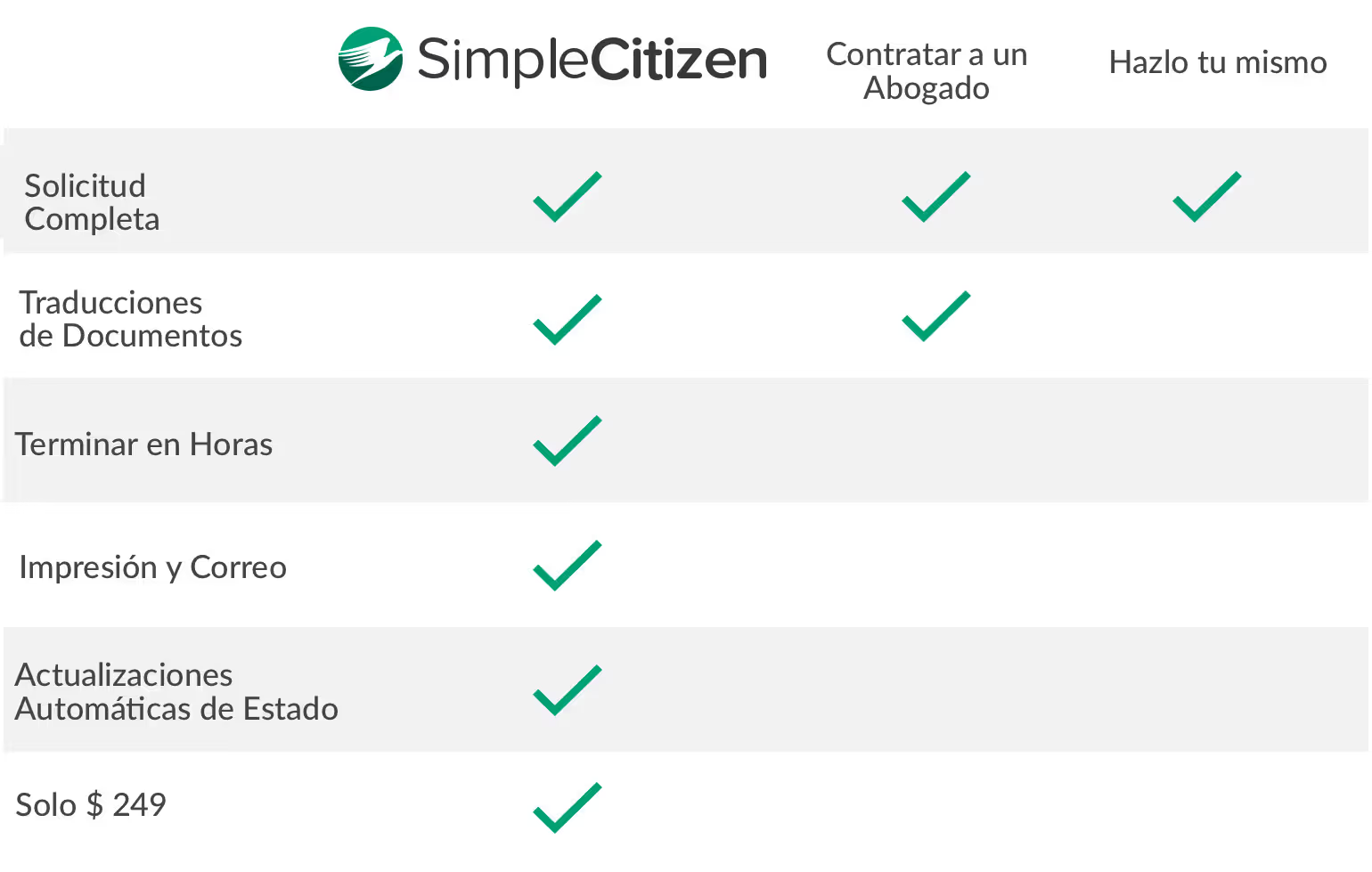
Sabe: Si usa SimpleCitizen y USCIS rechaza su solicitud, le reembolsaremos el 100% de las tarifas del gobierno.
Historias de éxito con SimpleCitizen
Ha & Mickey: “El sitio web y la interfaz de usuario hace que sea muy fácil para cualquier persona el llenar sus papeles con éxito. SimpleCitizen se ha diseñado de manera que puede terminar rápidamente todo el papeleo que necesita, comenzando por contestando toda la información en los campos especificados en cuestionarios. ¡Lo que es más importante, SimpleCitizen me envió por correo mi paquete con todos los formularios completados en el orden correcto, dejándome con el paso más fácil de todos – enviarlo a la oficina de la USCIS!”.
Olivia & Nick: “Yo no tenía idea de cómo empezar, pero SimpleCitizen caminó conmigo a través de todo el proceso y una semana más tarde mi aplicación llegó a mi casa con todo listo. Todo lo que tuve que hacer fue firmarlo y enviarlo al gobierno. Tengo un montón de amigos y familiares, y yo siempre recomiendo SimpleCitizen a ellos. ¡Gran servicio!”.
Claudia: “SimpleCitizen hizo el proceso de solicitud de Green Card más fácil y más barato para mí. SimpleCitizen hizo lo que hubiera un sido proceso muy estresante y muy costoso de una manera fácil y rápida. Estoy agradecido por su plataforma única y amable servicio al cliente. Voy a recomendar sus servicios a mis amigos y a mi familia. ¡Gracias SimpleCitizen!”
>> Lea muchas más historias de éxito aquí
Inscríbase para SimpleCitizen hoy y elimine las confusiones y dificultades del proceso de la Green Card.
No tiene que intentar navegar por el proceso green card usted mismo, y no tiene que pagar los excesivos honorarios del abogado. SimpleCitizen es amigable, el software es intuitive y le guiará a través de la aplicación de la Green Card. Solicitar una Green Card en la fracción del costo de utilizar de un abogado – con toda la comodidad de tener una guía en el camino. Su sueño americano le aguarda, y SimpleCitizen puede ayudar a lograrlo.
My Green Card Has an Error or is Lost. What Do I Do?
how to use Form I-90 for a lost or incorrect green card and how to update other immigration records.
Guide to replacing or correcting USCIS documents. Learn how to use Form I-90 for a lost or incorrect green card and how to update other immigration records.
Fixing or Replacing Your Immigration Documents: A Simple Guide
After going through the long immigration process, the last thing you want to do is lose all your documents. But if worse comes to worse, and it gets stolen, what do you do?
It can be stressful, but there actually is a process for correcting or replacing these essential documents. This guide will walk you through the common steps for handling lost, stolen, or incorrect immigration documents.
Replacing Your Green Card (Lost, Stolen, or Expiring)
If your Green Card has been lost, stolen, damaged, or is expiring, you will need to file an application to replace it.
- The Form to Use: The main application is Form I-90, Application to Replace Permanent Resident Card.
- When to File:
- Lost, Stolen, or Mutilated: You should file Form I-90 as soon as you realize your card is gone or damaged.
- Expiring Card: If you have a 10-year green card, USCIS recommends filing to renew it within the 6 months before it expires. (Note: Do NOT use Form I-90 to renew a 2-year conditional green card; for that, you must file Form I-751 to remove conditions. However, Form I-90 SHOULD be used if the 2-year green card is lost, stolen, damaged, or incorrect).
- How to File: You can typically file Form I-90 online through a myUSCIS account, which is often the fastest and easiest method.
Correcting an Error on Your Green Card or Other Document
If you receive your card and notice a mistake, like a misspelled name, wrong date of birth, or incorrect visa category, you must get it corrected. Here are your options:
1. If the Error Was Made by USCIS:
- If you can show that the mistake was a government error, you typically do not have to pay a new filing fee to get it corrected.
- You will still likely need to file Form I-90 (for a green card) or contact USCIS to have other documents (like an EAD or travel document) reissued. You'll need to submit the incorrect card along with evidence showing the correct information and proving the error was not yours.
2. If the Error Was Your Fault:
- If the mistake happened because of incorrect information you provided on your original application, you will generally have to file a new application and pay the full fee to get a corrected document.
The "Typographic Error" Conundrum: Sometimes, USCIS will consider correcting minor typos on documents other than green cards without a new application, but this is not guaranteed. The best first step is to check the official USCIS instructions or contact them through your online account.
What if My Card Was Mailed but Never Arrived?
This is a frustrating, but not impossible, situation. If your USCIS online account shows that your card was mailed but you never received it, there is a specific process to follow.
- Check Your Address: First, double-check that the address USCIS has on file for you is correct.
- Submit an Inquiry: You can submit an inquiry for a "non-delivery" of a card through your USCIS online account or by calling the USCIS Contact Center.
- Timing is Key: There are specific timeframes for reporting non-delivery. If too much time passes, USCIS may require you to file a new application (like Form I-90) and pay the fee again. It's important to act quickly if you think your card was lost in the mail.
Updating Your Information (Like a Legal Name Change)
Life changes, and your documents sometimes need to change, too.
- Legal Name Change: If you legally change your name (for reasons other than marriage, which is often handled during the green card process itself), you'll need to update your documents. For a green card, this means filing Form I-90 and providing a copy of the official court order or other legal proof of your name change.
- Other Biographic Information: If other personal information changes, you should check the specific USCIS guidelines for how to update it. Keeping your information current is an important responsibility.
Why Keeping Your Documents Safe and Accurate is So Important
Your Green Card (Form I-551) or EAD card are official proof of your identity and your status to live or work in the United States. You'll typically need them for:
- Getting a job.
- Applying for a driver's license or state ID.
- Traveling and re-entering the United States (for green card holders).
- Applying for a mortgage or other financial services.
- Eventually applying for U.S. citizenship.
If your document is lost, stolen, or has incorrect information, it can cause major problems. It's important to address the issue as soon as possible.
Dealing with a lost or incorrect immigration document can feel like a major setback, but thankfully USCIS has established processes to fix these problems. The most important thing is to act promptly and follow the official instructions on the USCIS website.
I Got My Green Card! What Happens Now?
Learn about your rights and responsibilities as a new U.S. Lawful Permanent Resident.
You have your green card, congratulations! Learn about your rights and responsibilities as a new U.S. Lawful Permanent Resident to help maintain your status.
Your New Rights and Responsibilities
Congratulations! Receiving your green card (officially called a Permanent Resident Card, Form I-551) is a life-changing milestone. It means you have been granted permission to live and work in the United States permanently.
Now that you're a Lawful Permanent Resident (LPR), it's important to understand both the new rights you've gained and the key responsibilities you must follow to maintain your status. This guide breaks down what you need to know as you start your new life in the U.S.
Your Rights as a Green Card Holder
As a Lawful Permanent Resident, you now have many of the same rights as U.S. citizens.
Here’s what you can now do:
- Live Permanently in the U.S.: You have the right to live anywhere you choose in the United States.
- Work Legally in the U.S.: You can work at almost any job without needing a special work permit (EAD). (Note: Some federal jobs may be restricted to U.S. citizens only).
- Own Property: You have the right to own a house, car, and other property in the United States.
- Be Protected by Law: You are protected by all federal, state, and local laws of the United States.
- Apply for a Driver's License: You can apply for a driver's license in your state or territory.
- Attend Public Schools and Colleges: You are eligible to attend public schools and colleges.
- Travel Outside the U.S.: You can travel internationally. However, there are important rules about how long you can be outside the U.S. without risking your permanent resident status (more on that below).
- Sponsor Relatives: You can file immigrant petitions (using Form I-130) for certain immediate family members, like your spouse and unmarried children, to get their own green cards.
- Receive Social Security Benefits: If you meet the requirements (usually by working and paying taxes for a certain number of years), you can receive Social Security retirement, disability, and survivor benefits.
- Apply for U.S. Citizenship: After meeting certain requirements (like living in the U.S. for three or five years), you can apply to become a U.S. citizen.
Your Responsibilities as a Green Card Holder
Maintaining your permanent resident status means following certain rules. These responsibilities are very important.
Here’s what you are required to do:
- Obey All Laws: You must obey all federal, state, and local laws. Committing certain crimes can put you at risk of being deported and losing your green card.
- File Your Taxes: You must file income tax returns with the Internal Revenue Service (IRS) and your state's tax department every year, just like U.S. citizens.
- Carry Your Green Card: It's generally recommended to carry proof of your permanent resident status with you. While you don't always need the physical card in your pocket every minute, you should have it available as your official government-issued ID.
- Update Your Address with USCIS: This is a critical responsibility. If you move, you must report your new address to USCIS within 10 days of moving. The easiest way to do this is by using the official USCIS Online Change of Address tool.
- Support the U.S. System of Government: You must support the democratic form of government and not try to change it through illegal means.
- Register with the Selective Service (if required): If you are a male between the ages of 18 and 25, you must register with the Selective Service System.
A Note on Maintaining Your Residence
Your green card gives you the right to live permanently in the United States. USCIS expects you to make the U.S. your primary home.
- Traveling Abroad: You can travel, but if you stay outside the U.S. for more than one year, USCIS may determine that you have "abandoned" your residency.
- For Long Trips: If you know you need to be outside the U.S. for one year or more, you should apply for a Re-entry Permit using Form I-131, Application for Travel Document, before you leave the country. This shows USCIS that you don't intend to abandon your status.
The Path to U.S. Citizenship
For many, getting a green card is a major step toward becoming a U.S. citizen. Being a Lawful Permanent Resident is a requirement before you can apply for citizenship through the process called "naturalization."
After you meet the eligibility requirements—which typically include holding your green card for a certain number of years (usually five years, or three if married to a U.S. citizen), demonstrating good moral character, and passing English and civics tests—you can choose to apply to become a full U.S. citizen.
Welcome to your new life as a U.S. permanent resident! Understanding these rights and responsibilities is the key to successfully living in the United States and, if you choose, eventually becoming a citizen.
Perhaps it may be found within a different category.