Cómo preparar y enviar el Formulario I-693
En Español
El I-693 incluye 10 partes. Como solicitante, solo debe completar la Parte 1 antes de su cita con el médico. También deberá escribir su nombre y número de extranjero (cuando tenga uno) en la parte superior de cada página del formulario. Debe ser un número de 8 o 9 dígitos que comience con la letra A y se puede encontrar en cualquier carta o aviso que haya recibido del Departamento de Seguridad Nacional.
Para completar la Parte 1, necesitará:
Como solicitante, también deberá completar la Parte 2. Esta parte es donde proporciona información de contacto y firma el formulario. Debe completar esta sección con el cirujano civil presente para presenciar cómo lo completa.
El formulario I-693 está incluido en el Creador de Solicitudes de Tarjeta Verde
Para encontrar un cirujano certificado por el USCIS:
Debería aparecer una lista de médicos en su área. Seleccione uno y programe una cita llamando al número que se encuentra al lado.
Se le pedirá que complete la Parte 3. Esto incluye:
Como cirujano civil certificado por USCIS, debe informar los resultados verdaderos y precisos de su examen.
Para hacer esto, deberá anotar la información de la identificación emitida por el gobierno del solicitante. También será responsable de atestiguar que el solicitante completa y firma la Parte 2.
Deberá seguir las regulaciones más recientes del Departamento de Salud y Servicios Humanos y las pautas de los Centros para el Control y la Prevención de Enfermedades. Esas pautas se pueden encontrar aquí.
También se le puede pedir que haga referencias y presente informes de casos. Estos procesos también se pueden encontrar en las pautas de los CDC.
Al completar el I-693, deberá:
No hay tarifa de presentación para el I-693.
Cómo presentar el I-693
If you are not applying for an adjustment of status, follow the instructions given by the office requesting the medical examination.
Imprime el PDF y rellénalo a mano con bolígrafo negro.
Busque un profesional legal para completar el formulario.
This article outlines the different ways individuals can apply for a marriage-based green card
Green Card Application
If you’re married to or about to marry either a U.S. citizen or a U.S. green card holder AND hope to live in the United States, you’re probably trying to figure out the best way to apply for a green card. If this description applies to you, then you’ve come to the right place! This article lays out the different ways individuals can apply for a marriage-based green card, how these paths are similar, as well as how they are different. This article does not, however, discuss immigration pathways for those seeking permanent residency through employment-based applications, or as refugee or asylum seekers.
As you read, you might feel confused or even overwhelmed at times… don’t worry, we get it! U.S. immigration can feel like a lot to take in! That’s why SimpleCitizen has sought out to make U.S. immigration more accessible to people just like you! We offer the same assistance and expertise an immigration lawyer provides at a fraction of the cost! Need help applying? Learn how to prepare your application with SimpleCitizen here.
Before we begin, it’s important to note that your choices will differ depending on whether you are married or unmarried, and whether that marriage is to a U.S. citizen or a U.S. green card holder. Let’s clarify what the difference is!
Married: For the purposes of this article, married refers to any applicant that is married to a U.S. green card holder or U.S. citizen.
Unmarried: Unmarried refers to any applicant who plans to marry a U.S. green card holder or U.S. citizen but has not yet done so. Unmarried, in the context of this article, does not include employment-based applicants, or those seeking status as a refugee or asylum-seeker.
As previously mentioned there are different application options available depending on whether the applicant is married or unmarried. Here's a quick list of options available to an applicant depending on whether they are married or unmarried.
The sections below will both summarize and detail the primary differences between these options and should help you better identify the path that is right for you!
These application paths apply to individuals who are ALREADY married to a U.S. citizen or a U.S. green card holder.
| Adjustment of Status | Consular Process | |
|---|---|---|
| Specific Forms |
Form I-130, I-130A, and Form I-485 Additional forms: I-864, I-131, I-765, and I-693 |
Form I-130/I-130A, once approved the applicant will then need to fill-out Form DS-260 and an Affidavit of Support (Form I-864) Potentially a Public Charge Questionnaire, Form DS-5540, depending on your consulate. |
| Cost |
Form I-130 = $675 Form I-485 = $1,440 Form I-765 (optional) = $260 Form I-131 (optional) = $630 Total: $3,005 |
Form I-130 = $675 Form DS-260 and Affidavit of Support = $445 Total: $1,120 |
| Who it would apply to | Applying based on marriage to a U.S. citizen or U.S. green card holder – from inside the United States. The applicant must already be married and living in the United States. | Applying based on marriage to a U.S. citizen or green card holder — from outside the United States. The applicant must already be married but living outside of the United States. |
| Agencies | USCIS | USCIS, U.S. Department of State, and U.S. Department of Homeland Security |
| Where you apply from | Inside the U.S. | Outside the U.S. |
| Where you would wait | Inside the U.S. | Outside the U.S. |
| Timeline |
Variable due to COVID-19. Previous Timeline was 8-20 months. Typically takes longer for this option than for Consular Process but the applicant can wait inside the United States. |
Variable due to COVID-19. Previous Timeline was 6-12 months. Typically faster than Adjustment of Status depending on the Embassy or Consulate. |
| Work | Apply for work authorization using Form I-765. Once granted, the applicant is able to work in the U.S. | The applicant will not receive work or travel authorization until green card, and therefore entry into the U.S., has been granted. |
| Travel | Apply for advance parole to travel via Form I-131. Once granted, the applicant can travel without application being deemed abandoned. | Can travel if they have an additional visa that allows them to travel but their admittance will be up to the agent reviewing their case. Having a visa does not guarantee entry. |
The process of applying for an Adjustment of Status green card as a married applicant differs slightly depending on whether the applicant is married to either a U.S. citizen or a U.S. green card holder. While applicants married to a U.S. citizen can file Form 1-130 (Petition for an Alien Relative) concurrently with Form I-485 (Adjustment of Status to Permanent Resident), applicants married to U.S. green card holders cannot. Rather, they must go through something called the Visa Bulletin after they file Form I-130 (Petition for an Alien Relative). Only once the Visa Bulletin for the applicants category is current can they submit Form I-485.
The way the Visa Bulletin works can be pretty complicated but here is a brief overview! Again, remember that this step only applies to applicants married to U.S. green card holders NOT to applicants married to U.S. citizens.
The Visa Bulletin is released every month by the U.S. Department of State. It shows which green card applications are eligible to move forward based on when the I-130 (or I-140 for employment-based applications) petition was originally filed.
Because the U.S. congress sets annual limits on the amount of green cards that can be issued, and because the number of annual applications often far-exceeds that quota, there is a large backlog of applications. This backlog leads to wait times for new applicants, which are published monthly in the Visa Bulletin.
After filling Form I-130, Petition for Alien Relative, you’ll be able to check the Visa Bulletin to see your place in line which can then help you estimate how much time it will take before you can apply to be issued a green card.
First, the spouse of the applicant seeking a marriage-based Adjustment of Status must file Form I-130, Petition for Alien Relative. They are considered the petitioner of the applicant. Once Form I-130, Petition for Alien Relative, is approved, one must wait for the priority date in one’s immigrant visa category to become current (see the date listed in the Notice of Action, and check when it is current by clicking here) be sure to check the current month and year. When the date listed is current, it is time to file Form I-485, Application to Register Permanent Residence or Adjust Status. This is the required form for becoming a Permanent Resident.
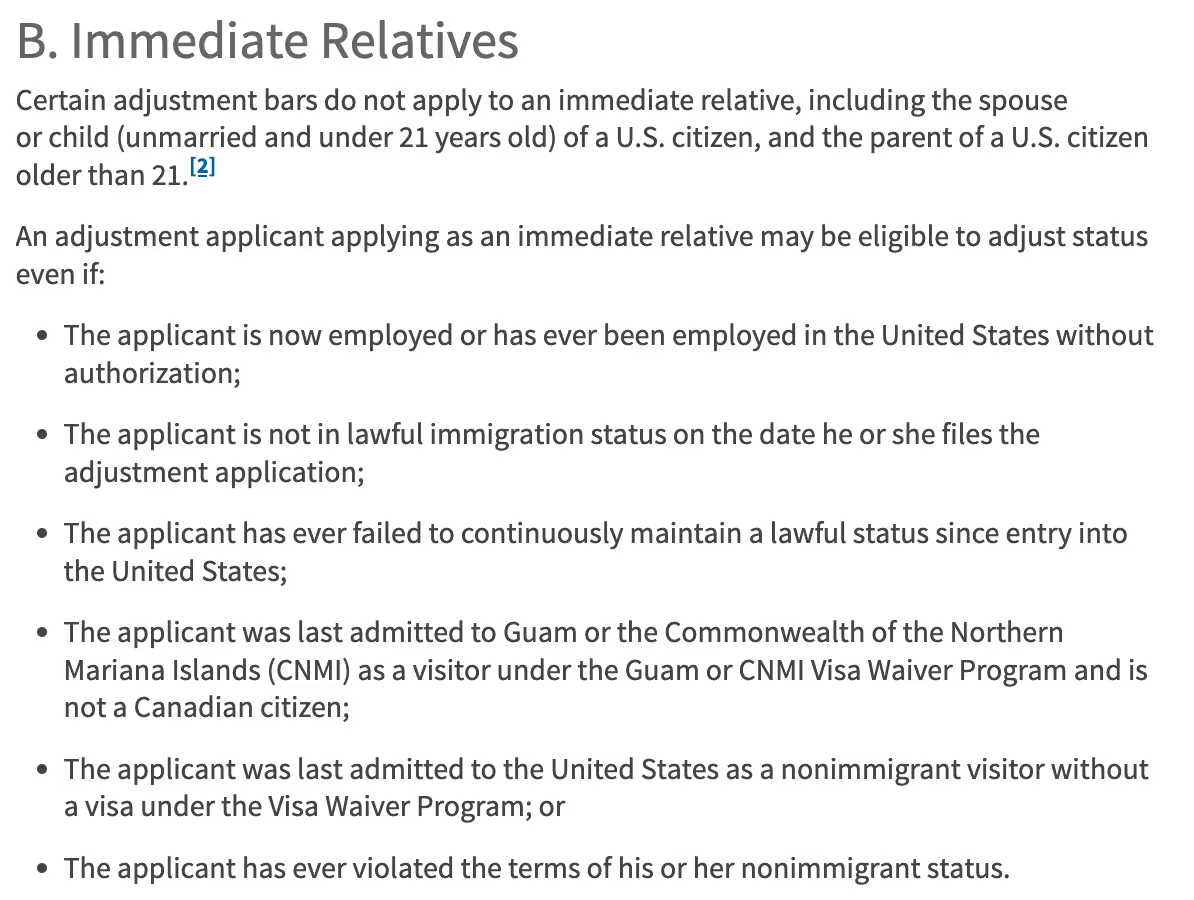
Another primary difference between those married to U.S. citizens and U.S. green card holders is the flexibility that exists in regards to violating the terms of one’s status. The spouses of U.S. citizens are more likely to be forgiven for things such as overstaying a visa or working without authorization. This same forgiveness is not extended to the spouses of U.S. green card holders. If you or your spouse have violated the terms of your status as the spouse of a U.S. green card holder, it is recommended that you get a lawyer to assist you.
For monthly updates on the Visa Bulletin, see this page.
Another important thing to be aware of as someone applying for a marriage-based Adjustment of Status are intent and misrepresentation. If applicants are not careful, they could potentially put themselves at risk of being flagged for or even committing immigration fraud. This applies to both the spouses of U.S. citizens and U.S. green card holders.
In short, USCIS wants to make sure that when an applicant entered on a temporary, non-immigrant status (such as a temporary work permit or student visa), their intention was not actually to gain an immigrant status. If they feel like the applicant misrepresented their intent, that applicant’s case is much more likely to be flagged for potential fraud. An example of this would be an applicant entering on a non-immigrant student visa and then getting married shortly after their arrival. Such behavior could appear to indicate that the individual misrepresented their intent to come to the United States.
A case is much more likely to be flagged for immigrant intent if the applicant gets married or submits an application to adjust status within 90 days of entry into the United States. Applicants who share these circumstances should prepare to address this in their interview with USCIS. This can be overwhelming or scary for applicants. Luckily, SimpleCitizen offers guidance on instances like this through application review by an immigration attorney from our network attorney. Learn more here.
There are a number of forms required to apply for an Adjustment of Status.
For more information on this form check out these resources!
For more Information on filling form I-130 as someone who is married to a U.S. green card holder check out this article.
Since the petitioner is filing for their spouse, the spouse must fill out and sign Form
I-130A, Supplemental Information for Spouse Beneficiary.
Learn more about Form I-130A and how to file it here
Learn how to file this form here
Additional forms that are needed include:
For more information on this form see USCIS instructions here and our article here
Learn more about how to file this form here.
Optional Forms
Learn more about this form here
Check out our step-by-step guide to Form I-765 here
The overall cost of the application will vary slightly depending on the applicant, but the filing fees are consistent for most family-based applications. The total cost for filing the above listed forms is currently $3,005. This cost is broken up into four primary parts: the filing fee for Form I-130 (Petition for Alien Relative) which is $675, the filing fee for Form I-485 (Application to Register Permanent Residence or Adjust Status) which is $1,440, the filing fee for Form I-765 (Application for Employment Authorization) which is $260, and the filing fee for Form I-131 (Application for Travel Authorization) which is $630.
Applying for a green card through an Adjustment of Status applies to applicants that are a) married to a U.S. citizen or U.S. green card holder and b) are applying from inside the United States.
Applicants both apply and wait from inside the United States. Leaving the country before either Advance Parole or Permanent Residency has been granted could result in the termination of the applicants petition. In this case, they would then need to reapply and wait from outside the United States through the Consular Process method.
Previously, the average wait time for Adjustment of Status applications was 8-20 months. These wait times vary depending on the office filed through and the particulars of the case. However, applicants are not able to pick and choose which office they work through. Rather, your field office will be assigned to you based on where you live. Learn more about office-specific wait times here.
Working and traveling in the United States is allowed as long as the applicant meets at least 1 of the following requirements
As previously mentioned, leaving the country before either Advance Parole (Form I-131) or Permanent Residency has been granted could result in the termination of the applicants petition. In this case, they would then need to reapply and wait from outside the United States through the Consular Process method.
The forms required for this application cannot be done all at once. Rather, they are broken down into two primary steps.
Step 1: Fill out and submit Form I-130, Petition for an Alien Relative
Step 2: Once Form I-130 has been approved, the applicant must then fill-out and submit two more forms
Form I-130 = $675
Form DS-260 and Affidavit of Support = $445
Total: $1,120
Applying for a green card through the Consular Process applies to applicants that are a) married to a U.S. citizen or U.S. green card holder and b) are applying from outside of the United States.
Applicants both apply for and wait for their green card from outside of the United States. Initially, applicants file Form I-130, Petition for Alien Relative, through USCIS. Afterwards, the agencies they work with are the U.S. Department of State and U.S. Department of Homeland Security.
In the past, average wait times for applications submitted via Consular Process have ranged from 6-10 months, depending on the embassy or consulate.This route tends to have shorter wait times than applying for an Adjustment of Status from within the United States.
Applicants applying through Consular Process will not be granted entry to the United States until their green card has been granted. For this reason, they will not obtain work or travel authorization for the U.S. until permanent residency has been granted.
However, if applicants have an additional visa that allows them to travel into the United States they are able to use it during the waiting process. That being said, entry is not guaranteed. Rather, their admittance into the United States will be up to the agent reviewing their case. If said officer believes the applicant is at risk of overstaying their visa, they can deny the applicant entry into the United States.
As a refresher, this section is specifically for applicants intending to marry either a U.S. citizen or green card holder.
| K-1 to Adjustment of Status | Consular Process | |
|---|---|---|
| Specific Forms |
Form I-129F, Petition for Alien Fiancé(e) Form DS-160, K-1 Fiancé(e) Visa Form I-485, Adjustment of Status Additional forms for Step 3: I-864, I-131, and I-765 |
Forms I-130 and I-130A, once approved you then need to fill-out Form DS-260 and an Affidavit of Support (Form I-864) |
| Cost |
1) Petition for Alien Fiancé(e): Form I-129F = $675 2) K-1 Visa Application: Form DS-160 = $265 3) Green card application (Forms I-130, I-485, I-765, I-131) = Up to $3,005 Total: $3,945 |
Form I-130 = $675 Form DS-260 = $445 Total: $1,120 |
| Who it applies to | Fiancé(e)s of U.S. citizens planning on getting married within 90 days of entering the U.S. | Individuals filing from outside the U.S. that are married to a U.S. citizen or green card holder. Unmarried applicants must first marry before this route is available to them. |
| Agencies |
Petition for Alien Fiancé(e) (Form I-129F): USCIS K-1 Fiancé(e) Visa (Form DS-160): U.S. Department of State and Department of Homeland Security (via NVC) Adjustment of Status (Form I-485): USCIS |
USCIS, U.S. Department of State and U.S. Department of Homeland Security |
| Where you apply from |
Petition for Alien Fiancé(e) (Form I-129F): Outside the U.S. K-1 Visa (Form DS-160): Outside the U.S. Adjustment of Status (Form I-485): Inside the U.S. |
Outside the U.S. |
| Where you wait from |
Petition for Alien Fiancé(e): Outside the U.S. K-1 Visa and Interview: Outside the U.S. Adjustment of Status: Inside the U.S. |
Outside the U.S. |
| Timeline |
Form I-129F: 5-7 months Form DS-160: Varies by Embassy Adjustment of Status (Form I-485): 8–20 months |
Has averaged 6–12 months in the past but delays expected due to COVID-19 |
| Work and Travel |
Awaiting K-1 Visa: Cannot work/travel unless holding another valid visa After K-1 granted: May enter U.S. for up to 90 days to marry Awaiting Adjustment of Status: May only work/travel after permits are granted |
No work/travel authorization until green card is granted If holding another visa, travel may be possible but entry is up to the reviewing agent |
| Pros |
May gain entry to U.S. faster Less evidence of joint living/finances needed Can marry inside the U.S. |
Simpler, fewer steps Enter as green card holder Can work/travel immediately upon entry Cheaper and faster path to permanent residency Available to fiancés of U.S. permanent residents |
| Cons |
More expensive Longer wait for permanent residency Enter as temporary visitor Must wait for work/travel authorization Only for fiancés of U.S. citizens (not green card holders) |
More evidence required Must marry outside the U.S. May take longer to gain entry |
If you do not want to go through the K-1 Fiancé(e) Visa process the other option would be to get married and then follow the consular process for married applicants, as outlined above. They are listed in the same table as the Fiancé(e)-to-Adjustment of Status path to help you compare the two.
A K-1 Visa is a visa issued to the foreign fiancé(e) of a U.S. Citizen that allows them to enter the United States temporarily. Upon arrival to the United States, the couple has 90 days to get married.
In order to be eligible for this type of Visa, the couple must meet two primary requirements
The petitioner, usually the U.S. Citizen Partner, must file Form I-129F, Petition for an Alien Fiancé(e) with USCIS. The filing fee for this form is currently $675. Find the PDF version of this form as well as the filing instructions here.
After a few weeks, applicants usually receive Form I-797C, Notice of Action, from USCIS. This indicates that the application has passed basic checks and is awaiting adjudication. It is during this adjudication that the petition will either be approved or denied. It usually takes anywhere between 8-10 months for a petition to be approved.
Once the petition has been approved by USCIS, they transfer jurisdiction of the case to the National Visa Center (NVC) which is a segment of the U.S. Department of State. Here the NVC will issue the applicants a case number. This case number is very important so be sure to keep it in a safe place!
Once NVC assigns the application a case number, it will forward the I-129F packet (application) to the embassy of the home country of the foreign fiancé(e).
After the application has been forwarded to the embassy closest to where the foreign fiancé(e) lives, the applicant is then able to fill out Form DS-160 to apply for their K-1 Visa and pay their DS-160 Filing Fees ($265). Form DS-160 is filled out and submitted online. To access the form, click here. For answers to frequently asked questions about Form DS-160, check out this helpful link!
Be sure to heep the following information for your records
Once the status of the case is “Ready” the applicant is then able to reach out to their local U.S. embassy and schedule their K-1 Visa Interview. However, Form DS-160 must be submitted, the medical examination must have taken place, and the application fees must be paid before the interview can take place. The applicant should make sure they bring all required documents to the interview to avoid any delays or complications. This includes the receipt number from their application payment as well as the printed confirmation information for their completed DS-160 application.
If their visa is granted, the foreign fiancé(e) will get a visa stamp in their passport which can then be used to enter the United States within 4 months of its issuance. Remember that this is a temporary Visa, so be sure to enter the U.S. before it expires.
After entry into the United States, applicants have 90 days to get married. This is because the Fiancé(e) status automatically expires 90 days after entry and cannot be extended. The applicant must leave the United States at the end of the 90 days if they are not yet married.
Call-out: In the case when marriage does not happen within 90 days AND the fiancé(e) does not depart, they will violate U.S. immigration law. This could affect their future eligibility for U.S. immigration benefits and may result in removal r(deportation).
After marriage, the next step is for the couple to file for a green card (Form I-485, Adjustment of Status). If the foreign partner intends to work in the U.S. or travel outside of the country while their application is being processed, they must also file for a Work and Travel Permit (Forms I-765 and I-131, respectively) and From I-864, Affidavit of Support. Filing these forms concurrently with Form I-485 results in the waiving of their fees.
Listed below are the required forms for this step in the application process:
Form I-485. Application to Register Permanent Residence or Adjust Status:
Form I-864, Affidavit of Support
Form I-131, Application for Travel
Form I-765, Application for Employment Authorization
Going the K-1, Fiancé(e) Visa to Adjustment of Status route is often the most expensive option for applicants, totaling approximately $3,945.
1) Petition for Alien Fiancé(e) (Form I-129F) = $675
2) K-1 Fiancé(e) Visa Application Fee = $265
3) Green card application: Forms I-130, I-485, I-765, and I-131 = Up to $3,005
Total: $3,945
This route applies to anyone who is engaged to a U.S. citizen and who plans to get married in the United States before applying for Permanent Residency.
In total, the timeline for the fiancé(e) path to permanent residency varies greatly depending on the circumstance of the case such as the citizenship of the applicant, wait-times at the specific embassy, etc. On average, start to finish wait times average anywhere between 13 and 27 months.
Rules surrounding work and travel differ depending on which stage in the process the applicant is at. Below, the information is broken up into the two primary stages.
In order to make sure you are eligible to apply and that you choose the correct application for your situation, you can use SimpleCitizen’s free eligibility quiz here.
By answering just a few easy questions you can determine if you are eligible to apply.
If you have a questions about your eligibility or are unsure how to get started, here are a few options:
You don’t have to try to navigate the green card process yourself, and you don’t have to pay outrageous attorney fees. SimpleCitizen’s easy to use software will guide you through the whole green card application.
Apply for a green card at the fraction of the cost of using an attorney — with all the comfort of having a guide along the way.
Your American dream awaits you, and SimpleCitizen can help you achieve it.
Click here to start your application.
https://learn.simplecitizen.com/immigration-support/what-is-consular-processing
https://learn.simplecitizen.com/immigration-support/what-is-adjustment-of-status
https://learn.simplecitizen.com/immigration-support/comprehensive-guide-get-green-card
https://learn.simplecitizen.com/immigration-support/form-i-485-instructions
https://learn.simplecitizen.com/immigration-support/submitting-form-i-485-what-to-expect
https://learn.simplecitizen.com/immigration-support/what-is-form-i-485-used-for
https://learn.simplecitizen.com/immigration-support/who-may-file-form-i-485
https://learn.simplecitizen.com/immigration-support/top-10-questions-about-getting-green-card
¿Quién puede presentar el formulario I-130?
En Español
Cuando se trata de quién puede presentar el Formulario I-130 existe una diferencia entre los ciudadanos estadounidenses y los residentes permanentes legales.
Si es ciudadano de los Estados Unidos, puede presentar el Formulario I-130 para familiares, que incluyen:
Sin embargo, si es un residente permanente legal, solo puede presentar el formulario para:
Si desea presentar la solicitud para más de un familiar, debe completar un Formulario I-130 por separado para cada individuo. No hay límite para la cantidad de formularios que puede enviar siempre que cada familiar se ajuste a las categorías enumeradas anteriormente en "ciudadano" o "residente permanente legal".
The impact of the Biden-Harris administration on Immigration Law.
U.S. Immigration News
Last updated May 5, 2021.
Joseph R Biden Jr was inaugurated as the 46th president of the United States on January 20, 2021. Since then we’ve seen significant changes and expect to see further improvements in immigration law. There are a number of actions that the Biden-Harris administration has proposed to improve the immigration system.

They will end family separation at the border and reunite children with their parents. They will not use a zero-tolerance policy as an intimidation tactic.
They will open more access to asylum. They will do this by expanding the meaning of persecution, or the grounds on which to seek asylum. For example, they want to extend protections to LGBTQ+ individuals. They also want to end the Migrant Protection Protocols, which forced individuals awaiting asylum cases to go back to their home countries while their cases are being processed. Furthermore, they will make sure that asylum applications are processed efficiently and with less limitations.
They will end prolonged detention, especially of children. They want to develop alternatives to detention, such as case management programs. These allow individuals to exit detention but continue to move through the legal system.
They want to send more resources to the border. Specifically, they want to work with private and public organizations that help asylum seekers at the border, such as those who provide shelter or legal aid. They will focus on working with established non-governmental organizations and other asylum/refugee assistance agencies.
On March 9, 2021, the 2019 Public Charge Rule was terminated. USCIS is no longer accepting or requiring Form I-944, Declaration of Self-Sufficiency. The Biden administration saw the public charge rule as having added more roadblocks to immigration when individuals had to use public assistance such as SNAP or Medicaid. They want to allow individuals to use these services if they need them and still enjoy family reunification.
They want to protect DREAMers and their families. The ultimate goal is to provide a path to citizenship for DREAMers and their families, but for now, they will introduce protections. On January 20, 2021, President Biden issued a Presidential Memorandum entitled, “Preserving and Fortifying Deferred Action for Childhood Arrivals (DACA)” (“The Memo”). USCIS is accepting first-time requests for DACA as well as renewals.
They will expand economic help for DACA students, such as access to federal student aid, community college without debt, and investment in minority colleges such as HBCUs.
The Biden administration will rescind travel and refugee bans. They will not ban individuals based on their religion or the color of their skin. They will direct visa and other immigration applications to be re-opened from regions which previously saw immigration halts.
They will review the Temporary Protection Status (TPS) and the Deferred Enforced Departure (DED) programs. They will make sure individuals who qualify for these programs are not returned to their home countries. They also hope to provide a path to citizenship to those TPS/DED individuals who have been in the United States for a long time. They have added the new TPS rules.
They will restore sensible immigration enforcement. They will focus enforcement on those migrants who pose a threat to public safety. Those who are in detention will see due process and other civil rights defended. There will be no workplace raids, or raids in other areas where individuals are vulnerable (such as hospitals, schools, and churches).
They will enforce better standards for Immigration and Customs Enforcement (ICE) and Customs and Border Protection (CBP) officers. They will receive more training and be required to be more transparent, and they will also receive independent oversight.
ICE will replace the word “illegal alien“ with “undocumented” and “integration” will replace “assimilation”.
They will protect those migrants who have served in the military. They will not be targeted for deportation, and those who have been deported will be paroled back to the United States and be reunited with their families and military service.
They want to give representation to non-citizens. They will do so by counting any individual living in a certain State at the time of the Census, regardless of immigration status.
They will improve the naturalization process. They will improve and streamline it by addressing the backlog. They hope to prioritize better adjudication (or decision making) systems, make processing quicker, and get rid of unreasonable filing fees.
They will revitalize the Task Force on New Americans. They will prioritize integration, entrepreneurship, and civic engagement and provide resources and training for language learning, financial management, workplace skills, and guidance on the naturalization process.
Finally, they hope to convene a meeting with regional leaders (from countries such as Canada, Mexico, Guatemala, El Salvador, and Honduras). These leaders will build a multi-national plan to address and alleviate factors driving immigration between the countries.
Joe Biden will focus on building bridges for immigrants and refugees to access the opportunities that the United States has to offer. He believes that immigrants are an integral part of this nation. He has emphasized that past Trump administration policies have hurt immigrants, and he hopes to return to policies that help them.
Let’s look at the most common RFEs that USCIS issues and how to avoid receiving one.
General Immigration Information
Last Updated: February 11, 2025.
When USCIS needs more information for a case they issue what is called a “Request for Evidence” or an RFE, as they are commonly called.
While these requests are issued on a routine basis and are just USCIS’s way of collecting more information, we understand that they can add stress to your process. Let’s look at the most common RFEs that USCIS issues for Family-Based green card applications and how to avoid receiving one.
SimpleCitizen is designed to help simplify the process of gathering required information and documents and strengthening applications overall. All applications include an independent attorney review of the information and evidence that has been added, and our case support teams
are trained to assist our customers as they work to implement the attorney’s feedback. This feedback is intended to help reduce the risk of Requests for Evidence (RFEs) and other delays with USCIS. While there is always some risk of an RFE, we work hard to reduce that risk whenever possible.
If you have received an RFE, please look at our Article “Request for Evidence (RFE)? What To Do”. If you are an existing customer, you can also reach out to our LiveChat support or to your SimpleCitizen case support team if you have additional questions or concerns!
Sending the incorrect birth certificate is one of the most common mistakes applicants make. USCIS will not accept just any birth certificate. They require a long-form certificate that contains information about at least one parent. In addition, USCIS only accepts certain versions of birth certificates from each country. To find which version is accepted from each country, you can visit the Department of State Reciprocity Schedule.
Additionally, if your birth certificate, or other official documents, are not in English, USCIS requires that a certified translation is included, along with the certificate of translation. Failure to include both a copy of the original document and its certified translation is likely to result in an RFE.
Any documents submitted to USCIS, both required documents and documents submitted to support the application, must either be in English or include an English translation.The translation should include a certificate from the translator stating that the translation is complete and accurate. It should also include the translator’s contact information and signature. Neither the petitioner or beneficiary can complete their own translations.
SimpleCitizen is happy to provide certified translations for all USCIS required documents for our customers at no additional cost! However, if there are non-required documents, such as items for relationship evidence, that are not in English, a self-translation would also be accepted. For more information on translations, please see our article here.
NOTE: Make sure when you submit your translations to USCIS that you also include a copy of the original document. Only adding the translation could result in an RFE.
Forgetting to add a required document is also a common reason why an RFE may be issued. Each case has unique document requirements that depend on the details included in their application. For this reason, please make sure to carefully check what documents are needed for your particular circumstances. Commonly missed documents could include divorce decrees or death certificates from all previous marriages, proof of U.S. citizenship or Legal Permanent Residence, and/or photo ID, and court-certified documents. SimpleCitizen guides our customers on exactly what documents their case needs. Click here to start your application.
In order to act as a sponsor you must have filed a tax return for the most recent tax year. Failing to include a copy of the full Tax Return 1040 OR Tax Return Transcript for the most recent tax year increases the chance of being issued an I-864 greatly. Please note that this is true even if the sponsor submits proof of a tax extension. Tax Returns are required regardless of whether or not a tax extension has been issued and the sponsor will be very likely to later get an RFE requesting proof that the Federal Tax Return has since been filed.
If a sponsor was not required to file taxes due to making less income than the specified requirements, an explanation must be included in the application. Something to consider here, however, is that USCIS has been extremely picky about income history recently. Not meeting the income requirement in the previous tax year also greatly increases the chance of being issued an RFE.
Another time RFEs are commonly issued for this reason is on/near the tax deadline of April 15th. If you are submitting near this date and do not submit the Federal Tax Return from the most recent tax year there is a risk of an RFE being issued. This is because if you are submitting near tax day there is a chance USCIS may not review the paperwork until after April 15th and may require additional evidence and request the newest tax return. This risk can be lessened by adding the newest tax year’s return when you are submitting close to the tax deadline.
USCIS prefers to receive copies of the IRS Tax Return Transcripts whenever possible. These are free to request on the IRS’s website, after providing valid identification. You can request these here. If you are planning on including IRS Transcripts, please make sure to select the correct one as USCIS will not accept the IRS Wage and Income Transcript, nor the Account Transcript for immigration sponsorship purposes.
If the IRS Tax Return Transcripts are not available for any reason, USCIS will also accept the Form 1040, which is commonly referred to as your Federal Tax Return. If you are providing USCIS with the Tax Return instead of the IRS Tax Return Transcript you will be required to provide all pages of the 1040 and any Federal Tax Schedules or Forms that were included when you filed the taxes with the IRS. In addition, any W-2s or 1099s associated with the tax return should be included. One common mistake is only adding W-2s or 1099s from a current job and not all other jobs held in the tax year. When submitting this information double check that all documents have been added.
*Please note that State taxes documents are not required and should not be included.
If you filed taxes based on income from self-employment or other forms of income such as investments, scholarships, grants, etc, you should have filed at least one of the following schedules with your tax returns: Schedule C (Profit or Loss from Business), Schedule D (Capital Gains), Schedule E (Supplemental Income or Loss), or Schedule F (Profit or Loss from Farming). You must include each and every Form 1040 Schedule, if any, that you filed with your Federal income tax return.
Your copy of the tax return form can show you if any schedules or supporting documents were used when the tax return was originally filed. Depending on which lines of your tax returns were filled out, supporting documentation may be needed!
Typically line 1 on the first page of the 1040 form shows the wages that were reported on the 1040 and can be a guide to make sure all W-2s or 1099’s are added to provide proof of those wages. These documents are generally provided through an individual's employers at the beginning of each new year.
The additional lines highlighted in red can also be a guide to see if any Federal Schedules were used to file your taxes. If there are totals in those spots, USCIS will require you to submit any supporting documents available!


As a reminder: Sponsors are required to submit all supporting tax documentation submitted to the Internal Revenue Service for the most recent tax year. Supporting tax documents can include W-2s, 1099s, Form 2555, and all tax schedules to report various types of income that have been reported to the IRS for each year. Forgetting to add one of these documents is very likely to result in an RFE.
The Form I-864, Affidavit of Support, is filed to show that the intending immigrant will be supported financially in the U.S. This is done by showing that the petitioner or a joint sponsor makes an income of 125% of the poverty line for their household size. You can see USCIS’s breakdown of these income requirements based on the current year here.
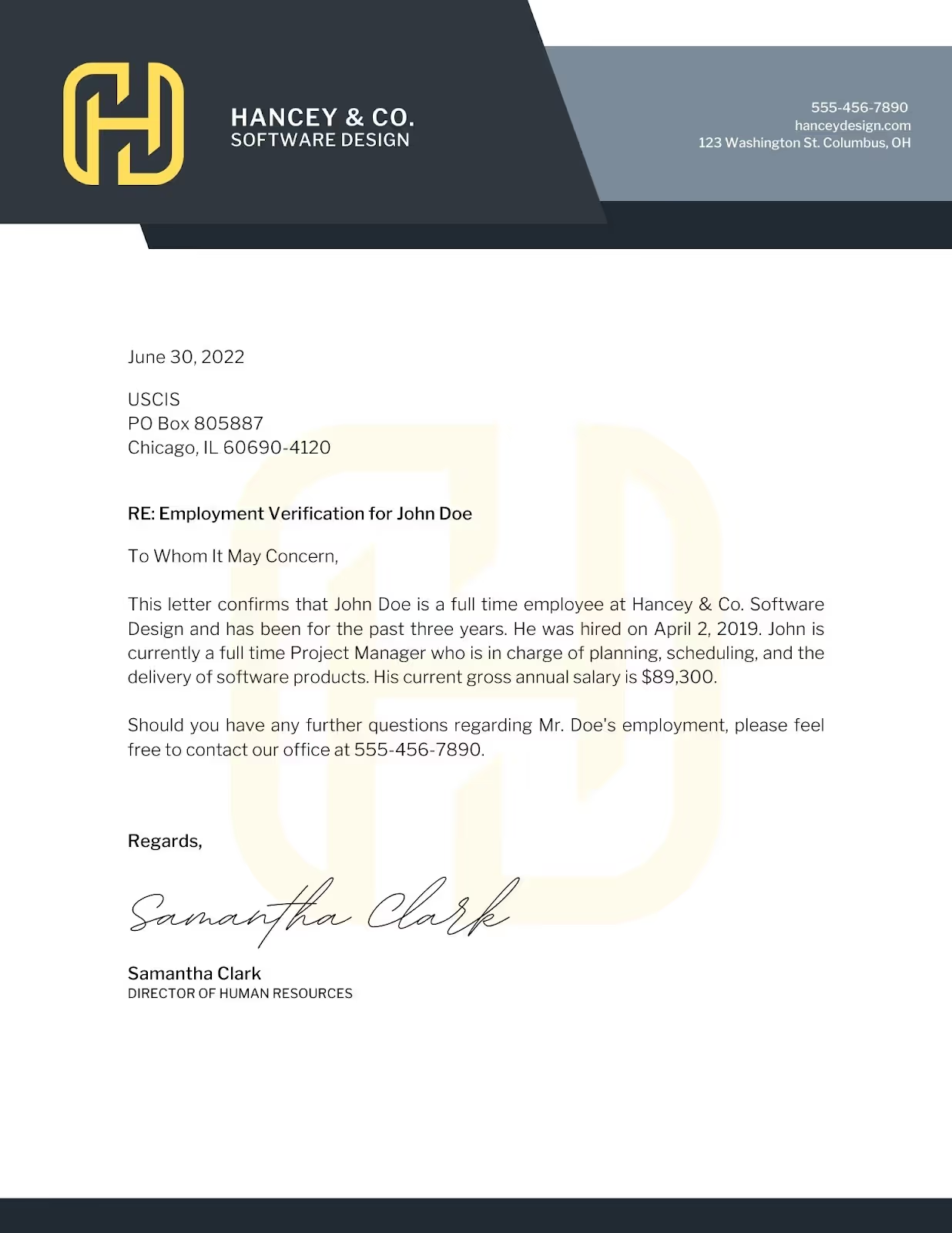
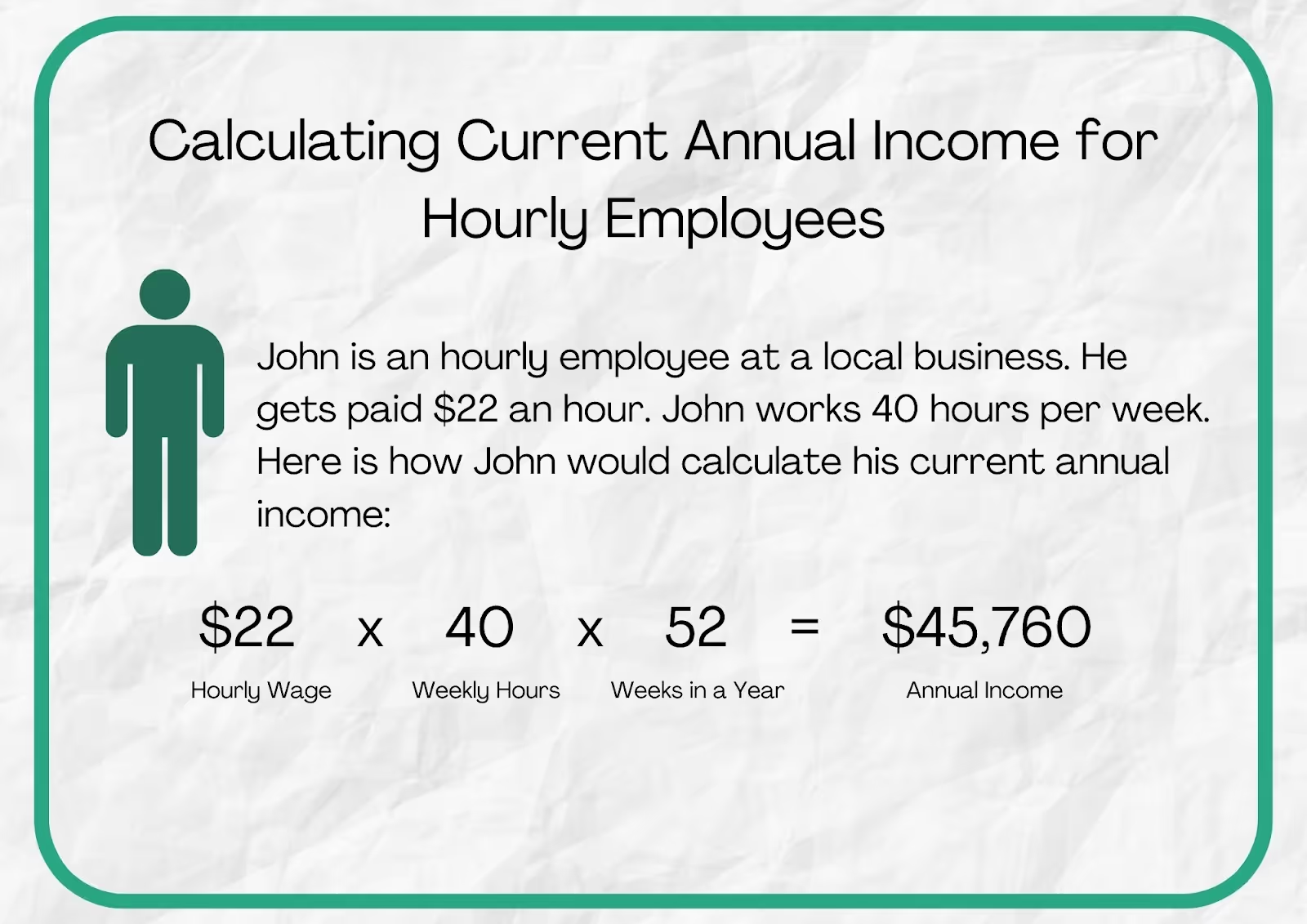
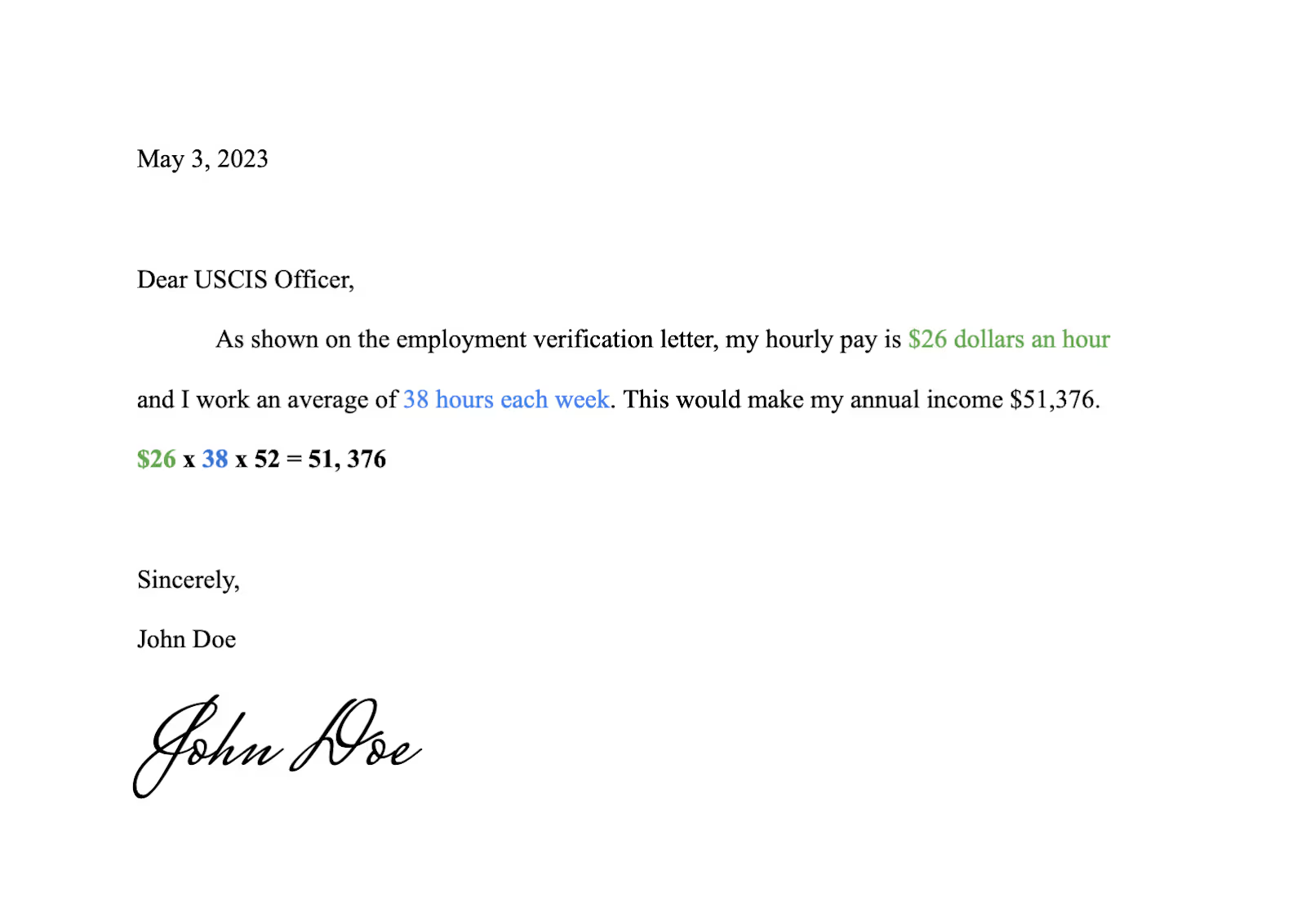
USCIS always highly scrutinizes proof of income, but especially if the income is close to the required income. In these cases a detailed letter from the employer confirming the employment and six months of pay stubs showing consistent income can help, but in some circumstances a joint sponsor may also be necessary. For more information on Employment Verification Letters, please see this article.
In addition, USCIS instructions state that assets can be included to help meet the income requirements. The I-864, Affidavit of Support Instructions provide the following information for including assets in the application:
“If your Current Annual Household Income is equal to or more than needed to meet the income requirement as shown by the current Federal Poverty Guidelines (Form I-864P) for your household size, you do not need to [include assets]. If your total household income does not meet the requirement, you may submit evidence of the value of your assets, the sponsored immigrant’s assets, and/or assets of a household member that can be used, if necessary, for the support of the intending immigrants. The value of assets of all of these persons may be combined in order to meet the necessary requirement.
Only assets that can be converted into cash within one year and without considerable hardship or financial loss to the owner may be included. The owner of the asset must include a description of the asset, proof of ownership, and the basis for the owner’s claim of its net cash value. You may include the net value of your home as an asset. The net value of the home is the appraised value of the home, minus the sum of any and all loans secured by a mortgage, trust deed, or other lien on the home. If you wish to include the net value of your home, then you must include documentation demonstrating that you own it, a recent appraisal by a licensed appraiser, and evidence of the amount of any and all loans secured by a mortgage, trust deed, or other lien on the home. You may not include the net value of an automobile unless you show that you have more than one automobile, and at least one automobile is not included as an asset” (Italicized and underlined formatting has been added by SimpleCitizen).
If a sponsor or applicant cannot provide sufficient evidence of their claimed assets, including them in the application may increase the risk of an RFE.
Please note: USCIS adjudicating officers are increasingly issuing RFEs for sponsors that use assets to help meet the income requirement. For this reason, many customers choose to add a Joint Sponsor instead of assets when they do not meet the income requirement.
Similarly to the previous point, we have seen an increase in scrutiny against self-employed and retired joint sponsors. If USCIS feels that the income from self-employment, or retirement, is not stable enough to sponsor an immigrant long-term or that not enough evidence of income has been provided, they are very likely to send an RFE requesting a different joint sponsor.
If you are wanting to include income from someone who is self-employed, additional documentation can help to make a stronger case. The evidence provided with the I-864 is to help establish that the income requirements are clearly and consistently met. Including this additional documentation can help in making it clear to USCIS that the self-employment is sufficient for their requirements.
Here are some of the potential documents for Self-Employed sponsors and joint sponsors:
Similarly, if you are wanting to include income from someone who is retired, here are some potential documents to help make their case stronger:
Please note: These lists are general recommendations that can help reduce the risk of an RFE. However, they do not guarantee that these types of sponsors will be accepted by USCIS and documentation will vary on a case-by-case basis based on their individual employment situation. Each application is adjudicated by an assigned USCIS officer, and the approval of them is largely up to the officer’s individual discretion.
We have seen customers find the most success when their relationship evidence is extensive and varied. If a benchmark would be helpful for you, it could be useful to aim for approximately 100-200 pieces of evidence with approximately 10-15 different evidence types spanning the full duration of the relationship.
Evidence we have seen be preferred by USCIS for customers in the past includes the following:
Remember, a large portion of the Marriage-Based Green Card application process is designed to prove that you and your US Citizen (or Legal Permanent Resident) spouse are in a legitimate relationship. . If USCIS does not feel that you provided enough evidence for them to make that judgment, then they will request more, either by an RFE letter in the mail, or at the interview.
Occasionally, applicants will receive an RFE for the Form I-693, Report of Medical Examination and Vaccination Record if they chose not to submit it at the time of their initial submission. In the past, we have seen this be a common indicator for when USCIS may be waiving an interview.
To complete a medical exam, applicants must go through a licensed Civil Surgeon. You can find one closest to you here.
There is no set price for the medical exam -- each doctor's office determines their own fee so it can be good to "shop around" and call multiple offices in your area to compare the prices and wait times. For example the fees for the same exam can often range anywhere from $175 to $950.
Here is some information about completing the medical exam that may be helpful for you!
For USCIS Form Instructions on completing Form I-693, Medical Exam, read here.
Please note: If you have received a Deficiency Notice for the Form I-693, Report of Medical Examination and Vaccination Record, a response is not required at that time. Deficiency notices are a courtesy reminder to applicants who chose not to submit the completed medical exam when they originally filed their application with USCIS. It will typically inform you that no response is needed, but that the medical examination should either be submitted at the time of the interview or when an RFE is issued for the exam.
We hope this guide was helpful in determining what you can do to reduce the risk of receiving an RFE from USCIS!
As a final note, it is also important to know that not all RFEs are a bad thing. In the past, we have seen USCIS send out RFEs in order to determine if an interview might be waived for a case, which can help reduce the overall processing times as well! At the end of the day, RFEs are completely normal. That being said, responding to any request for evidence as soon as possible is critical to the overall processing of your application.
If you have any additional questions or concerns, please feel free to reach out to us directly on our Live Chat.
Need to file for an immigration benefit but aren’t sure where to start? To get started on your application, please take our eligibility quiz here to help determine the correct application type for you!
Thank you! We’re happy you’re here!
Learn what a credit report and score are, how to get one, and what to do if you don’t have one!
Last Updated: August 21, 2020

This article addresses what a Credit Report and Credit score are, how to get your credit report as well as what to do if you do not have one!
Recently, USCIS introduced a new form, Form I-944, Declaration of Self-Sufficiency. This Form is extensive and includes many different components used to determine the likelihood of an applicant becoming a public charge, or in other words, relying on the US government for financial support. One of these components is the credit report and score requirements.
USCIS will review the applicant’s U.S credit report and credit score to help determine whether or not they are at a high risk of becoming a public charge. Being deemed a high risk of becoming a public charge could increase the chances that your application will be denied.
A credit report is a record of an individual’s history managing and repaying their debt. It contains a wide variety of information, including, but not limited to:
Credit files are “living” documents in the sense that they are constantly being updated with the most recent information.
Credit reports are used to create an individual’s credit score. This report and the credit score work together to help lenders or other entities determine if an individual is “credit-worthy” based on their history of debt management and repayment.
For more information on credit reports, check out this webpage.
A credit score is a 3-digit number ranging from 300-850 that summarizes the historical credit information on the credit report. It is used to indicate the likelihood that a person will become delinquent on a loan or a credit obligation. The lower a credit score the lower a person’s perceived credit worthiness. Higher scores are better as they indicate better credit management and repayment.
Credit reports can be obtained once a year under the Fair Credit Reporting Act from each one of the three credit reporting agencies for free. Applicants are only required to provide one credit report from any of the three nationwide credit reporting agencies, Equifax, Experian, and TransUnion. See https://www.usa.gov/credit-reports for more information.
Visit AnnualCreditReport.com
Call 1-877-322-8228. For TTY service, call 711 and ask the relay operator for 1-800-821-7232.
Complete the Annual Credit Report Request Form (PDF, Download Adobe Reader) and mail it to:
Annual Credit Report Request Service
PO Box 105281
Atlanta, GA 30348-5281
Sometimes credit reports have errors. If this is the case, the applicant should provide evidence from their chosen credit reporting agency that demonstrates that the error has been reported and that the error has either been resolved or is under investigation.
Additionally, if there is any negative credit history in the report such as delinquent accounts, debt collections, tax liens, foreclosures, etc., the applicant may provide an explanation in the designated areas on Form I-944.
Some applicants may not have a US credit report or credit score. This is often because they either do not have a Social Security Number (SSN) which is required to sign up to get a credit report or they have not used credit while in the United States. If an applicant does NOT have a credit report or credit score, they should include alternative documents such as evidence of continued bill payment. Additionally, applicants can also try to include a letter from one of the three credit reporting agencies listed previously stating that they have no credit score.
In the past, people have been required to fax a letter to Equifax stating that they could not access a Credit Report with their information and asking if Equifax could send them a letter stating that there was no Credit Report available for them. To do so, individuals must first call into Equifax to be given the fax number which they can then use to send the letter. Once Equifax received the faxed letter requesting a statement about a lack of a Credit Report, Equifax mailed them a letter stating the following:

At the time this article was written, Transunion and Experian did not appear to offer the same services as Equifax.
The form I-944 asks for a lot of information and requires a lot of documentation and this can add to the stress of the immigration process.
At SimpleCitizen, we handle many of these cases daily and know how to best prepare an application. Our team of experts, along with our partner immigration law firms can ensure that your application is well taken care of. Sign up today to start your green card application.
In July of 2020, USCIS announced they would be increasing green card, citizenship, and other fees.
U.S. Immigration News
Updated: Oct. 1, 2020
On Tuesday night (9/29/2020), a federal judge in California temporarily blocked U.S. Citizenship and Immigration Services (USCIS) from increasing their fees.
In July, USCIS announced they would be increasing green card, citizenship, and other fees to “meet operational needs”. The fee increases were significant compared to previous fee increases implemented by USCIS, averaging 20 percent across all applicaiton types. According to the Immigrant Legal Resource Center, the changes included a new $50 fee for asylum applications, limited fee waivers and changed the criteria for fee waiver eligibility, and charged separate fees for Forms I-765 and I-131 when filed with Form I-485, which is more than a 60 percent increase.
In Tuesday’s opinion, Judge Jeffrey White of the United States District Court for the Northern District of California questioned the reasoning behind these fee increases. USCIS has not provided data to show why their financial situation has become so dire. The court agreed with the plaintiffs that the fee increases seem to be based on arbitrary and capricious arguments.
The court also questioned the legality of the fee increases as The Department of Homeland Security (DHS) does not have a Senate-confirmed secretary. The acting director of DHS, Chad F. Wolf, and previous acting director, Kevin McAleenan, were both appointed unlawfully under the Homeland Security Act and as such, they did not have the authority to issue the rule changes USCIS set forth as its final rule. The court concluded that the public has an interest in avoiding executive overreach and that appointments required informed consent of the Legislative branch.
In his ruling, Judge White also cited humanitarian protections for low-income and vulnerable immigrants. The fee increases would “expose those populations to further danger” he wrote.
The court’s injunction took effect immediately Tuesday night, so USCIS fees will not increase in the short term. However, the Trump administration will likely appeal the court’s decision.
El Formulario I-797 es un documento que el Servicio de Ciudadanía e Inmigración de los Estados Unidos
En Español
Updated: March 31, 2020
For English click here.

El Formulario I-797 es un documento que el Servicio de Ciudadanía e Inmigración de los Estados Unidos (USCIS) utiliza para comunicarse con los solicitantes.
USCIS le enviará el Formulario I-797 aproximadamente 2-3 semanas después de que les envíe una solicitud. El propósito de este formulario es notificarle que han recibido su solicitud.
Hay siete formularios I-797 diferentes y cada uno tiene un propósito diferente como se describe en este artículo.
Este formulario I-797 es simplemente un recibo que le informa que su solicitud o petición ha sido aprobada. Tenga en cuenta que esto es solo el recibo, no el documento oficial. Por lo tanto, no puede usar esto para viajar, conseguir un trabajo, etc. Sin embargo, el formulario sigue siendo muy útil.
Le brinda información sobre su solicitud, incluido su número de recibo. Su número de recibo es un código de 13 dígitos que puede usar para rastrear su caso en línea. Simplemente use este Comprobador de estado de casos de USCIS.

Si pierde su número de recibo, puede programar una cita de InfoPass donde se reunirá con un oficial de USCIS que puede brindarle información sobre su caso. Asegúrese de traer una identificación válida a la cita.
Asegúrese de guardar una copia de todos los formularios I-797 para sus registros personales. Se pueden usar comúnmente como evidencia para otros formularios de USCIS que puede completar.
Formulario I-797A Se envía un Aviso de acción como reemplazo del Formulario I-94. Esto generalmente significa que el cambio de estado ha sido aprobado y que el inmigrante puede permanecer legalmente en los Estados Unidos mientras se toma una decisión. El Formulario I-94 se puede encontrar en la parte inferior del Formulario I-797A y funciona como el documento oficial. El cuerpo del documento proporcionará pautas adicionales. Este formulario incluye la fecha de admisión, la clase de admisión y la fecha en la que se admite que permanezcan.
Para aumentar la eficiencia, reducir los costos operativos y agilizar el proceso de admisión, la Oficina de Aduanas y Protección Fronteriza (CBP) de EE. UU. Ha automatizado el Formulario I-94. El documento en papel solo se entrega en circunstancias limitadas. Si necesita una copia de su Formulario I-94, puede solicitarla aquí.
Formulario I-797B se emite cuando el solicitante presenta el Formulario I-140, Petición de inmigrante para trabajador extranjero. El cuerpo del documento incluirá instrucciones. La sección inferior incluirá información importante para la admisión a los EE. UU. Según las circunstancias del solicitante, como todos los formularios I-797, este formulario incluirá detalles sobre su solicitud.
Este es quizás el formulario I-797 más común. Es muy importante que lea este documento detenidamente, ya que generalmente le indica el siguiente paso en el proceso de solicitud. Además de la información regular, el Formulario I-797C informará al solicitante de un rechazo, transferencia, reapertura o cita programada / reprogramada.
Las citas típicas incluyen una cita biométrica o una entrevista con un oficial de USCIS. Si recibe un Formulario I-797C, preste mucha atención a lo que dice. Ignorar o leer mal las instrucciones puede retrasar su caso.
El formulario I-797D generalmente incluirá una tarjeta de beneficios. Esto podría ser una tarjeta verde u otro documento oficial. Sin embargo, aún es importante mantener una copia para sus registros personales.
Muchos formularios de USCIS requieren evidencia adicional. Esto se llama Solicitud de Evidencia (RFE). Si el USCIS no recibe toda la evidencia requerida en una solicitud, enviará el formulario I-797E. De esta forma, explicarán los problemas con la evidencia ya proporcionada o simplemente declararán que no se incluyó evidencia.
Si recibe este formulario, ¡asegúrese de leerlo cuidadosamente! El Formulario I-797E a menudo incluirá un límite de tiempo e instrucciones específicas. Si nunca responde a una solicitud de evidencia, lo más probable es que su solicitud sea denegada.
Cuando responda a una Solicitud de Evidencia: Presente solo fotocopias de documentos oficiales porque el USCIS no le devolverá evidencia y lo más probable es que la destruya después de que se cierre el caso.
Haga clic aquí para obtener más información sobre cómo responder a las Solicitudes de evidencia.
Este es el único formulario I-797 que no es un "Aviso de acción". Este documento permite viajar a los solicitantes extranjeros. Si recibe el Formulario I-797F, simplemente siga las pautas proporcionadas en el documento, ya que son específicas para su tipo de caso.
This article explains the difference between an H-1B visa and a Work and Travel Permit
Green Card Application
Last Updated: March 11, 2025.
Some H-1B Temporary (nonimmigrant) Workers who are applying for an adjustment of status to become Permanent Residents may choose to apply for a Work and Travel permit during the interim period while their application is being processed.
Some, however, do not. You will need to determine which option is best for you. This article is meant to help you better understand the difference between an H-1B visa and a Work and Travel Permit as well as lay-out some of the pros and cons associated with each of them!
Most companies start the permanent residency (green card) process for their employees after 6 – 12 months of employment through an Adjustment of Status. This also applies to H-1B Visa holders applying for a Family-Based Adjustment of Status, not just Employment-Based. The permanent residency process is expensive. However, because most nonimmigrant visas have strict time limits, companies that hire foreign talent can only keep those employees long term if they sponsor them for a green card. For more detailed instructions on how to apply for Permanent Residency (green card) as a current H-1B Visa holder, check out Step 2 in our article The Ultimate H-1B Visa Guide: How to Hire International Employees.
It is important to note that your H-1B visa is STILL valid even if you apply for a Work and Travel Permit as long as you continue to meet all the requirements of your H-1B Visa. Because of this, having both Visas grants you the benefits of both. However, if you travel or change employers or update your work authorization with your current employer using your Work and Travel Permit, you will no longer be able to use your H-1B Visa as you will be considered to be under Adjustment of Status rather than an H-1B visa holder.
| H-1B Visa Renewal | Work and Travel Permit | |
|---|---|---|
| Pros |
• Longer duration (3 years vs. 1-year) • Can serve as a good backup plan while waiting for your Work and Travel Permit. • Can hold both statuses concurrently until Work and Travel Permit is used, in which case the H-1B becomes invalid. • Fees usually paid for by employer rather than out-of-pocket. • Shorter wait-times |
• Flexible with Jobs — not linked to one specific employer or job. • Reduced Form I-765 fee when concurrently with Form I-485 • EAD for Adjustment of Status can be renewed until a decision is made on your application • Not dependent on employment at a specific company in a specific position • Acts as a good back-up plan should your H-1B visa expire or you lose your job while your application for an Adjustment of Status is pending • Acts as a good back up plan if your H-1B visa becomes invalid and you need to travel outside the US. Advance Parole ensures your application is not abandoned. |
| Cons |
• Job specific. • Cannot change positions without reapplying. If you lose your job, you will likely lose your legal status as this visa is employer-specific. • Expensive — but often paid for by the employer. • Temporary • 6-year limit except in special circumstances |
• Shorter duration — only valid for 1-2 years. • Longer average wait time • No cap on how many times it can be renewed • Using the Work and Travel Permit for employment or travel invalidates the H-1B visa and it can no longer be used. |
Here is a table that summarizes the main differences between an H-1B renewal and a Work and Travel Permit. Information listed here is expanded upon in greater detail below.
| H-1B Renewal | Work and Travel Permit | |
|---|---|---|
| Current Average Processing Time – National (June 2020) | Premium Filed: 0.5 months Non-Premium Filed: 4.5 Months |
6-8 Months but can vary depending on specific offices. |
| Base Filing Fee | $460 for Form I-129 | $260 for Form I-765 (if filed with pending I-485) and $630 for Form I-131 |
| Total Cost (approximately) | Approx $3,000, often paid for by the employer. | $410 + $575 each time filed, plus a potential biometrics fee of $85. Sometimes paid for by the employer. |
| Length of Visa | Usually 3 Years or until employment ends | 1-2 years |
| Ability to Renew | Yes. Can be renewed for 3 more years for a combined maximum of 6 years. | Yes |
| Form(s) | Form I-129, Petition for Nonimmigrant worker | Forms I-785 and I-131 |
| Job Specific | Yes | No |
| Who Files the form? | Employer/petitioner | Applicant or Petitioner/Employer |
| Application Deadline | April 1st | n/a |
| Earliest Start Date | October 1st | n/a |
| Yearly Visa Cap? | Only on initial application, not renewal. | n/a |
| Travel | Yes. However, if you ever work or travel with EAD/Advance parole, your H-1B becomes invalid and can no longer be used for work and travel. | Yes, but with caution and only once granted Advance Parole. |
In order to decide whether or not you should apply for a Work and Travel Permit while your application for Permanent Residency is being processed, you will need to understand how it differs from simply staying with your current H-1B Visa, or renewing your H-1B visa.
First, let’s review the details of the H-1B visa, how your status is impacted when you apply for an Adjustment of Status (I-485), and how to apply for renewal. This information is meant to serve as a brief summary since you have likely already gone through the H-1B application process at least once before. For more detailed information about the H-1B Visa and how to apply, check out our articles Top 10 Most Common H-1B Visa Questions and The Ultimate H-1B Visa Guide: How to Hire International Employees.
H-1B visas are usually valid for three years. USCIS can limit the duration of the visa according to the information your employer provides in the H-1B application. For example, if an employer cannot prove that the applicant is more likely than not needed for the full three year period, USCIS may issue the visa for less than three years. You may file to renew your H-1B visa for up to an additional three years. There are, however, some exceptions to this 6-year limit. For example, there are ways to recapture days the employee was outside of the United States which allows them to ensure every day of the six years is utilized.
The H-1B visa is employer specific, which means that it is only valid while you are employed by your original petitioner (employer). Additionally, you do not want to get caught in a situation where your H-1B expires before your green card is granted. If that happens, you will not be able to legally work in the United States until you either receive your green card, renew your H-1b, or are granted a Work and Travel Permit. While there is the option to renew, some applicants choose to apply for a Work and Travel Permit as it is not employment-specific.
If you entered the U.S. on an H-1B visa, you may continue to work on that visa as long as it remains valid and you follow all stipulations pertaining to that visa. This means working for the same employer and abiding by the time limits placed on your visa. Make sure you plan ahead and extend your visa or apply for a Work and Travel Permit if you are worried your H-1B work authorization will expire before a decision has been made on your Adjustment of Status application (I-485).
To learn more about how a green card application affects your H-1B Visa status, check out our article here.
Whether you are applying for the first time or renewing/extending your H-1B visa, the application process is quite similar. As with your initial application, your employer will need to submit form I-129 on your behalf along with all the necessary documents.
The employer can file Form I-129 no more than 6 months before the start date of the employment. The same applies for H-1B extensions that are filed using Form I-129. You can apply for a renewal no more than 6 months before your current H-1B is due to expire.
To begin the petition process the employer must:
There is a $460 base filing fee for an H-1B petition extension. However, with the additional costs factored in, the renewal cost is almost the same as the initial application cost, averaging at about $3,000. However, these fees are almost always paid for by the employer.
Do not worry about the cap when applying for a renewal of your H-1B as it does not apply to renewals.
H-1B visa-holders applying for an Adjustment of Status (I-485) may choose to also apply for a Work and Travel Permit. This is optional, but has unique benefits. First, however, it’s important to understand what the Work and Travel Permit is and how to apply.
Recently USCIS started issuing employment and travel authorization on a single card for certain applicants attempting to adjust their status by filing an Application to Register Permanent Residence or Adjust Status (Form I-485). This card serves as both an Employment Authorization (EAD) (Form I-765) and Advance Parole (Form I-131) document. This card looks similar to an Employment Authorization Document (EAD) but includes a text that reads “Serves as I-512 Advance Parole”. This combo card is a Work and Travel Permit.
Not only is this new card more durable and secure, it also eliminates the need for applicants to carry around two separate cards. As someone applying for an Employment-Based Adjustment of Status you are eligible for this combo card. For more information, you can find USCIS’ answers to frequently-asked questions pertaining to this card here.
Before we dive into the application process, let’s learn about the two primary components of this card: Employment Authorization and Advance Parole:
Advance parole is permission for an immigrant to enter the United States for a specific purpose. A “paroled” individual remains an “applicant for admission” and they can continue filing for a different immigration status.
Receiving this card does not guarantee your re-entry into the United States if you travel. Learn more about How to Travel After Submitting Form I-131 here.
This card authorizes parole, not admission, to the US. Parole is not an admission or “entry”. Rather, it allows you to leave the United States without your Adjustment of Status application being deemed “abandoned”. Upon arriving at a port-of-entry into the United States, present your Work and Travel Permit to the Customs and Border Protection (CBP) Officer to request parole. If parole is granted, you will be permitted to return to the U.S. as a parolee.
Employment authorization is when USCIS gives temporary authorization for employment to non-citizens. Immigrants can use Form I-765 to request an Employment Authorization Document (EAD). This document grants the non-citizen temporary employment authorization in the United States. Applying for Employment Authorization while waiting for your Adjustment of Status application to be processed is optional for H-1B Visa holders.
Unlike your H-1B Visa, Employment Authorization granted via Form I-765 is not job specific. In other words, it is not tied to a certain employer or position. In this respect, Employment Authorization granted via Form I-765 is more flexible in terms of where you can work and when. Additionally, because it is not dependent on a specific employer, you can change jobs or lose employment without losing your legal status or having to reapply for a new Visa.
In order to get the combo Work and Travel permit, you must file an Application for Employment Authorization, Form I-765, and an Application for Travel Document, Form I-131, concurrently. These can be filed with or after filing and Application to Register Permanent Residence or Adjust Status (I-485). Please ensure that you enter your name and address identically on Forms I-765 and I-131.
Note that you will receive an EAD without permission to travel if you do not request Advance Parole or if your Form I-765 is approved but your Form I-131 is denied.
You must file the Forms I-765 and I-131 at the same time in order to receive an EAD and Advance Parole (Combo) card. Otherwise, you will receive two separate cards that you must carry with you.
For more information on how to file Form I-131, read our article Form I-131 Application for Travel: Everything You Need to Know. For our Step-by-Step guide to Form I-765 (EAD), check out this article.
As mentioned previously, when Form I-131 and I-765 are filed concurrently with an application for an Adjustment of Status (I-485), the filing fees for Form I-765 is reduced. In this case, Form I-765 has a fee of $260 and Form I-131 has a filing fee of $630.
USCIS fees do change sometimes. You can check the updated amounts here and here or call the USCIS National Customer Service Center at 1-800-375-5283.
USCIS is currently taking 6-8 months to process and approve the combo card. Sometimes, they process these forms separately, and generally, Form I-765 is processed faster than Form I-131. Wait times can differ between offices, so be sure to look up the average wait times for your specific office. You can do that here. While it can be frustrating to wait that long to receive work authorization, these processing times are shorter than the current green card wait times and are meant to make the wait time for the green card a little easier.
Work and Travel permits are issued by the USCIS for a period of one or two years, depending on the availability of an immigrant visa. USCIS may also in its discretion issue the card for a longer or shorter validity period, depending on the particulars of the case.
If your I-485 is still pending approval and your work permit is close to expiring you can apply for a renewal of your EAD.
This application can be submitted up to 120 days within your work authorization expiring. This is done by submitting a new Form I-765 and a new form I-131 to USCIS. When applying for this renewal you will need to attach additional documents such as a copy of your current EAD and the Form I-797 notice from your Form I-485 application.
You file your renewal application on Form I-765 and Form I-131 with USCIS before your current employment authorization expires. You are not required to be in a valid nonimmigrant status when you file your renewal application
One of the most important things to consider when deciding whether or not to apply for a Work and Travel Permit is employment. As mentioned previously, H-1B visas are linked to a specific employer meaning that you will be unable to change employers or stop working without losing your visa. The same applies to being fired or being laid-off.
The Work and Travel Permit, on the other hand, is not linked to a specific employer. This means that you are not tied to a specific job. Rather, your status and work authorization remains valid regardless of where you work or whether or not you are working.
If you anticipate needing to change employers for any reason while your green card is being processed, it may be helpful to have a Work and Travel permit as a back-up-plan as it will allow you to change employers and continue working in the United States without becoming “out-of-status”.
Many applicants working on a H-1B that apply for an Adjustment of Status do so within the first 6-12 months. This ensures they have at least 24 months for their application to go through before their H-1B expires. Doing so decreases the chance that workers will have their Temporary (Non-Immigrant) Work visa expire before their green card application has been accepted. As mentioned previously, H-1B visas normally expire after 3 years but can be renewed.
If one applies for an Adjustment of Status more than 12 months after their start-date, there is a greater likelihood that their H-1B visa could expire before a decision is made on their green card application. Applicants and employers should keep this in mind as they will likely need to plan ahead and either apply for an extension, apply for a Work and Travel Permit, or both in order to ensure continued employment authorization.
As of May 2021, the average national wait time for Employment-based Adjustment of Status applications was 13.7 months, however, wait times can be highly variable. Additionally, wait-time averages often differ between offices. For example, as of May 2021, the expected wait time for the Salt Lake City, UT office was 10.5-30 months for Employment-Based Adjustment of Status applications. Find more information about the wait times for your specific office here.
The current average processing times for H-1B renewals is 4.5 months for non-premium petitions. Premium petitions are currently taking an average of 0.5 months to process.
While Work and Travel Permits used to take only 90 days to be processed, the average wait time is usually 4-8 months.
Something else to consider is whether or not the applicant is nearing the end of their 6-year maximum on the H-1B visa. As mentioned previously, H-1B visas are typically granted in 3-year increments for a maximum of 6 years. However, in some cases, individuals can apply for 1-year renewals after they reach the 6-year maximum. Be sure to keep this timeline in mind as well.
Given the processing times listed above, individuals will need to decide which option is best for them. Remember that having a Work and Travel Permit does not affect the status of an H-1B visa unless the terms of the H-1B have been violated in some way --such as by changing jobs. However, a Work and Travel Permit can be used to continue employment in the event that an H-1B expires. Note that if you choose to use the Work and Travel Permit Employment Authorization Document to work, you will no longer be able to use your H-1B visa.
As a general rule, any individual who has applied for an Adjustment of Status (I-485) must ensure that they have the right documentation to travel. Traveling without the correct documentation while the application is pending can result in the application being deemed abandoned or the applicant being unable to return to the United States for a time. There are a few exceptions to this rule, including H-1B visa holders and L-1 visa holders.
As previously mentioned, H-1B Visa-holders are the exception to the rule. Unlike other Visa types, applicants with H-1B status who have a pending application for Adjustment of Status do not need to apply for Advance Parole to travel as long as they have followed/are still following all the stipulations of their visa. They are free to travel as long as their H-1B visa remains valid.
There is, however, an exception. In the case of a pending H-1B extension within the 240 day rule, workers who leave the U.S. will most likely have to wait outside of the United States for the extension itself to be approved. Because of this, applicants should stay in the U.S. while their renewal/extension is pending.
Most individuals apply for Advance Parole (I-131) at the same time they apply for an Adjustment of Status (I-485) and Work Authorization (I-765). Once granted, Advance Parole can be used by applicants to leave the United States without their pending application becoming abandoned.
Again, please note that H-1B visa holders are exempt from this rule in most circumstances.
In summary, it is usually a good idea to apply for a Work and Travel Permit when submitting an Application to Adjust Status ((I-485). It also serves as a helpful back-up plan in the case of travel. However, as noted previously, if you use your Work and Travel permit to travel, you will invalidate your H-1B visa.
You don’t have to try to navigate the green card process yourself, and you don’t have to pay outrageous attorney fees. SimpleCitizen’s easy to use software will guide you through the whole green card application--including work and travel permits!
Apply for a green card at the fraction of the cost of using an attorney — with all the comfort of having a guide along the way.
Your American dream awaits you, and SimpleCitizen can help you achieve it.
Click here to start your application.
This article provides information about the basic vaccination requirements for immigrating to the US.
Frequently Asked Questions
As you may already know, applying to immigrate to the United States requires a medical examination with a USCIS certified doctor. To learn more about this medical examination and it’s Form I-693, Report of Medical Examination and Vaccination Record, read our article here. It serves as a precursor to this article.

Part of the medical examination requires doctors to check that you are up-to-date on all vaccinations designated as mandatory by USCIS and CDC. This article provides information about the basic vaccination requirements for those hoping to immigrate to the United States as well as describes what actions are required to opt-out of these requirements. For further information on vaccination requirements, check out some of the FAQ’s on the USCIS website.
Under US immigration law, all immigrants, including those seeking permanent resident status, are required to receive vaccinations to prevent the following diseases:
The influenza vaccination requirement is unique in that it is only required during the flu season since it is strain-specific and only available for a limited time each year. For the purposes of the Form I-693, the flu season is considered to be from October 1st - March 31st. If applying during this window, the influenza vaccination is required.
Effective Jan 22, 2025, applicants subject to the immigration medical examination no longer need to be vaccinated against COVID-19 before the civil surgeon can complete an immigration medical examination and sign Form I-693, Report of Medical Examination and Vaccination Record.
Remember to bring your up-to-date vaccination history with you to your appointment.
If you have lost or misplaced your vaccination history, contact your doctor or public health clinic to see if they have a copy. You can also contact your state’s health department if you are living in the United States to see if they keep vaccination records. For children, check with previous schools or daycares as they may have a copy as well.
During your appointment, the civil surgeon or panel physician will review your vaccination history with you to determine whether or not you have received all of the required vaccinations. This is why it is so important to remember to bring an official record of your vaccination history with you to your appointment. The results of this evaluation will be recorded on your Form I-693.
If you are up to date on the required vaccines, no additional vaccines will be required at the time of the medical exam.
If you are not up-to-date on all of the required vaccinations, don't worry! The civil surgeon or panel physician can often provide them and can help you determine which ones are appropriate for you. You also have the option to ask your family doctor to administer the required vaccines to you after your evaluation. If you choose the latter option, you will need to show the records of these vaccinations to the civil surgeon or panel physician to note on Form I-693 in order to complete the form prior to submitting it to USCIS.
Additionally, some of the required vaccine series require months to years to complete. This can make it difficult for applicants to receive all required vaccinations prior to adjustment of status or immigration. For many of these USCIS only requires that you have at least one dose of each age-appropriate vaccination listed as mandatory.
Some people may not be able to get vaccinated — or may need to wait.
The day of your appointment, tell your doctor if you:
While USCIS does not charge a filing fee for Form I-693, fees for the medical examination are set and charged by the doctor administering the test. Usually these examination fees range from $100 to $500. You can shop around to find the best price. In addition to the examination fee, you will also need to pay for any additional vaccinations needed to meet USCIS requirements.
As can be expected, the costs of these vaccinations will depend largely on how many and which vaccinations you need. It will also depend on the country in which you are getting vaccinated, the clinic you are attending, and what type of health-insurance you have. You can expect to pay anywhere from $25-$150 for each vaccination before insurance is factored in. Clinics often list which vaccinations they carry and how much they charge, so feel free to shop around for the best price!
There are a wide variety of reasons why someone may not have or may not wish to receive certain vaccinations.
Individuals can be exempted from immunization requirements for reasons such as age, health, pregnancy, as well as their moral convictions and religious beliefs. To find a more detailed list of potential exemptions, check out this list from the USCIS.
Some people qualify for something called a “Not Medically Appropriate” exemption, often referred to as a blanket waiver. According to the USCIS website, this applies to:
If you meet one or more of these criteria, the civil surgeon or panel physician will indicate this on the Form I-693 and USCIS can then waive that requirement.
A separate waiver application is not required for these specific exemptions. In other words, no additional form is needed for an officer to grant a blanket waiver for the vaccination requirement.
To learn more about vaccination requirements for pregnant women, see the CDC’s "Guidelines for Vaccinating Pregnant Women" page. For more detailed information regarding age-specific vaccinations, check out the CDC’s information on age requirements.
For exemptions that do not meet the “Not Medically Appropriate” criteria, an individual must file a separate waiver application. This specifically applies to those who object to required vaccinations because of sincerely held moral convictions or religious beliefs. The required waiver is Form I-690, Waiver of Grounds of Inadmissibility. If you plan to apply for this waiver, inform your civil surgeon or panel physician.
Please note that I-690s have a higher rejection rate. If denied, USCIS will require you to complete the medical exam which could delay the approval of your case.
This form is used to apply for a waiver of inadmissibility. It can be used by applicants for a number of reasons, including to waive the vaccination requirements. This waiver of the vaccination requirement is specific to those who wish to be exempted due to moral convictions or religious beliefs. For additional information on this form and its potential uses, refer to this USCIS web page. This link also provides you access to the PDF version of form I-690.
As of March 2025, the filing fee for this waiver form is $905.
USCIS, in consultation with CDC, has established the following requirements that an applicant has to demonstrate through documentary evidence to qualify for this exemption:
Evidence of these religious beliefs or moral convictions may be established in two primary ways:
The minimum requirement is that you include a personal statement describing the reasons behind your objection. Make sure you include enough information in your statement to adequately demonstrate that you meet the three criteria listed above.
An example of supporting evidence would be providing evidence of regular participation in a congregation by submitting affidavits from congregation members or evidence of regular volunteer work.
When you file this form you must submit all evidence and supporting documentation required. You will also need to include the filing fee of $905.
Print the PDF and fill by hand with black pen.
Find a legal professional to complete the form.
For additional information on your medical examination and form I-693, refer to our article How to Complete a Medical Examination.
If you need help or have questions about vaccination requirements, exemptions, or Form I-690, please reach out to our team and we’ll get back to you shortly.
1400 Broadway
New York, NY 10018
1018 N 985 W #515
Orem, UT 84057