
Search Results

Alert: USCIS Issues Recommendation for I-485 Applicants to File Form I-693, Report of Medical Examination and Vaccination Record, with Initial I-485 Filing to Potentially Speed Up Processing Time
Adjustment of status applicants must now submit the medical exam at the time of I-485 submission.
U.S. Immigration News
Dated: December 5, 2024
Dec 2, 2024 Update: While USCIS previously allowed Form I-485 to be submitted without a complete Form I-693, Report of Immigration Medical Examination and Vaccination Record, they changed that rule as of December 2, 2024, and now require that adjustment of status applicants submit the medical exam at the time of submission of Form I-485.
On December 14th, 2022 USCIS informed the American Immigration Lawyers Association (AILA) of their recommendation that green card applicants filing form I-485 file, Application to Register Permanent Residence or Adjust Status, also file Form I-693, Report of Medical Examination and Vaccination Record, along with their application.
While applicants do have the option to file the I-693 either with the initial application or at a later point as requested by USCIS, this new recommendation to file it with the initial application is given due to USCIS’s expansion of potential interview waivers for family-based application. By including the completed medical examination with the I-485 filing, applicants will reduce the risk of receiving a Request for Evidence for the I-693 if USCIS chooses to waive their interview.
USCIS has not provided the methods that they use in determining whether a case’s interview will be waived.
Information retrieved from AILA Doc No. 22121452
Documents for Filing A Marriage-Based Green Card Application from Inside of the United States
Documents for Filing A Marriage-Based Green Card Application from Inside of the United States.
Green Card Application
Last Updated: November 10, 2022
If you’re looking to file a Marriage-Based Green Card application from inside of the US and want to use SimpleCitizen to generate your application, here are a few of the documents you may want to gather in preparation for filling out your questionnaire.
However, this is not a comprehensive list. Depending on the unique circumstances of your case, you may be prompted to add more documents. You should not rely on this list alone when preparing your evidence.
NOTE: USCIS only accepts certain documents from each country for birth certificates, marriage and divorce certificates, military or police documents, etc. You can check your country’s documents here to make sure you have the correct documents accepted by USCIS.
Information:
Note that you will not need to provide physical evidence for the following. Rather, you will just need the required information in order to fill out the questionnaire or government forms.
- Beneficiary’s Address history for the past 5 years
- Should include start date, end date, and address information
- Beneficiary’s most recent address outside of the US for one year or more (if different from above)
- Beneficiary's employment history for the past 5 years
- Should include start date, end date, position, company, and company address
- Petitioner’s Address history for the past 5 years
- Should include start date, end date, and address information
- Petitioner’s employment history for the past 5 years
- Should include start date, end date, position, company, and company address
Documentation:
Note: For your initial application to USCIS you will just be adding high-quality scans. However, you will need to take original documents with you to the USCIS interview for documents such as birth certificates, passports, visas, marriage certificates, divorce certificates, etc. Make sure you have those available and ready for the interview as you are often only given a 2-5 week notice to appear for that interview.
Identity Documents for the Beneficiary
- Beneficiary’s Birth Certificate
- Beneficiary’s Passport
Visa and Travel Documents for the Beneficiary
- Beneficiary’s I-94 travel record (look it up here)
- Beneficiary’s US Visa
- Passport from most recent entry into the US
- Current passport if different from the passport from entry
- For J visa holders: All DS-2019s
- For F visa holders: All I-20s
Identity Documents for the Petitioner
- Petitioner’s Passport, Driver’s License, or form of other photo ID
- Petitioner’s Birth Certificate
- Petitioner’s Permanent Resident Card or Naturalization documentation (if applicable)
Financial documents for the Petitioner
Note: These documents, along with proof of US citizenship or permanent residence, should also be included for any Joint Sponsor or any household members whose income is being added to the application. If the beneficiary is eligible to and plans on including their income as well, they should also prepare to add these documents.
- Most Recent 6 Month of Pay Stubs for any current employer
- Employment Verification Letter for any current Employer
- Tax Return and W-2s (OR tax transcript) for the most recent tax year (required)
- Tax Returns and W-2s (OR tax transcript) for the second and third most recent tax years (total income amount from returns is REQUIRED. Documents themselves are optional)
Note: If a petitioner is self-employed or retired different documents will be requested to prove this income. It is very common to add a joint sponsor if the sponsor is self-employed due to self-employment income being considered less secure and the documentation less clearly being able to prove the income history.
Proof of Relationship Documents:
- Marriage Certificate
- Divorce Certificates for any previous marriages
- Relationship evidence such as:
- Joint ownership, lease or tenancy
- Joint financial responsibilities
- Joint assets and co-mingling of funds
- Joint Insurance statements
- Letters of support from friends & family
Additional relationship documents for Marriage-Based Applications:
Relationship evidence: You will provide a variety of relationship evidence to prove the validity of your marriage. It can be helpful to add a good variety of different types of evidence (15+ different types of evidence). This evidence commonly totals 100-200 pages of evidence. This evidence should include a variety of evidence types including but not limited to the examples listed below.
- 20-40 diverse photographs of the couple
- Evidence of Joint Financial Responsibility
- Evidence of Joint Assets or Co-mingling of Funds
- Evidence of Shared Residence
- Evidence of Joint Insurances
Filing a Marriage-Based Adjustment of Status
SimpleCitizen is here to help make collecting documentation and filling out USCIS paperwork easier! The best way to get started with SimpleCitizen is to take our quick eligibility quiz at the link below. This will help you find the correct application package for your specific situation.
Get started today!
Want to hear from real customers who have used SimpleCitizen for their applications? Check out our Google and TrustPilot reviews!
Related articles
Understanding the Different Paths to Permanent Residency for Marriage-Based Applications
Letters of Support from Friends and Family
Calculating Current Annual Income for a Sponsor or Joint Sponsor
Understanding current annual income, why it's needed, and how to calculate it.
General Immigration Information
What is the current annual income and why is it needed?
The current annual income is the projected amount that a sponsor, and when applicable, joint sponsor, will earn that calendar year. Current annual income is calculated before any tax or other deductions and is sometimes referred to as gross income. Tax documents are not used to find the figure for current annual income as they are from a previous year and may not reflect financial changes. The current annual income helps support the claim to USCIS that the sponsor, and when applicable, joint sponsor, meet the financial requirements. The reported current annual income should match the salary figure listed on the employment verification letter (EVL).
Calculating current annual income
Salaried employees:
The current annual income will be your total annual salary. This should be stated on your employment verification letter and reflect on your pay stubs. Please note that bonuses or commission should not be included in this figure because they may not always be consistent.
Hourly employees:
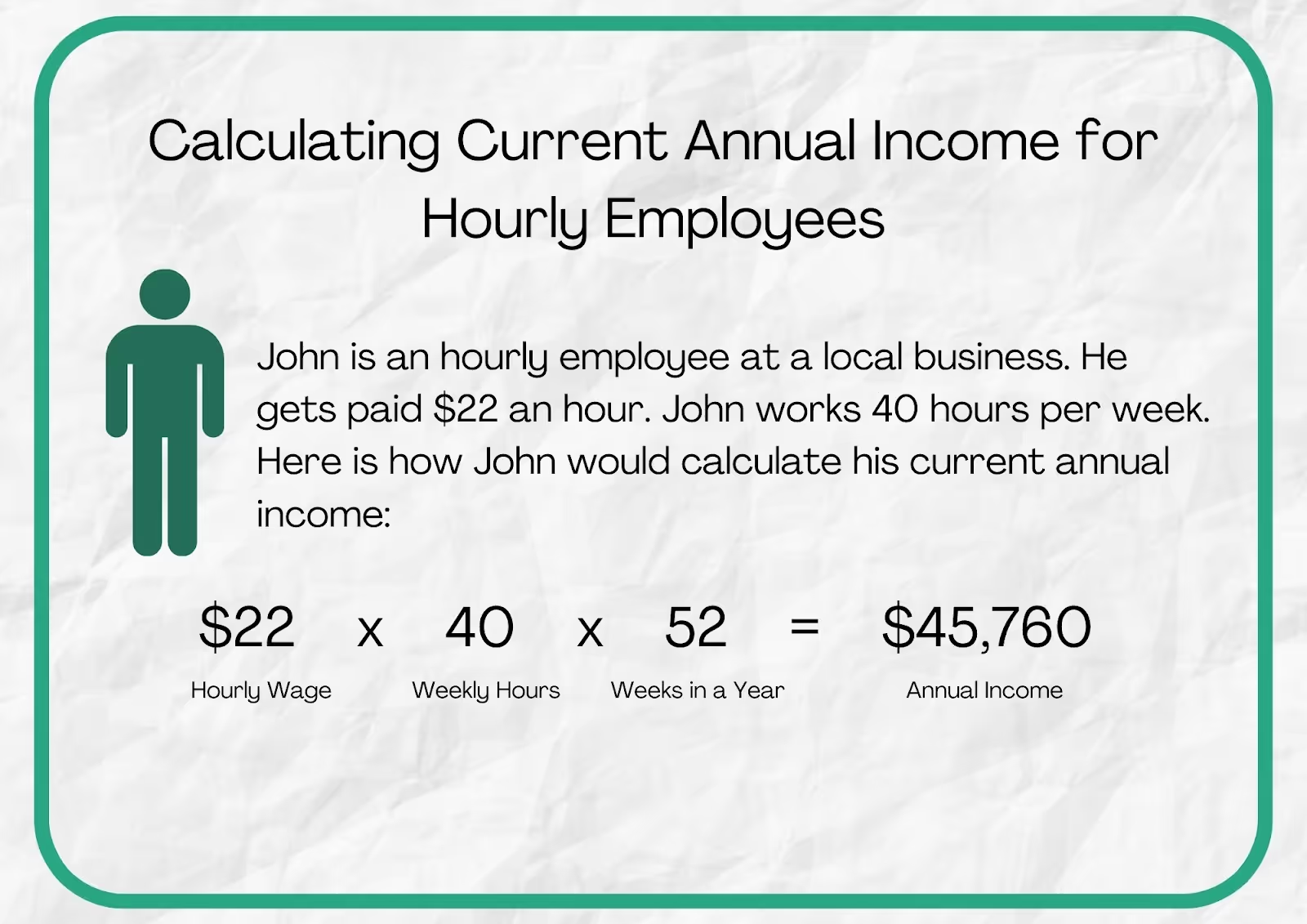
Hourly employees will need to calculate their annual income by multiplying their hourly wage by the average number of hours they work each week. Then, multiply that number by the total number of weeks in a year (52).
Example:
FAQ:
What if I have more than one job?
Sponsors that have more than one job should calculate the current annual income for each job individually and then add them together. The total amount is what the sponsor will enter as their annual income. Please note that you will need to provide an Employment Verification Letter and 6 months of paystubs for each job referenced.
What if I am self-employed?
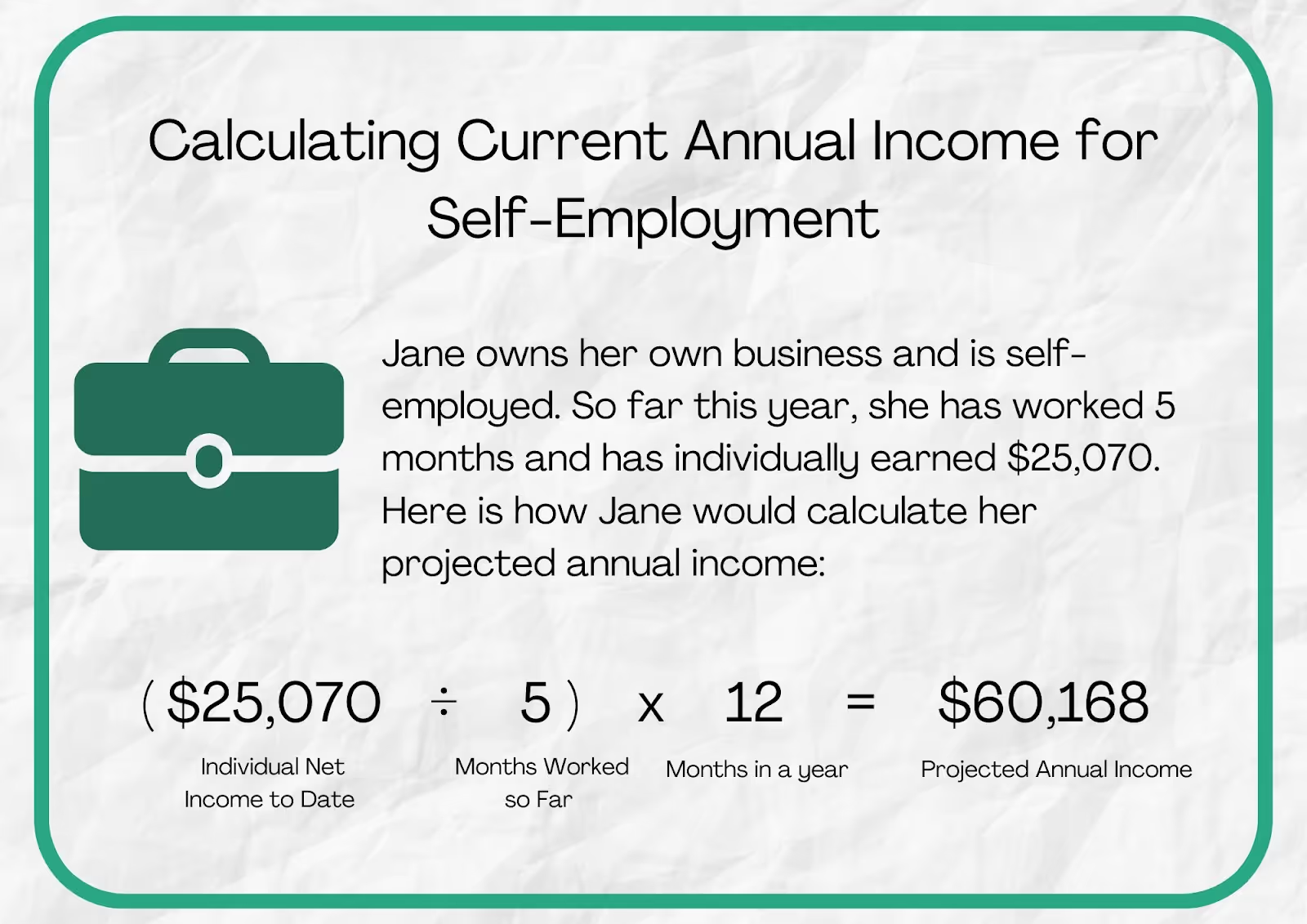
If the individual is self-employed and does not work consistent weekly hours, they can estimate their income by calculating their monthly average using their net individual (not business) income for the year so far divided by the number of months in the year that have passed multiplied by months.
Example:
My employer only included my hourly wages on my employment verification letter, but not my annual salary. What should I do?
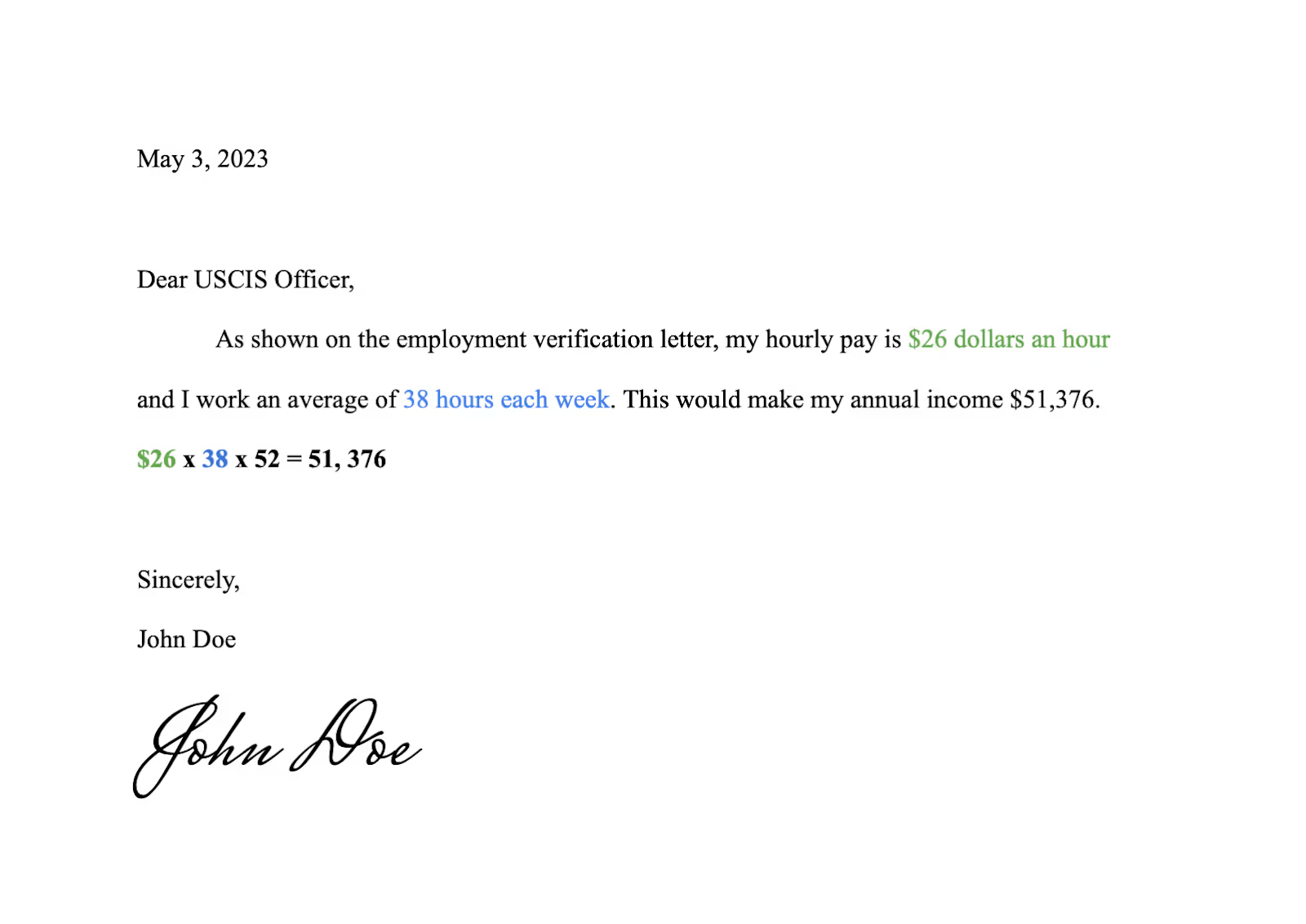
If possible, it is best for your employer to include your annual salary in your employment verification letter. If you are paid hourly, you will want to ask that they include your hourly pay rate and your average hours worked each week. Be sure to add a separate conversion letter that contains the following conversion equation to show USCIS how you calculated your annual income.
Conversion Letter Sample
What is the difference between annual income and total income?
Annual income is the raw income that someone makes before any kind of deductions. Total income (reflected on the 1040 Tax Return and W-2 Form) is the net income that is calculated after all withholdings are accounted for. Please note that when listing your previous tax income history, you will use the total income amount from each tax return. However, for the current annual income, you will want to list your annual income, not your total income.
Letters of Support from Friends and Family
Letters of support are statements by friends and family that help support the validity of the marriage
Frequently Asked Questions
Last Updated: August 4, 2026
What are letters of support and why do I need them?
In marriage-based green card cases, USCIS is looking for evidence of a bona fide marriage. A bona fide marriage is another way of saying a real marriage, entered into in good faith. It is important to prove to USCIS that your marriage is genuine since they are on the look out for fraudulent marriages. Essentially, they want to make sure that an applicant married the petitioner for love and not in pursuit of a marriage-based immigration benefit.
One type of evidence that USCIS allows you to include to help prove that your marriage is legitimate is Letters of Support. Letters of support are statements written by friends and family of the couple that help to demonstrate the validity of the marriage. While letters of support do not replace more concrete evidence such as joint assets or a shared address, they help build up the credibility of the marriage. For that reason, applicants can include some in the Relationship Evidence section of their application to further strengthen their application.
Who can write a letter of support?
A letter of support can be written by anyone who has known the couple from before marriage to present time. The writer should be familiar with the couple’s relationship. Examples of people who could write a letter of support include:
- Family members
- Friends
- Religious leaders
What should be included in letters of support?
The letter is the writer’s opportunity to explain their experiences with the couple. Each letter of support should be unique. However, there are things that each letter should contain, such as::
Examples:
.png)
.png)
FAQs:
How many letters of support should be included?
Though USCIS has not officially stated how many letters of support should be included, our partner attorneys recommend that each case include around 3-5 letters of support. Each letter should be unique in both content and style of writing.
Do the letters need to be notarized?
The letters do not need to be notarized. However, it is helpful to include a statement that swears to the validity of the letter such as, “I swear, under penalty of perjury, that the foregoing is true and correct to the best of my knowledge.”
Does the writer need to be a citizen of the United States?
No, the writer does not have to be a U.S. citizen or even living in the United States.
Does the letter need to be translated into English?
If the letter is in a language other than English, you will need to include a translation of the letter into English along with the original letter. It does not need to be a certified translation, but the translator should include a signed, written personal statement that they are fluent in both languages and that the translation appropriately reflects the document. Here’s an example of what that could look like:
Translation Letter Sample:
Submitting an Expedite Request for the Employment Authorization Document (EAD)
USCIS allows individuals under select circumstances to apply to expedite their EAD.
Frequently Asked Questions
EAD stands for Employment Authorization Document and gives temporary authorization for someone going through the immigration process to work in the United States. An EAD is most often granted by filing Form I-765, Application for Employment Authorization. The processing time for an EAD application can be unpredictable and due to the COVID-19 pandemic, has increased significantly. To look up processing time for the I-765 you can check here.
USCIS understands that there are circumstances in which individuals are not able to wait for an EAD. Because of this, USCIS allows individuals under select circumstances to apply to expedite their EAD. Please note that expediting an EAD is different than expediting a green card application. In addition, if you EAD expedite is denied it does not impact the normal processing time of the EAD or the green card application.
Who qualifies?
USCIS has set certain criteria as to who can apply to expedite their EAD. Cases are considered if they meet one or more of the following criteria:
- Severe financial loss to a company or person, provided that the need for action is not the result of the petitioner or applicant’s failure to timely file the benefit request or timely respond to any requests for additional evidence.
- Emergencies and urgent humanitarian reasons.
- Nonprofit organization whose request is in furtherance of the cultural or social interests of the United States.
- U.S. government interests.
- Clear USCIS error.
Requests are considered on a case-by-case basis and may not be approved even if they fit into one of these categories. For additional information on criteria, please visit the USCIS website.
What do I need to do to make an expedite request?
Before applying for an expedite request, the biometrics appointment must be completed and you must have the receipt number for your pending I-765. When submitting the request, you should have evidence to support your reasoning behind needing an expedite.
How to make an expedite request:
Apply directly through USCIS:
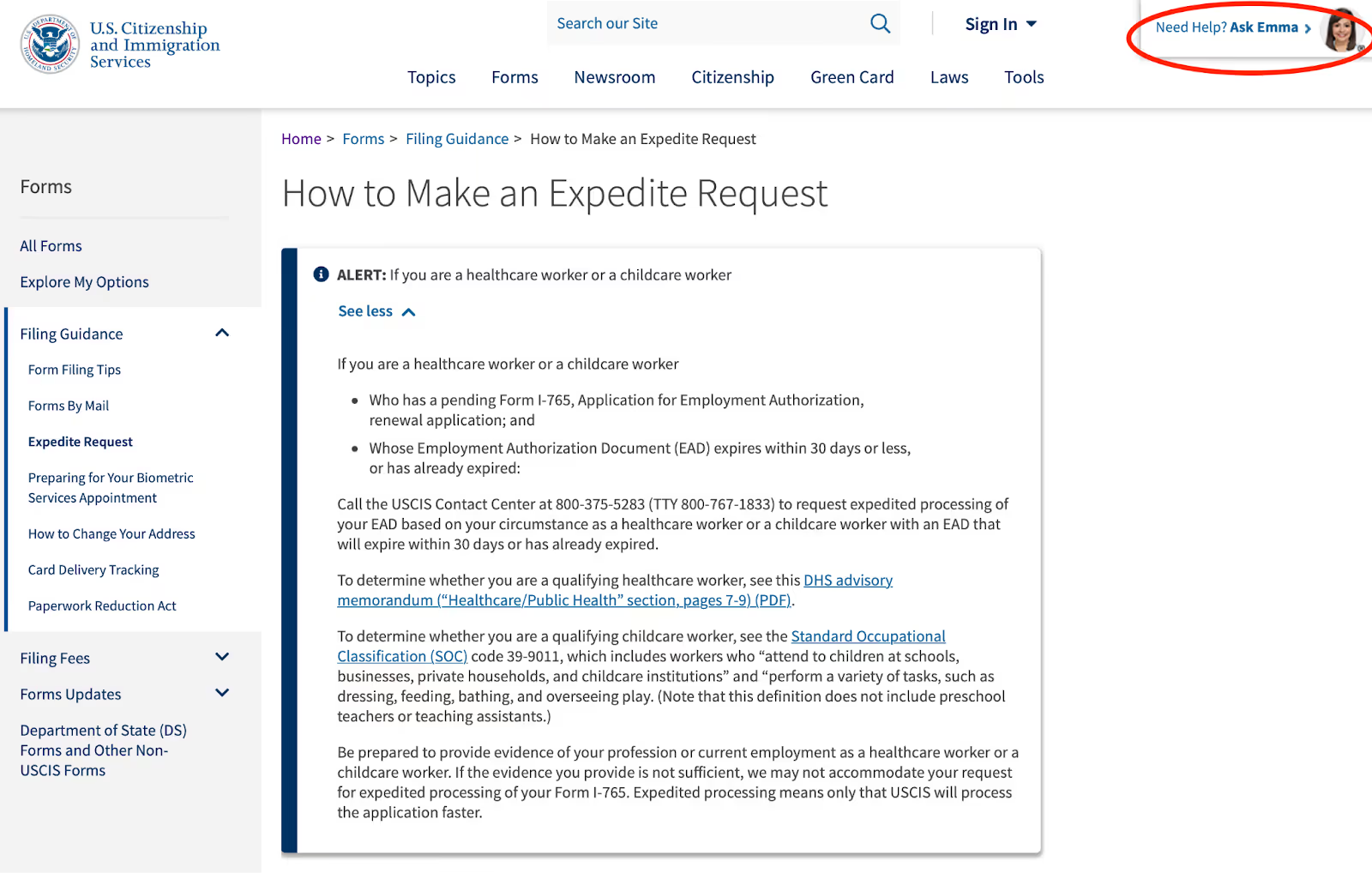
The other option for requesting expedited processing is to contact USCIS directly. You can call the USCIS Contact Center at 800-375-5283 or by going to the USCIS website and messaging Emma who is the USCIS chat bot and can be found by clicking the “Need Help? Ask Emma” box at the top right of the webpage.
USCIS will then send you an email with instructions on how to submit the expedite request for the EAD. Please note that these requests are very rarely granted. However, it can be worth a try if you meet one of the above qualifications.
Working with your congressperson:
One way to try to get your case expedited is to reach out to your member of congress. While representatives do not have the power to make a decision on the case, they can bring the case to the attention of USCIS and advocate for their constituent. To apply for an EAD expedite through a congressperson, you must find your state senator or congressional representative. You can reach out to your congressperson via phone or email. Their office will inform you about the process and what kind of information and evidence they will need. This process is often reserved for individuals with extreme need or who are outside of normal USCIS processes.
Additional Resource:
A helpful resource for those who are trying to expedite their EAD is the Office of the Citizenship and Immigration Services Ombudsman. Please note that this option is typically only available if an applicant's form is outside the normal processing time, so be sure to check the USCIS Processing Times website here to see if this option is right for you.
The Office of the Citizenship and Immigration Services Ombudsman (CIS Ombudsman Office) is part of the Department of Homeland Security and acts a liaison between individuals and USCIS. They cannot process or make a decision on a case, but they can help to guide you through select issues after you have requested expedited processing from USCIS. To request assistance from the Ombudsman, you must fill out a DHS Form 7001, Request for Case Assistance. The request can be sent online, through email, or mail. More information on the process can be found here. Their office will inform you about the process and what kind of information and evidence they will need.
Calculating Current Annual Income- Multiple Jobs in a Calendar Year
Calculating Current Annual Income- Multiple Jobs in a Calendar Year.
Green Card Application
Last Updated: October 5, 2022.
When reviewing your annual income, USCIS will consider not just a sponsor’s current income, but also how long they have been with their current employer and how much they will make throughout the current year. Because of this, if a sponsor has had multiple employers during the current calendar year many people find the most success with USCIS when they report not just their current job’s income, but also their projected income for the calendar year based on both past and current jobs. This projected income should be as accurate as possible and should be supportable with evidence.
Note: When determining annual income, USCIS only considers an individual’s base salary. Overtime, bonuses, stipends, tips, commissions, or other irregular sources of income are not guaranteed to be paid and will not be considered by USCIS.
We know this can be complicated so we are here to help give you examples and guide you through the process.
How to calculate a sponsor’s projected annual income
To calculate their annual income the sponsor will list all jobs they have held throughout the current calendar year and determine what their year-to-date earnings were for each of their jobs. If they have multiple current jobs they can all be added in this list of jobs. Then, they will calculate how much they anticipate earning with their current job from their start date to the end of the year.
Let’s show an example to see what this could look like:
Sarah has had 3 different jobs during the current calendar year.
Job #1: Sarah was at this job from January - April: Her last pay stub showed a year to date income of $7,040.
Job #2: Sarah was at this job from June - August: Her last pay stub showed a year to date income of $5,600.
Job #3 (Current): Sarah started this job in September. She makes $15 an hour and works an average of 15 hours a week. From the time Sarah started her job to the end of the year there are 17 weeks in the year. Sarah can calculate her projected income at this job by multiplying her weekly average earnings ($15 x 15 hours = $225 weekly) by the 17 weeks she will work at this job in the year. This makes her project income $3,825.
To calculate annual income Sarah will then add those job positions together to calculate her current annual income.
$7,040 + $5,600 + $3,825 = $16,465
Sample Projection Letter
Here is a sample projection letter that can be used to clearly map out this income for USCIS so they can see how this income was calculated. At the bottom of this article there are links to PDF and a Docx versions of this template letter.
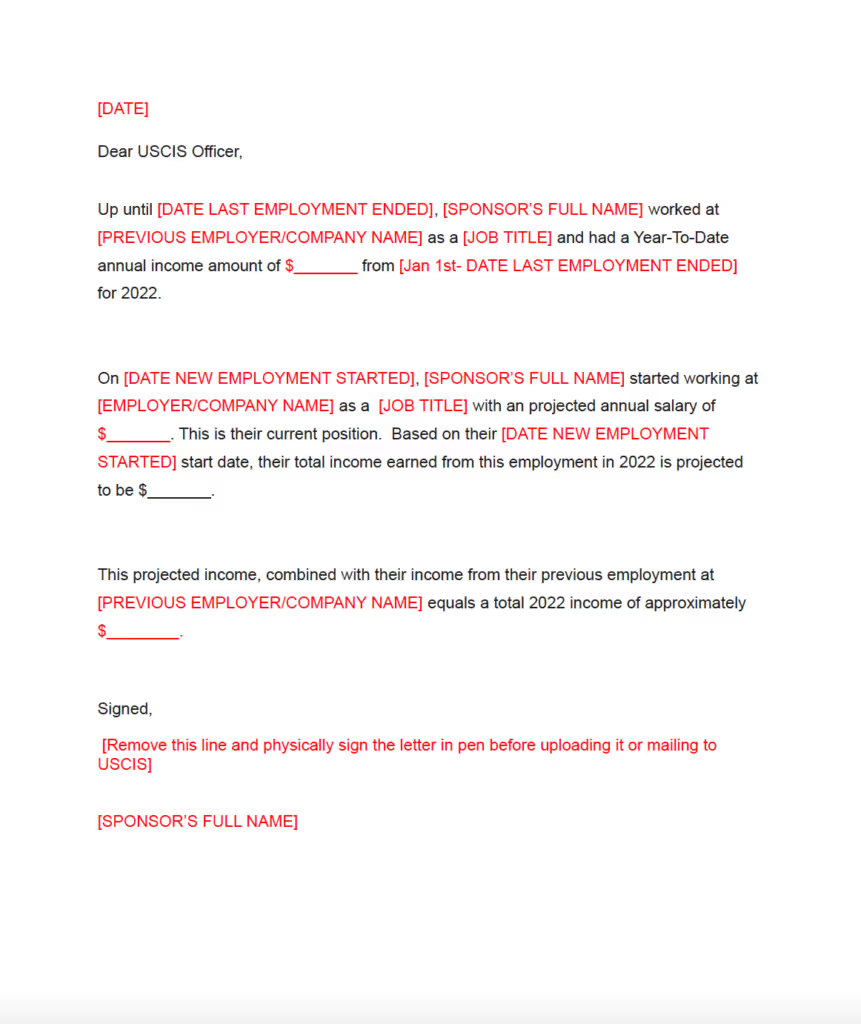
In addition to creating a letter that projects their income following the above sample, the sponsor can also add proof of income for all jobs added from the year.
Documentation
USCIS wants to see proof of the reported annual income. Here is what our partner attorneys recommend:
- Last 6 months of pay stubs. If the sponsor has changed jobs during that time it is recommended to add all pay stubs from that time period, even if from a previous employer.
- Final 2 pay stubs from any previous employers the sponsor has had in the calendar year. This is so USCIS can see their YTD earnings from those jobs and verify the annual income.
- Employer Letter from the sponsor's employer on company letterhead. It should state their title, start date, and annual salary. If they are paid hourly it is recommended that they report hourly rate, average weekly hours worked, and what that makes the sponsor's annual income. Many companies have automated processes for generating these letters. Often they can consult with their Human Resources Department to get that letter issued.
- If they have had multiple jobs, include a projected income statement following the template discussed above.
Interpreters at Your Interview
Understanding some of the basics for bringing an interpreter to USCIS interviews.
General Immigration Information
An applicant (also referred to as a "beneficiary") may not be fluent in English and may require the use of an interpreter at the adjustment interview.
At the adjustment interview, the interpreter should:
- Present their valid government-issued identity document
- Complete an interpreter’s oath and privacy release statement
- Translate what the officer and the applicant say word-for-word to the best of their ability without adding the interpreter’s own opinion, commentary, or answer
In general, a disinterested party should be used as the interpreter.
The USCIS officer conducting the interview may exercise discretion, however, to allow a friend or relative of the applicant to act as interpreter. If the officer is fluent in the applicant’s preferred language, the officer may conduct the examination in that language without use of an interpreter.
USCIS reserves the right to disqualify an interpreter provided by the applicant if the officer believes the integrity of the examination is compromised by the interpreter’s participation or the officer determines the interpreter is not competent to translate.
Translating Your Immigration Documents into English
Information about translations, certified and self-translated.
General Immigration Information
USCIS applications often require that the applicant submit documentation to support and verify information in their application. All documents submitted as part of an application must be in English, or, if in another language, translated into English.
The Code of Federal Regulations (8 CFR 103.2(b)(3)) states that any document containing a language other than English must include a full English translation by a certified translator. The translator must certify that the translation is complete and accurate, and that they are competent to translate from the foreign language into English.
Does this mean you need to hire a professional translator, or pay for a third-party translation service online? Not necessarily! The information below outlines which documents need to be translated and who can translate them, as well as explains the translation services offered by SimpleCitizen at no extra cost to customers.
Examples of documents that often require translation include:
- Birth certificates
- Death certificates
- Marriage certificates
- Divorce decrees
- Relationship Evidence
- Adoption certificates
- Military documents
- Police records
- Court dispositions
- Other evidence
Who can translate a document?
USCIS requires that your documents be translated by an individual or organization that is competent in both English and the language in which the document is written.
Some documents, like official government-issued documents required to be included with an application (e.g., birth certificates, marriage certificates, etc.), must include an official, certified translation. A company commonly used by SimpleCitizen customers is RushTranslate. However, feel free to shop around to find the certified translation service that best meets your needs, timeline, and budget.
Other documents, like relationship evidence (hand-written cards, text messages, social media posts, etc.) can be self-translated. This means that the beneficiary or the petitioner of an application may translate a document into English, as long as they include a signed certificate of translation as described below.
Certified self-translation letter requirements and template:
For self-translations, the person translating the document must certify that:
- They are fluent in both languages
- The translation is complete and accurate.
This can be done through a separate letter attached to the translation. This letter must include the translator’s full name, physical mailing address, signature, and the date the translator wrote the letter. It is recommended that this letter is typed, and not handwritten.
Applicants who need to translate their own documents (i.e, relationship evidence like text messages, cards from friends/family, travel itineraries, etc.) will need to certify that they are fluent in both English and the language the document is written in. Below is an example template of a certified translation letter. This letter can be included with the translation in order for the translator to certify that they are competent to translate the foreign language in the document to English.
Translation Certification Template
I, [translator’s name], certify that I am fluent (conversant) in English and [foreign language], and that the attached translation is an accurate translation of the attached document entitled [name of document].
[Translator’s Signature][Translator’s Typed Name][Date][Address]
Does SimpleCitizen offer translation services?
SimpleCitizen packages include translations of all official, government-issued documents required for your application (birth certificates, marriage certificates, final divorce decrees, police records, etc.) by an authorized translation service with an official certificate of translation. This service is offered with your application package at no additional cost!
Are there any document types that SimpleCitizen cannot translate?
SimpleCitizen’s translation service is able to translate official, government-issued documents that are required for your application. However, our translation service cannot translate relationship evidence (hand-written cards, text messages, social media posts, etc.) Please see the “Who can translate a document?” section above for information about how to self-translate relationship evidence documents!
Due to HIPAA regulation, SimpleCitizen is also unable to translate vaccination records and other medical documents for the Form I-693 (Report of Medical Examination and Vaccination Record). However, if your vaccination records are not in English, please note that they will need a certified, official translation in order to submit them for the medical exam. Reputable online translation services like RushTranslate are great resources for translating your vaccination records!
We’re happy you’re here!
Simple Citizen is here to help you achieve the American dream. Safely and accurately apply, submit, & stay on top of your immigration status, from your visa to your naturalization.
Click here to learn more about what we do, our application assistance timeline, and what customers say about SimpleCitizen’s services.
Click here to start your application.
Do you have a question about SimpleCitizen’s application packages? Let’s chat!
Changing Your Name: A Guide for Marriage-Based Green Cards and Citizenship
A guide to marriage-based name changes
Citizenship Application
Last Updated: March 13, 2025.
Overview
If you recently married a U.S. Citizen or U.S. green card holder, chances are you are considering whether or not you should change your name, and how to do so. While changing your name can be a tedious task, doing so through the USCIS is quite simple--it just takes a little time. If your name has been legally changed, it should be updated with USCIS immediately in order to comply with USCIS requirements. Make sure that if you do decide to change your name, you add changing it with USCIS to your to-do list. It is very important that your green card or naturalization documentation correctly reflect your legal name.
Some individuals may need to change their name for other reasons such as name misspelling, originally using a fictitious name, clerical error, etc. For more information on these types of cases, see the USCIS guide here.
Step 1: Determine if Changing Your Name is Right for You
Whether or not you or your spouse change your last name following marriage is a personal decision. While conventional, changing your last name to match that of your spouse is not required in the United States. In fact, there are a number of name-changing variations that are starting to become increasingly popular, such as using a hyphenated last name that includes the surname of both you and your spouse.
Regardless of how you choose to change your name, doing so presents a number of benefits and challenges. Here is a brief summary of some of the pros and cons associated with changing your name:
Pros
- Proving that you are married can be much easier when traveling
- Can offer additional ease when children are involved
- Easier to prove that you are married when one of you is admitted to a hospital
Cons
- Time Consuming
- Can be difficult for working professionals who have built a career using their previous name
- Can take a long time for replacement immigration documentation to arrive
- Replacing documentation can be expensive
Step 2: When to Change Your Name
The answer to when you should change your name following marriage varies from person to person. While many recommend waiting to change your name until you apply for Citizenship/Naturalization, name changes can be done earlier in the immigration process. For example, name changes can happen when initially filing for your marriage-based green card. Additionally, those who decide to change their name after they have already been granted their green card or Citizenship (Form N-400), can file to have their name changed by filing for a card replacement. This is done using either Form I-90 (Application to Replace Permanent Residence Card) or Form N-565 (Application for Replacement of Naturalization/Citizenship Document), depending on which step the application is in in the immigration process. However, something to consider is that it can be quite expensive to get a replacement card with it costing up to $540 to replace a green card and up to $555 to replace a naturalization certificate.
So all things considered, there is no single time during the immigration process that an immigrant is supposed to change their name. Rather, there are multiple times when changing one’s name is possible. When deciding which time would work best, there are a number of things you should consider such as timing, and cost. The details of the potential “times” or ways you can change your name are detailed in the section below.
Remember that regardless of what stage in the immigration process you are in, your immigration documentation should reflect your legal name. For that reason, you should avoid changing your legal name until you are prepared to change it on your immigration documentation as well, and vice versa.
Step 3: Change your Name
First, an individual’s name must be legally changed under applicable state law. The legal process and the required fees for changing your name will differ slightly depending on the state you are living in, so make sure you are familiar with your specific state’s requirements. After legally making this change under state law, you are then eligible to apply for a green card or naturalization under your new legal name, or apply to replace your old green card or old naturalization certificate.
Note that when submitting evidence of a legal name change, a photocopy of your name change document is not sufficient. The document you submit must be officially registered with the proper civil authority. You will need to request a registered copy of your name change document if you do not already have one. This should be in addition to the original registered copy you keep for your personal records.
Changing Your Name While Filing For Your Green Card
When filing for a marriage-based green card, you are able to change your name simultaneously, as long as you have sufficient proof of your marriage. To do this, you would simply need to file under your new married name and include your previous maiden name in the section designated for “previous names ”. This means you will list your new married name as your legal name on all the forms you fill out. Remember to be consistent as any inconsistencies can increase the likelihood of your application being delayed or rejected. You will also need to include a copy of your marriage certificate with your application as evidence of your union. Because you are originally filing for Permanent Residency with your new name, no additional costs are incurred with this option, apart from any filing fees associated with your state’s name changing process.
Changing Your Name After Being Granted a Green Card
Many applicants do not change their name before applying for permanent residency. If they wish to change their name after applying, they can do so by filling out Form I-90, Application to Replace Permanent Resident Card. It can be used for a number of purposes, including changing the name on a current green card.
Lawful Permanent Residents (green card holders) who change their name due to marriage (or because of other circumstances) are able to travel using their original U.S. green card in their prior name as long as they bring proof of their name progression. Proof could include a marriage certificate, or other court documents showing a legal name change.
Form I-90, Application to Replace Permanent Residence Card
Specific Instructions:
For item numbers 3.a. - 3.c. provide your full legal name in the spaces provided. If formally legalized by your state, this would be your new married name.
Item number 4 on the form provides a space where you can indicate that your name has legally changed since the issuance of your green card/ Permanent Resident Card. Select the appropriate box (“Yes”), and then continue to Item Numbers 5.a. - 5.c.
For Item Numbers 5.a. - 5.c., you should provide your name exactly as it is printed on your Permanent Resident Card (green card), even if it has changed since that card was issued. This means that assuming you used your maiden name on your original green card, you would list that maiden name in this section.
Don’t forget to include all the required documentation and filing fees with your application.
Cost: Unlike some of the other options, changing the name on your green card has some associated filing fees. These include a filing fee of $455 and a biometrics fee of $85, for a total filing cost of $540.
Required Information and Documents
- Legal Name
- Date of Birth
- Mailing Address
- Copy of your current green card
- Filing fee
- Name exactly as it appears on your Permanent Resident Card (green card)
- Registered copy of Marriage certificate and/or other court-issued document showing that your name was legally changed
- Legal name change documents must have been registered with the proper civil authority.
Submitting: Can be submitted online or by mail to the USCIS. For more information on how to file and submit Form I-90, see the USCIS website here
Status Updates: Once you fill out your Form I-90 you will be able to access your online account. If you file online, you will create an online account yourself. However, if you file on paper, USCIS will scan the documents online and create your online account for you. After USCIS creates your online account they will send you instructions on how you can access your USCIS online account and see status updates.
Wait Time: Currently, the average estimated wait time for Form I-90 to be processed is approximately 6 -11 months.
More Information: If your request for a name change is approved, you will be sent a new green card. However, if USCIS wants more information from you, you may need to go to a USCIS office for an interview or provide additional documentation.
Changing your Name When Filing for Citizenship/Naturalization
Any green card holder that qualifies for U.S. Citizenship is able to legally change their name to any name they wish, assuming it meets a few specific requirements. If that Legal Permanent Resident (green card holder) wishes to wait 3 or 5 years until they qualify for U.S. Citizenship, they can change their name when they apply for U.S. Citizenship. Doing so concurrently with their N-400 application does not incur any additional costs, allows them to apply for a United States passport with their new married name on it, and will result in their married name appearing on their Naturalization Certificate as well.
Form N-400, Application for Naturalization
Instructions: Part 2, Question 3 of the form is specifically meant for you to change your name
The name-change service is only available at USCIS offices that offer swearing-in (oath) ceremonies in a courtroom, presided over by a judge. Only a judge has the authority to grant your name change at the swearing-in ceremony, a USCIS officer does not. Additionally, not all offices offer this service. Some regions only have ceremonies presided over by a judge a few times per year. If you live in these regions, it will likely result in your Citizenship application taking longer than others.
Occasionally the swearing-in-ceremonies are held at a USCIS office--sometimes right after the naturalization interview. When the ceremony occurs after the naturalization interview, the request for a name change on Form N-400 cannot be acted upon. In this case, the applicant would need to follow the name-change procedures specific to their state’s law and apply for a name change after their Naturalization/Citizenship has been granted. The instructions for this process are detailed below.
Changing your Name After Citizenship has Been Granted
If you decide to change your name after your Citizenship/ Naturalization Certificate has already been granted, there is a way to do that too! However, it does require the payment of an application fee as well as any other costs associated with changing your name on your U.S. passport, and any other official documents. To request a name change on your U.S. Naturalization Certificate you simply fill out and submit Form N-565, Application for Replacement Naturalization/Citizenship Document.
N-565, Application for Replacement Naturalization/Citizenship Document
Instructions: Anyone applying for a new document due to a name change will be required to fill out Part 5 on the form. You must also include your original document, as well as a copy of your marriage certificate and a copy of evidence that your name has legally been changed to the new married name.
Required Information and Documentation:
- 2 identical passport-style photographs
- Your original document or certificate (note that a copy of this document is not acceptable since you are applying for a name change. You must submit the original).
- Evidence of marital status change (copy of marriage certificate)
- Evidence of legal name change
Wait Times: Currently, the average national wait time for Form N-565 acceptance is 6-8 months. You can stay up-to-date on the USCIS processing times by checking the USCIS website here.
More Information: For more information on how to file and submit Form N-565, see the USCIS website here
Conclusion
In conclusion, changing your name is a long, tedious, often expensive process! Changing your name through USCIS is just one of the many steps that need to be taken. Remember not to change your name legally until you are ready to change it on your immigration documentation so that you can align with USCIS regulations.
If you are applying for your green card or citizenship soon, SimpleCitizen can help! Find out how to get the help of the professionals at a fraction of the cost here.
Additional Resources
What Happens After Filing Form I-90
Cómo obtener las vacunas requeridas o solicitar una exención
Cómo obtener las vacunas requeridas o solicitar una exención
En Español
Como ya sabrá, solicitar la inmigración a los Estados Unidos requiere un examen médico con un médico certificado por USCIS. Para obtener más información sobre este examen médico y el Formulario I-693, Informe de examen médico y registro de vacunación, lea nuestro artículo aquí. Sirve como precursor de este artículo.
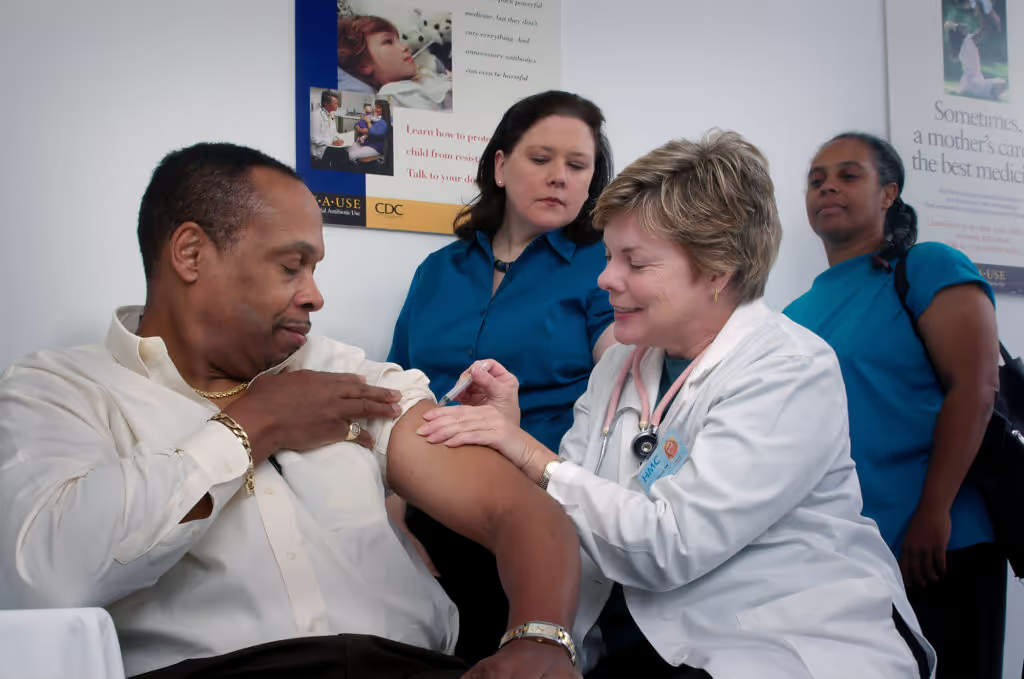
Parte del examen médico requiere que los médicos verifiquen que está al día con todas las vacunas designadas como obligatorias por USCIS y El CDC. Este artículo encontrará información sobre los requisitos básicos de vacunación para aquellos que esperan inmigrar a los Estados Unidos y describe las acciones necesarias para optar por no cumplir con estos requisitos. Para obtener más información sobre los requisitos de vacunación, consulte algunas de las preguntas frecuentes en el sitio web de USCIS.
Información General
¿Qué vacunas se requieren?
Según la ley de inmigración de los Estados Unidos, todos los inmigrantes, incluidos aquellos que buscan el estatus de residente permanente, deben recibir vacunas para prevenir las siguientes enfermedades:
- Haemophilus influenzae tipo B
- Hepatitis B
- Sarampión
- Paperas
- Tos ferina
- Polio
- Rubéola
- Toxoides tetánicos y diftérico
- Cualquier otra enfermedad prevenible por vacunación recomendada por el Comité Asesor de Prácticas de Inmunización.
- Influenza
- Rotavirus
- Hepatitis A
- Enfermedad meningocócica
- Varicela
- Enfermedad neumocócica
El requisito de vacunación contra la influenza es único en el sentido de que solo se requiere durante la temporada de influenza, ya que es específico de la cepa y solo está disponible por un tiempo limitado cada año. A los efectos del Formulario I-693, se considera que la temporada de gripe es del 1 de Octubre al 31 de Marzo. Si se aplica durante este período, se requiere la vacunación contra la influenza. Esta es una vacuna diferente a la vacuna Covid-19 que se requiere a partir del 1 de Octubre de 2021.
A partir del 1 de octubre de 2021, los solicitantes sujetos al examen médico de inmigración deben estar completamente vacunados contra COVID-19 antes de que el cirujano civil pueda completar un examen médico de inmigración y firmar Formulario I-693, Informe de examen médico y registro de vacunación.
Prepárate para tu cita
Debe traer los siguientes artículos:
- Registro oficial de vacunación o inmunizaciones.
- Formulario I-693, Informe de examen médico y registro de vacunación. Imprima y traiga el formulario a su cita. Complete la Parte 1 del formulario, pero no lo firme hasta que el cirujano civil se lo indique.
- Identificación emitida por el gobierno, un pasaporte válido o una licencia de conducir.
- Tarjeta de seguro médico. Consulte con el consultorio del médico para ver si aceptan su plan médico.
- Pago. Consulte con el consultorio del médico sobre las formas de pago aceptables.
Recuerde llevar su historial de vacunación actualizado a su cita.
Si perdió o extravió su historial de vacunación, comuníquese con su médico o clínica de salud pública para ver si tienen una copia. También puede comunicarse con el departamento de salud de su estado si vive en los Estados Unidos para ver si mantienen registros de vacunación. Para los niños, consulte con las escuelas o guarderías anteriores, ya que es posible que también tengan una copia.
Evaluación de vacunación
Durante su cita, el cirujano civil o el médico del panel revisará su historial de vacunación con usted para determinar si ha recibido o no todas las vacunas requeridas. Por eso es tan importante recordar llevar un registro oficial de su historial de vacunación a su cita. Los resultados de esta evaluación se registrarán en su Formulario I-693.
Si está al día con las vacunas requeridas, no se requerirán vacunas adicionales en el momento del examen médico.
Si no tiene las vacunas requeridas
Si no está al día con todas las vacunas requeridas, no se preocupe! El cirujano civil o el médico del panel a menudo pueden proporcionarlos y pueden ayudarlo a determinar cuáles son adecuados para usted. También tiene la opción de pedirle a su médico de familia que le administre las vacunas necesarias después de su evaluación. Si elige la última opción, deberá mostrar los registros de estas vacunas al cirujano civil o al médico del panel para que los anote en el Formulario I-693 para completar el formulario antes de enviarlo a USCIS.
Además, algunas de las series de vacunas requeridas tardan meses o años en completarse. Esto puede dificultar que los solicitantes reciban todas las vacunas requeridas antes del ajuste de estatus o inmigración. Para muchos de estos, USCIS solo requiere que tenga al menos una dosis de cada vacuna apropiada para la edad listada como obligatoria.
Hable con su médico antes de vacunarse
Es posible que algunas personas no puedan vacunarse o que deban esperar.
El día de su cita, informe a su médico si:
- Tiene alguna alergia
- Ha tenido efectos secundarios graves a causa de una vacuna en el pasado.
- Está embarazada o planea quedar embarazada
- Están enfermos
Costos de vacunación
USCIS no cobra una tarifa de presentación del Formulario I-693, las tarifas del examen médico las fija y cobra el médico que administra la prueba. Por lo general, estas tarifas de examen cuestan entre $ 100 y $ 500. Hable a varios sitios para encontrar el mejor precio. Además de la tarifa del examen, también deberá pagar las vacunas adicionales necesarias para cumplir con los requisitos de USCIS y CDC.
Como era de esperar, los costos de estas vacunas dependerán en gran medida de cuántas y qué vacunas necesite. También dependerá del país en el que esté vacunado, la clínica a la que asista y el tipo de seguro médico que tenga. Puede esperar pagar entre $ 25 y $ 150 por cada vacuna antes de que se considere el seguro. Las clínicas suelen enumerar las vacunas que llevan y cuanto cobran, así que siéntase libre de comparar precios para encontrar el mejor precio.
Exenciones de vacunación
Hay una variedad de razones por las cuales alguien puede no tener o no querer recibir ciertas vacunas.
Las personas pueden quedar exentas de los requisitos de vacunación por motivos como la edad, la salud, el embarazo, así como por sus convicciones morales y religiosas. Para encontrar una lista más detallada de posibles exenciones, consulte esta lista del USCIS.
Exención general: exenciones "No apropiadas desde el punto de vista médico"
Algunas personas califican para algo llamado una exención "No médicamente apropiada", a menudo referida como una exención general. Según el sitio web de USCIS, esto se aplica a:
- Vacunas que no sería seguro recibir debido a una condición médica como embarazo, alergias o una mala reacción previa a esa vacuna.
- Vacunas que no se requieren según la edad del solicitante en el momento del examen médico.
- Vacunas que se administran en serie en intervalos, pero no hay tiempo suficiente para completar toda la serie en el momento del examen médico. (A menudo se requiere que el individuo tenga al menos la primera ronda de la serie)
- La vacuna contra la influenza si no es temporada de influenza. Como se mencionó anteriormente, la vacuna contra la influenza es diferente de la vacuna Covid-19.
Si cumple con uno o más de estos criterios, el cirujano civil o el médico del panel lo indicarán en el Formulario I-693 y USCIS podrá entonces renunciar a ese requisito.
No se requiere una solicitud de exención por separado para estas exenciones específicas. En otras palabras, no se necesita ningún formulario adicional para que un oficial otorgue una exención general para el requisito de vacunación.
Para obtener más información sobre los requisitos de vacunación para mujeres embarazadas, consulte la página "Pautas para vacunar a mujeres embarazadas" de los CDC. Para obtener información más detallada sobre las vacunas específicas por edad, consulte la información de los CDC sobre los requisitos de edad.
Exenciones morales o religiosas
Para las exenciones que no cumplen con los criterios de "No médicamente apropiado", una persona debe presentar una solicitud de exención por separado. Esto se aplica específicamente a aquellos que se oponen a las vacunas requeridas debido a convicciones morales o creencias religiosas sinceras. La exención requerida es el Formulario I-690, Exención de motivos de inadmisibilidad. Si planea solicitar esta exención, informe a su cirujano civil o médico del panel.
Tenga en cuenta que los I-690 tienen una tasa de rechazo más alta. Si se niega, USCIS le pedirá que complete el examen médico, lo que podría retrasar la aprobación de su caso.
Formulario I-690, Renuncia de motivos de inadmisibilidad
Qué es?
Este formulario se utiliza para solicitar una exención de inadmisibilidad. Los solicitantes pueden utilizarlo por varias razones, incluida la exención de los requisitos de vacunación. Esta exención del requisito de vacunación es específica para aquellos que desean quedar exentos debido a convicciones morales o creencias religiosas. Para obtener información adicional sobre este formulario y sus posibles usos, consulte esta página web de USCIS. Este enlace también le brinda acceso a la versión PDF del formulario I-690.
Costo
A partir de Septiembre de 2021, la tarifa de presentación de este formulario de exención fue de $ 715.00 usd.
Requisitos de exención para exenciones de vacunación
USCIS, en consulta con los CDC, ha establecido los siguientes requisitos que un solicitante debe demostrar a través de evidencia documental para calificar para esta exención:
- El solicitante debe oponerse a todas las vacunas en cualquier forma. No pueden elegir qué vacunas quieren. Sin embargo, es importante tener en cuenta que tener algunas vacunas pero no otras no implica automáticamente la denegación de la exención. El oficial debe considerar las razones proporcionadas para recibir ciertas vacunas y no otras, como si las convicciones morales o creencias religiosas de la persona han cambiado sustancialmente desde la fecha en que se administraron las vacunas.
- La objeción debe basarse en creencias religiosas o convicciones morales.
- La creencia religiosa o convicción moral debe ser sincera. El enfoque de la adjudicación de la exención se basará en gran medida en si puede demostrar o no que la creencia religiosa o la convicción moral se aplica de manera consistente en su vida. Esta estricta adherencia se considera distinta de la mera preferencia.
Evidencia
La evidencia de estas creencias religiosas o convicciones morales se puede establecer de dos formas principales:
- Mediante declaración jurada del solicitante
- Mediante evidencia adicional que sustente esa declaración jurada
El requisito mínimo es que incluya una declaración personal que describa las razones detrás de su objeción. Asegúrese de incluir suficiente información en su declaración para demostrar adecuadamente que cumple con los tres criterios enumerados anteriormente.
Un ejemplo de evidencia de apoyo sería proporcionar evidencia de participación regular en una congregación mediante la presentación de declaraciones juradas de miembros de la congregación o evidencia de trabajo voluntario regular.
Cómo presentar el formulario I-690
Cuando presente este formulario, debe presentar todas las pruebas y la documentación de respaldo requeridas. También deberá incluir la tarifa de presentación de $ 715.
Completar en una computadora
Descarga y visualiza en un visor de PDF.
Imprima y complete el formulario en papel
Imprime el PDF y rellénalo a mano con bolígrafo negro.
Contratar a un profesional legal
Busque un profesional legal para completar el formulario.
¿Tiene preguntas sobre los requisitos y exenciones de vacunación?
Para obtener información adicional sobre su examen médico y el formulario I-693, consulte nuestro artículo Cómo completar un examen médico.
Si necesita ayuda o tiene preguntas sobre los requisitos de vacunación, las exenciones o el Formulario I-690, comuníquese con nuestro equipo y nos comunicaremos con usted a la brevedad.