
Search Results

How to get the required vaccinations or file for an exemption
This article provides information about the basic vaccination requirements for immigrating to the US.
Frequently Asked Questions
As you may already know, applying to immigrate to the United States requires a medical examination with a USCIS certified doctor. To learn more about this medical examination and it’s Form I-693, Report of Medical Examination and Vaccination Record, read our article here. It serves as a precursor to this article.
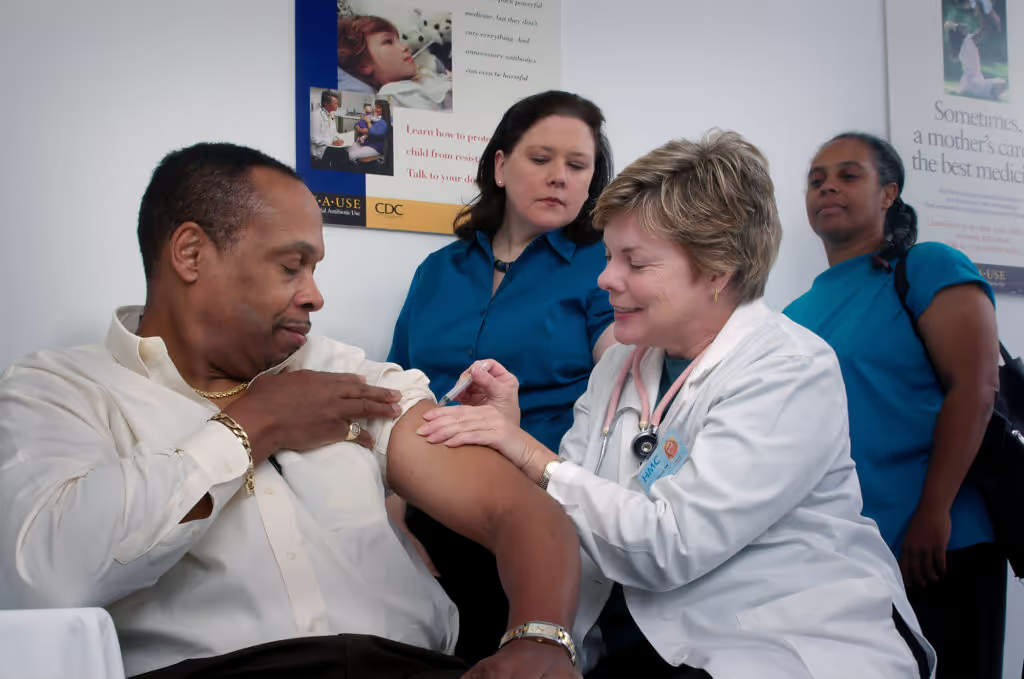
Part of the medical examination requires doctors to check that you are up-to-date on all vaccinations designated as mandatory by USCIS and CDC. This article provides information about the basic vaccination requirements for those hoping to immigrate to the United States as well as describes what actions are required to opt-out of these requirements. For further information on vaccination requirements, check out some of the FAQ’s on the USCIS website.
Overview
Which vaccinations are required?
Under US immigration law, all immigrants, including those seeking permanent resident status, are required to receive vaccinations to prevent the following diseases:
- Haemophilus influenza type B
- Hepatitis B
- Measles
- Mumps
- Pertussis
- Polio
- Rubella
- Tetanus and Diphtheria Toxoids
- Any other vaccine-preventable diseases recommended by the Advisory Committee for Immunization Practices
- Influenza
- Rotavirus
- Hepatitis A
- Meningococcal disease
- Varicella
- Pneumococcal disease
The influenza vaccination requirement is unique in that it is only required during the flu season since it is strain-specific and only available for a limited time each year. For the purposes of the Form I-693, the flu season is considered to be from October 1st - March 31st. If applying during this window, the influenza vaccination is required.
Effective Jan 22, 2025, applicants subject to the immigration medical examination no longer need to be vaccinated against COVID-19 before the civil surgeon can complete an immigration medical examination and sign Form I-693, Report of Medical Examination and Vaccination Record.
Going to your appointment
You should bring the following items with you:
- Official vaccination or immunization record.
- Form I-693, Report of Medical Examination and Vaccination Record. Print out and bring the form to your appointment. Fill out Part 1 of the form but do not sign it until the civil surgeon tells you to do so.
- Government-issued I.D., such as a valid passport or driver’s license.
- Medical insurance card. Check with the doctor’s office to see if they accept your medical plan.
- Payment. Check with the doctor’s office about acceptable forms of payment
Remember to bring your up-to-date vaccination history with you to your appointment.
If you have lost or misplaced your vaccination history, contact your doctor or public health clinic to see if they have a copy. You can also contact your state’s health department if you are living in the United States to see if they keep vaccination records. For children, check with previous schools or daycares as they may have a copy as well.
Vaccination Assessment
During your appointment, the civil surgeon or panel physician will review your vaccination history with you to determine whether or not you have received all of the required vaccinations. This is why it is so important to remember to bring an official record of your vaccination history with you to your appointment. The results of this evaluation will be recorded on your Form I-693.
If you are up to date on the required vaccines, no additional vaccines will be required at the time of the medical exam.
If you do not have the required vaccinations
If you are not up-to-date on all of the required vaccinations, don't worry! The civil surgeon or panel physician can often provide them and can help you determine which ones are appropriate for you. You also have the option to ask your family doctor to administer the required vaccines to you after your evaluation. If you choose the latter option, you will need to show the records of these vaccinations to the civil surgeon or panel physician to note on Form I-693 in order to complete the form prior to submitting it to USCIS.
Additionally, some of the required vaccine series require months to years to complete. This can make it difficult for applicants to receive all required vaccinations prior to adjustment of status or immigration. For many of these USCIS only requires that you have at least one dose of each age-appropriate vaccination listed as mandatory.
Talk to your doctor before you get vaccinated
Some people may not be able to get vaccinated — or may need to wait.
The day of your appointment, tell your doctor if you:
- Have any allergies
- Have had serious side effects from a vaccine in the past
- Are pregnant or planning to get pregnant
- Are sick
Vaccination Costs
While USCIS does not charge a filing fee for Form I-693, fees for the medical examination are set and charged by the doctor administering the test. Usually these examination fees range from $100 to $500. You can shop around to find the best price. In addition to the examination fee, you will also need to pay for any additional vaccinations needed to meet USCIS requirements.
As can be expected, the costs of these vaccinations will depend largely on how many and which vaccinations you need. It will also depend on the country in which you are getting vaccinated, the clinic you are attending, and what type of health-insurance you have. You can expect to pay anywhere from $25-$150 for each vaccination before insurance is factored in. Clinics often list which vaccinations they carry and how much they charge, so feel free to shop around for the best price!
Vaccination Exemptions
There are a wide variety of reasons why someone may not have or may not wish to receive certain vaccinations.
Individuals can be exempted from immunization requirements for reasons such as age, health, pregnancy, as well as their moral convictions and religious beliefs. To find a more detailed list of potential exemptions, check out this list from the USCIS.
Blanket Waiver - “Not Medically Appropriate” exemptions
Some people qualify for something called a “Not Medically Appropriate” exemption, often referred to as a blanket waiver. According to the USCIS website, this applies to:
- Vaccinations that would not be safe to receive due to a medical condition such as pregnancy, allergies, or a previous bad reaction to that vaccine.
- Vaccinations that are not required based on the applicant’s age at the time of the medical exam.
- Vaccinations that are administered as a series in intervals, but there is insufficient time to complete the entire series at the time of the medical examination. (The individual is often required to have at least the first round of the series)
- The influenza vaccine if it is not the flu season.
If you meet one or more of these criteria, the civil surgeon or panel physician will indicate this on the Form I-693 and USCIS can then waive that requirement.
A separate waiver application is not required for these specific exemptions. In other words, no additional form is needed for an officer to grant a blanket waiver for the vaccination requirement.
To learn more about vaccination requirements for pregnant women, see the CDC’s "Guidelines for Vaccinating Pregnant Women" page. For more detailed information regarding age-specific vaccinations, check out the CDC’s information on age requirements.
Moral or Religious Exemptions
For exemptions that do not meet the “Not Medically Appropriate” criteria, an individual must file a separate waiver application. This specifically applies to those who object to required vaccinations because of sincerely held moral convictions or religious beliefs. The required waiver is Form I-690, Waiver of Grounds of Inadmissibility. If you plan to apply for this waiver, inform your civil surgeon or panel physician.
Please note that I-690s have a higher rejection rate. If denied, USCIS will require you to complete the medical exam which could delay the approval of your case.
Form I-690, Waiver of Grounds of Inadmissibility
What is it?
This form is used to apply for a waiver of inadmissibility. It can be used by applicants for a number of reasons, including to waive the vaccination requirements. This waiver of the vaccination requirement is specific to those who wish to be exempted due to moral convictions or religious beliefs. For additional information on this form and its potential uses, refer to this USCIS web page. This link also provides you access to the PDF version of form I-690.
Cost
As of March 2025, the filing fee for this waiver form is $905.
Waiver Requirements for Vaccination Exemptions
USCIS, in consultation with CDC, has established the following requirements that an applicant has to demonstrate through documentary evidence to qualify for this exemption:
- The applicant must be opposed to all vaccinations in any form. They cannot pick and choose which vaccinations they want. However, it is important to note that having some vaccinations but not others does not automatically result in the denial of the waiver. The officer should consider the reasons provided for getting certain vaccines and not others such as whether the individual’s moral convictions or religious beliefs have changed substantially since the date the vaccinations were given.
- The objection must be based on religious beliefs or moral convictions.
- The religious belief or moral conviction must be sincere. The focus of the waiver adjudication will be largely based on whether or not you can demonstrate that the religious belief or moral conviction is consistently applied in your life. This strict adherence is considered to be distinct from mere preference.
Evidence
Evidence of these religious beliefs or moral convictions may be established in two primary ways:
- Through the applicant’s sworn statement
- Through additional evidence that supports that sworn statement
The minimum requirement is that you include a personal statement describing the reasons behind your objection. Make sure you include enough information in your statement to adequately demonstrate that you meet the three criteria listed above.
An example of supporting evidence would be providing evidence of regular participation in a congregation by submitting affidavits from congregation members or evidence of regular volunteer work.
How to File Form I-690
When you file this form you must submit all evidence and supporting documentation required. You will also need to include the filing fee of $905.
Fill Out On a Computer
Download and view in a PDF viewer.
Print & Fill Out Paper Form
Print the PDF and fill by hand with black pen.
Hire a Legal Professional
Find a legal professional to complete the form.
Have questions about Vaccination Requirements and Exemptions?
For additional information on your medical examination and form I-693, refer to our article How to Complete a Medical Examination.
If you need help or have questions about vaccination requirements, exemptions, or Form I-690, please reach out to our team and we’ll get back to you shortly.
How to Prepare for your USCIS Interview
The interview is an exciting and significant step in obtaining lawful permanent residence status.
General Immigration Information
Updated: January 10, 2023
If you are getting ready for your marriage-based green card interview with USCIS, congratulations on making it this far! This is a huge achievement and you are almost to the finish line!
The adjustment of status interview is an exciting and significant step in obtaining lawful permanent residence status. Feeling nervous about the interview is normal! The interview can feel overwhelming for applicants, so it’s important to make sure you understand what the interview entails and how to properly prepare.
The information in this guide is here to help!
Good luck!
What is the purpose of the interview?
The interview is a normal part of the green card application process, especially for marriage-based applications. USCIS’ primary aims for the interview are to verify that all the information in your application is correct, confirm that your marriage relationship is genuine, identify any risk of fraud, and give you one last chance to update any information before the final adjudication of your application.
This is a step to look forward to because it is one of the last steps in the adjustment of status process and means you are one step closer to becoming a permanent resident of the United States.
Before the Interview
Here are some tips to prepare for your interview:
- Try not to be too nervous! This is the final stretch.
- Consider taking opportunities to reflect on and discuss your relationship with your spouse leading up to the interview. It is helpful to make sure you are both remembering the details of your relationship correctly so that you can confidently answer any questions the officer asks you. At the end of this article there is a list of common questions that you can talk through together for practice.
- Plan to arrive 15 minutes before your scheduled interview time to ensure a prompt start time.
- Keep your schedule open. Interviews are typically around 15-45 minutes long. However, sometimes individuals have to wait long after their scheduled interview time before their names are called. Keeping your schedule open can help reduce your stress if you are at the USCIS office longer than expected.
- The interview consists primarily of questions about your relationship and immigration history. Make sure you are informed and prepared to answer questions on these topics.
What should be brought to the interview?
- Original official documents (birth certificate, marriage certificate, passport, visa, your spouse’s birth certificate, etc). USCIS wants to see the originals, not copies, of these for both the petitioner and the beneficiary!
- Updated relationship evidence that you would like to add to your application. Please note that USCIS will keep the evidence submitted, so be sure the evidence you bring is either a copy or something you don’t need back.
- Updated financial documents for any sponsors on Form(s) I-864 (and Form I-864A, if applicable) . This should include: tax documents for any tax years that have passed since you filed the application, updated letters from employers, and updated pay stubs and/or bank statements from the last 6 months. If there have been any significant changes to employment or financial circumstance, bringing an updated I-864 with the new information can be helpful.
- A copy of your original Form I-485 and Form I-864(s) for you to use in your interview. These are the two main forms that will be reviewed in your interview, and it can help for you to be able to refer to those documents.
- Any additional documentation requested in the letter of invitation to interview you received from USCIS.
- If you have any new evidence that you would like to submit with your application, bring it with you. USCIS allows the submission of new evidence at interviews.
Who should go?
For marriage-based applications, USCIS requires the Form I-130 petitioning spouse to appear for the interview with the principal adjustment of status applicant. Essentially, both spouses will need to attend the interview.
What if an applicant is not comfortable interviewing in English?
Applicants who are not fluent in English are permitted to bring a translator to the interview. This interviewer does not need to be certified as a translator, but they must be fluent in both English & the applicant’s native language. The sponsoring spouse cannot be the translator. The interviewing USCIS officer will make the determination at the interview if they believe that translator can translate without bias.
During the Interview
Interviews generally take 15-45 minutes to complete. However, please know that interviews can go longer than 45 minutes so, as previously mentioned, it is often helpful to clear your schedule, just in case.
During the interview, the officer may try to verify that the applicant understood the questions on the application. Any unanswered questions or incomplete answers on the application are resolved at the interview. This is also an opportunity to update any information that may have changed since you submitted the application.
During the interview, the officer will review your documents and ask you questions to make sure you have a good faith marriage and that you are not committing immigration fraud. Don’t be afraid to let your love for each other show.
Common Interview Questions
Each interview and interviewer are different so no two interviews will be exactly the same. Due to how brief the interview is, the officer will not be able to ask a lot of questions, but will scrutinize the answers you give to make their decision. Please note that the officer chooses which questions to ask, and on occasion, questions may feel invasive or personal. They may ask questions about intimacy, marital conflict, family approval, finances, etc.
Here is a list of common interview questions that may be asked. As mentioned above, it can be helpful to go through these questions with your spouse prior to the interview to ensure you both remember details correctly.
Meeting and Courtship
- How did you meet?
- Where did you meet?
- Where was your first date?
- Where did you first meet in person?
- How often did you see each other after your initial meeting?
- How did your relationship progress from meeting to dating?
- What did you do on your dates?
- Did you take any trips together while you were dating?
- When did you introduce each other to family and friends?
- How long did you date before you decided to get married?
- Who proposed to whom?
- Tell me the story of your marriage proposal.
- Where did you buy the ring?
Wedding
- Where did you get married?
- What day were you married?
- Did you do a court or a church ceremony?
- How many people attended your wedding?
- Who from your family and friends were at the wedding?
- Did you have a reception?
- Where did you hold the reception?
- Tell me about what your reception was like.
- Were each of your parents at the wedding celebration?
- Where did you go for the honeymoon?
Relationship/Daily Life
- When is your spouse’s birthday?
- Have you been on vacation together?
- Do you attend church together?
- Do you plan on having children?
- Do you live together? Why not (if applicable)?
- How do you split your finances?
- Who is your spouse’s employer?
- What are your spouse’s work hours?
- When was your last fight?
- What did you fight about?
- Who wakes up first in the mornings?
- How often do you communicate throughout the day?
- Who does most of the cooking?
- Who cleans the house?
- What side of the bed do you sleep on?
- How do you typically celebrate holidays?
- What did you do to celebrate your spouse’s last birthday?
- When is your spouse’s birthday?
Family/Friends
- Have you met your spouse’s parents?
- What are their names?
- How many brothers and sisters does your spouse have?
- Does your spouse have any nieces or nephews?
- Do you spend time with your and your spouse’s families?
- Does your spouse have any children?
- Do they visit you?
- How do you get along with your spouse’s family?
- Do you have mutual friends?
- What is your spouse’s best friend’s name?
What is the result of a USCIS interview? When will applicants receive their green card?
Based on previous cases, interviews generally result in one of the following:
- USCIS may let you know at the end of the interview that they have approved your application. You would leave the interview and typically receive your green card by mail after about a month.
- USCIS may not inform you of a decision on your case, but will approve your green card shortly after the interview and you will receive it after about a month.
- USCIS may issue you a request for more evidence before they can come to a decision on your case. Just make sure to submit additional evidence within the timeframe that they give you. SimpleCitizen will help you with this process!
The Marriage Based green card interview with USCIS can be intimidating, but we are here to help! If you have further questions about the interview or your application, feel free to reach out to SimpleCitizen support!
For interview support from an attorney, our Professional package includes three attorney consultations, one of which can be used for interview preparation!
Click here to learn more about all of our affordable application packages. We are here to help guide you through your application and support you every step of the way.
We’re happy you’re here!
Can I work while my Green Card application is processing?
Learn some of the basics surrounding work authorization while a green card application is pending.
Green Card Application
Updated: Feb. 27, 2020
If you're like most applicants, you're probably wondering "Can I work while my green card application is processing". The answer is yes, you can likely work...eventually. First, you need to meet a few requirements before you go get a job.

Before Applying for a Green Card
If you entered the U.S. on a visa that include work authorization, such as an H-1B or L-1, you may continue to work on that visa as long as it is valid and you follow all stipulations pertaining to that visa.
If you have work authorization through OPT or a TN visa you are permitted to continue working until that visa expires, but are not eligible to renew that authorization if you have a pending adjustment of status application.
Applying for a Green Card & Form I-765
If you have not applied for a green card yet and would like to be able to work in the U.S. during the processing time, you must submit the Form I-765, Application for Employment Authorization with your green card application. Once your application is approved, USCIS will send you an Employment Authorization Document (EAD) that you can use to work in the U.S. while awaiting the approval of your green card. EAD is valid for both full and part-time work.
Processing Timeline: USCIS previously issued work authorization within 90 days, but their current processing time averages 6-10 months. While it can be frustrating to wait that long to receive work authorization, these processing times are shorter than the current green card wait times and are meant to make the wait time for the green card a little easier.
The Form I-765 is typically filed at the same time as your Form I-485, Application to Register Permanent Residence or Adjust Status. Don't forget to include the application fee.
Already applied for a Green Card but forgot the Form I-765?
If you did not submit the Form I-765 with your initial Form I-485 application and want to do so, you can still submit it afterwards. However, it will still be processed based on the date it was sent (which can take longer than the green card). If you submit the Form I-765 afterwards, you will need to attach a copy of the I-797 receipt notice from the initial Form I-485 to the top of the application and will need to remember the filing fee.
Situations where you cannot file Form I-765 and work.
If you are going through the consular process outside of the United States, you are not eligible to apply for work authorization. Similarly, if your petitioner is a permanent residence, you are not eligible to submit the Form I-765 with your Form I-130, Petition for Alien Relative, and will have to wait until you are eligible to submit the Form I-485 to apply for work authorization.
Work Authorization Renewal
If your I-485 is still pending approval and your work permit is close to expiring you can apply for a renewal of your EAD.
This application can be submitted up to 120 days within your work authorization expiring. This is done by submitting a new Form I-765 to USCIS. When applying for this renewal you will need to attach additional documents such as a copy of your current EAD and the Form I-797 notice from your Form I-485 application. Additionally, don't forget to submit any associated renewal filing fee.
Working without Authorization
By law, employers in the U.S. are only allowed to employ U.S. citizens, U.S. permanent residents, or other individuals given authority to work by the USCIS. Working without authorization can cause big problems for both the employee and the company. This could also potentially complicate your green card application and is not recommended.
If you have any questions about work authorization or your green card application, please reach out to SimpleCitizen support.
COVID19 Immigration Updates
USCIS updates pertaining to COVID19
U.S. Immigration News
This article is updated as new information regarding the impact of COVID-19 on immigration is released.
October 1, 2021
Effective Oct. 1, 2021, applicants subject to the immigration medical examination must be fully vaccinated against COVID-19 before the civil surgeon can complete an immigration medical examination and sign Form I-693, Report of Medical Examination and Vaccination Record. This guidance applies to Form I-693 signed by civil surgeons on or after Oct. 1, 2021.
September 14, 2021
USCIS announces the COVID-19 vaccine will be required in order to complete the medical exam. Form I-693 to be updated shortly after.
August 2, 2020
A court issued an injunction against USCIS use of Form I-944, Declaration of Self-Sufficiency due to COVID-19 and its impact on the global economy. USCIS will not require submission of Form I-944 until further notice.
July 14, 2020
The policy which was put in place to required F-1 students taking classes online due to COVID to leave the United States was rescinded.
July 6, 2020
Student and Exchange Visitor Program (SEVP) announces that students taking online courses in the fall will not be allow to remain in the US during that time. This policy was later rescinded on July 14, 2020.
June 4, 2020
Certain USCIS field offices begin reopening. Appointments which were previously scheduled and cancelled will begin to be rescheduled.
May 1, 2020
USCIS issues an announcement that all responses to Requests for Evidence (RFE) and Notice of Intent to Deny (NOID) dated between March 1 and September 11, 2020 will be given an extension of 60 days from the date previously set to be due.
April 24, 2020
USCIS has announced that all routine in-person services have been suspended until at least June 4th, 2020, but has continued to fulfill roles that do require public interaction.
USCIS will provide emergency services for limited situations. To schedule an emergency appointment contact the USCIS Contact Center.
April 23, 2020
The executive order will not apply to:
- Temporary visas (student visas, H1-B visas, etc.)
- Green card applicants filing from within the United States (“adjustment of status“)
- Spouses or minor children of U.S. citizens
- Special Immigrant Visas or EB-5 (“immigrant investor”)
It will affect:
- Spouses of legal permanent residents (green card holders) filing from abroad (consular processing). Spouses and minor children of U.S. citizens filing abroad are exempt.
- Siblings, parents, and adult children of U.S. citizens filing from abroad.
April 3, 2020
U.S. Immigration and Customs Enforcement (ICE) released updates on their response to COVID-19. They stated that, “Detainee access to legal representatives remains a paramount requirement and should be accommodated to the maximum extent practicable. Legal visitation must continue unless determined to pose a risk to the safety and security of the facility”. In addition, where possible non-contact legal visitation should be offered. If it is determined that in-person visitation be necessary it will be permitted.
April 1, 2020
USCIS has announced that all routine in-person services have been temporarily suspended until at least May 3rd, 2020, but has continued to fulfill roles that do require public interaction. USCIS will provide emergency services for limited situations. To schedule an emergency appointment contact the USCIS Contact Center.
What this means for pending applications: No biometric appointments or interviews are currently being held. In cases where a biometrics is required and still incomplete that means that applications for work and travel authorization are not being processed at this time. Currently cases that require an interview will also remain pending until an interview can be scheduled.
March 30, 2020
USCIS announced that extension requests will reuse previously submitted biometrics in order to continue processing Employment Authorization Document (EAD) renewals.
March 27, 2020
USCIS issues an announcement that all responses to Requests for Evidence (RFE) and Notice of Intent to Deny (NOID) dated between March 1 and May 1, 2020 will be given an extension of 60 days from the date previously set to be due.
March 21, 2020
Policies between the United States and both Canada and Mexico go into place. These policies restrict non-essential travel across both borders. Travel will be permitted for matters such as work, school, and healthcare.
March 20, 2020
USCIS announces that they will accept all forms and documents with reproduced signatures dated March 21, 2020 and beyond.
U.S. Citizenship and Immigration Services today announced that, due to the ongoing COVID-19 National Emergency announced by President Trump on March 13, 2020, we will accept all benefit forms and documents with reproduced original signatures, including the Form I-129, Petition for Nonimmigrant Worker, for submissions dated March 21, 2020, and beyond. Keep copies of all original documents with signatures in case called upon to present them to USCIS as a later date.
Marcy 17, 2020
USCIS has announced that all routine in-person services have been temporarily suspended until at least April 1, 2020, but has continued to fulfill roles that do require public interaction. USCIS will provide emergency services for limited situations. To schedule an emergency appointment contact the USCIS Contact Center.
What this means for pending applications: No biometric appointments or interviews are currently being held. In cases where a biometrics is required and still incomplete that means that applications for work and travel authorization are not being processed at this time. Currently cases that require an interview will also remain pending until an interview can be scheduled.
March 13, 2020
USCIS announced that seeking treatment for COVID-19 will not negatively impact immigrants under public charge.
Travel restrictions to the US are put into place from two dozen European countries. This restriction does not apply to US citizens and permanent residents, their spouses, their unmarried siblings under 21, and their children.
* March 14th Ireland and England are added to list of restricted travel.
How to Pay USCIS Application Fees
Every applicant must include a payment for USCIS fees when submitting an immigration application.
General Immigration Information
Last Updated: September 2025
Every applicant must include a payment for USCIS fees when submitting an immigration application. USCIS fees change over time, so make sure you know how much to pay.
Applications prepared with SimpleCitizen include detailed instructions on how to pay government fees. However, if you don't use SimpleCitizen, here is the USCIS form fee finder.
Beginning October 28, 2025, there are three ways to pay USCIS application fees:
- Electronic Bank Transfer Form
- Credit or Debit Card Form
- USCIS Online Payment (when applicable)
All payments, regardless of the payment method used, must come from a bank or other financial institution in the United States and be payable in US currency.
Here's a breakdown of each payment method:
1. Pay with an Electronic Bank Transfer
Paying with an electronic bank transfer is often considered the most simple way to pay as is is less likely to see rejections that are more common with credit and debit card payments. To pay using an electronic bank transfer, you must complete and sign Form G-1650, Authorization for ACH Transactions, and send it with your application to the USCIS lockbox.
A filled out Form G-1650 must be sent with each form that requires payment. For example, you must submit two Form G-1650s for a concurrently filed green card application; one for the Form I-130 and the other for the Form I-485. Place the Form(s) G-1650 on top of your application when you mail it into the USCIS.
2. Pay with a Credit or Debit Card
To pay the fee with a credit or debit card, you must fill out Form G-1450 and send the application to a USCIS Lockbox facility. Payments can be made with Visa, Mastercard, American Express, or Discover.
A filled-out Form G-1450 must be sent with each form that requires payment. For example, you must submit two Form G-1450s for a concurrently filed green card application; one for the Form I-130 and the other for the Form I-485. Place the Form(s) G-1450 on top of your application when you mail it into the USCIS.
3. Making an Online Payment
If you are filing one of the few forms that USCIS has available online, the USCIS system should guide you through the process of paying online. Once you are ready to submit your application, the system will direct you to the Department of Treasury site, pay.gov, to pay your fees online.
To make a payment online, only use pay.gov. Always be sure to check the website address before entering any payment information. Be very careful to avoid scam websites and scammers who may pretend to be a government website.
How to Complete the Medical Examination
This article explains how to prepare for the medical exam and submit the Form I-693.
Green Card Application
Updated: December 5, 2024
Every immigrant that applies for a Green Card must first complete a medical examination with a USCIS certified doctor.
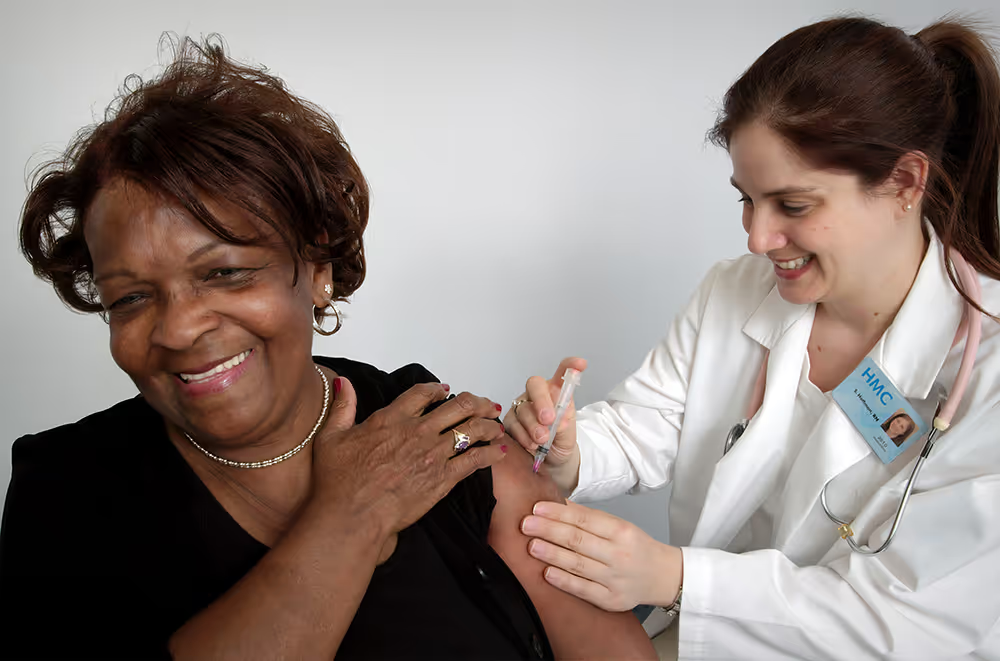
This article explains everything you need to know about the medical exam and it's associated form, Form I-693, Report of Medical Examination and Vaccination Record.
Finding a Doctor
Immigration medical exams need to be performed by USCIS-authorized doctors. USCIS refers to these doctors as Civil Surgeons and allows them to perform the medical examination required for the Green Card application process.
Inside the United States
To find an approved civil surgeon near you, visit myUSCIS Find a Doctor or call the USCIS Contact Center at 800-375-5283.
Outside the United States
If you're filing from outside the United States, the medical exam must be completed by a Panel Physician. Panel physicians are different from civil surgeons.
To find more information about the approved panel physician near you, visit Department of State Medical Examination site.
How much does it cost?
The cost of the medical exam is set by the physician and can vary between providers. Typically the exam is between $100 - $500. You can shop around by calling different providers in your area to find the best price.
How to Prepare for the Medical Exam
You should bring the following items with you:
- Form I-693, Report of Medical Examination and Vaccination Record. Print out and bring the form to your appointment. Fill out Part 1 of the form but do not sign it until the civil surgeon tells you to do so.
- Government-issued I.D., such as a valid passport or driver's license.
- Vaccination or immunization record, such as DT, DTP, DTaP, Td, Tdap, OPV, IPV, MMR, Hib, hepatitis A, hepatitis B, varicella, pneumococcal influenza, rotavirus and meningococcal disease.
- Medical insurance card. Check with the doctor's office to see if they accept your medical plan.
- Payment. Check with the doctor's office about acceptable forms of payment.
What happens at the exam?
During the exam, the doctor will perform a basic physical, ask several questions about your health, and run various tests. After the exam the doctor will fill out and seal the Form I-693 and supporting documents in an envelope for you.
IMPORTANT: Do not open this envelope. USCIS will not accept your medical form if it is not in a sealed envelope or if the envelope is altered in any way.
When to Send the Form to USCIS
While USCIS previously allowed Form I-485 to be submitted without a complete Form I-693, Report of Immigration Medical Examination and Vaccination Record, they changed that rule as of December 2, 2024, and now require that adjustment of status applicants submit the medical exam at the time of submission of Form I-485.
For applicants who are required to submit Form I-693, USCIS will reject Form I-485 if the completed medical exam is not submitted concurrently with Form I-485, Application to Register Permanent Residence or Adjust Status.
Effective April 4, 2024 any Form I-693 that was properly completed and signed by a civil surgeon on or after November 1, 2023, does not expire and can be used indefinitely as evidence to show that the applicant is not inadmissible on health-related grounds. USCIS officers have the discretion to request more evidence or a new or updated Form I-693 if they have reason to believe the applicant’s medical condition has changed since the civil surgeon signed the Form I-693, or that the Form I-693 submitted does not accurately reflect the applicant’s medical condition and the applicant may be inadmissible on health-related grounds. Medical exams completed before November 1, 2023, have a 2-year validity period.
What if I already had an exam outside the U.S.?
You are not required to have another exam if you already had one prior to admission. However, the Form I-485 (green card form) must be submitted within one year of an overseas medical examination.
If a new medical examination is not required, you must still show proof that you meet the vaccination requirements. If the vaccination record (DS 3025) was not included in the original overseas medical examination, you will need a new medical exam.
Have questions about the medical exam?
If you need help or have questions about the medical exam or the Form I-693, please reach to our team and we'll get back to you shortly.
Marriage Based Green Card FAQs
Here are some FAQ's about the green card application process!
Frequently Asked Questions
The immigration process can be overwhelming and the information about marriage based green cards can be complex. Here are some common questions that people have before they get started.
What documents do I need?
Here is a list of the documents the Applicant/Immigrant should provide as part of the green card application. Keep in mind that the employment/tax documents are only required if the applicant's income will be supporting the petitioner/sponsor's income.
- Applicant's Birth Certificate
- Applicant's Form I-94 (Last Admission Record)
- Applicant's Passport - Identification Page
- Applicant's U.S. Visa
- Applicant's Letter from Employer
- Applicant's Federal Tax Return Most Recent Year
- Applicant's Pay Stubs for the Last 6 Months
- Applicant's W2's for the Most Recent Tax Year
- Applicant Employment Authorization Card
These are the documents you should provide as evidence of a "good faith" marriage:
- Marriage Certificate
- Wedding/Ongoing Marriage Evidence
- Joint Assets and Co-Mingling of Funds
- Joint Financial Responsibilities
- Joint Ownership, Lease or Tenancy
- Letters of Support from Friends & Family
These are the documents that the Petitioner/Sponsor/U.S. Citizen should provide:
- Petitioner's Birth Certificate
- Petitioner's Passport
- Petitioner's Federal Tax Return Most Recent Year
- Petitioner's Letter From Employer
- Petitioner's Pay Stubs for the last 6 months
- Petitioner's W2's for the Most Recent Tax Year
Green Card Timeline?
The timeline for green card applications is always changing. You can check this website to find the average processing times of specific applications and the various USCIS service centers. You know which field office is processing an application by the first three letters of the receipt.
On average, we are currently seeing the following timelines:
- Filling out the questionnaire and uploading documents on SimpleCitizen. 30 min to months depending on how much time the client takes to get documents.
- Initial Review - 2-5 business days.
- Attorney Review - 2-10 business days.
- Shipping - 3-4 business days.
- Once application is mailed to USCIS, to get the I-797C receipts - 2-6 weeks.
- Biometrics appointment - 2-4 weeks after receipts
- EAD/AP - 6-12 months
- Interview 10-20 months
What do the first three letters of the I-797 notice receipt indicate?
- CSC – California Service Center
- EAC – Eastern Adjudication Center (now known as Vermont Service Center)
- IOE – ELIS (efile)
- LIN – Lincoln Service Center (now known as Nebraska Service Center)
- MSC – Missouri Service Center (now known as National Benefits Center)
- NBC – National Benefits Center
- NSC – Nebraska Service Center
- SRC – Southern Regional Center (now known as Texas Service Center)
- TSC – Texas Service Center
- VSC – Vermont Service Center
- WAC – Western Adjudication Center (now known as California Service Center)
What is an EAD or OPT?
Employment Authorization Document (EAD) is granted for people in the C09 category (pending I-485) when the I-765 is processed. This gives them work authorization for the time period listed on the EAD, usually one year. Because green card applications are typically taking longer than that these days people may need to apply to renew this document to continue to work while waiting for their green card. The USCIS usually processes this application at a separate field location than the rest of the application.
Optional Practical Training (OPT) is work authorization given to F-1 visa holders to be able to work in their field of study either during their schooling or afterwards. Usually OPT is good for 12 months. Income from OPT is considered temporary as you only have authorization for a short time and usually cannot be counted on the I-864, however if the expiration is not for another year or so and the applicant would likely get their EAD within that time it can be included.
Names: Should I use my previous or married name on the GC application?
You can use either your married name or your maiden name. Whichever you would rather have on your green card. Often customers keep the maiden name until they get citizenship so their passport, birth certificate, etc match the green card. If you do have documents that don’t match, you will just need to carry your marriage certificate with you. Let us know if you have any other questions or concerns about this.
Medical Exam: When do I need to complete medical exam? Is it before or after filling
Starting 12/2/2024, USCIS now requires that any I-485 applicants required to file Form I-693, Report of Immigration Medical Examination and Vaccination Record MUST submit Form I-693 concurrently with their Form I-485. Failing to file the two forms together can result in Form I-485 being rejected.
International Travel: Is it safe to travel outside the U.S while my Green Card is pending?
Once you have a travel permit, you can use that to travel outside the U.S. Before you have it, YOU CAN NOT travel. Otherwise your I-485 will be canceled, unless you have a valid H-1B Visa or L-1 Visa.
To avoid getting into any issues,You need to get authorization prior to travel. Advance Parole generally takes 6-12 months to receive. It is possible to have your I-131 expedited if you have an emergency that requires you to travel outside of the U.S.
What is Public Charge?
“Public charge” is described as someone who is likely to become dependent on government assistance.
Frequently Asked Questions
A “public charge” is an individual the government considers likely to become dependent on public assistance for their basic needs. USCIS has always evaluated this when determining your admissibility to the U.S. However, under the new rule taking effect in September 2026, USCIS officers are granted much broader discretion to consider a wider variety of government benefits.
What does this mean?
Under the previous 2022 rule, USCIS primarily looked at just two things: cash assistance for income maintenance and long-term institutional care at the government's expense.
Starting September 18, 2026, USCIS officers will now consider the receipt of any means-tested public benefit. This expanded list includes:
(Note: Benefits received before September 18, 2026, will still be judged under the older, narrower 2022 rules.)
The Application Process & What You Need to Know
If you are filing an application to register permanent residence or adjust status (Form I-485) that is postmarked or submitted electronically on or after September 18, 2026, your case will be subject to this new, broader review.
Officers will also evaluate your sponsor's Form I-864 (Affidavit of Support) to determine if your sponsor is realistically able and willing to financially support you.
Some applicants may remember Form I-944 from 2019 when the last round of public charge changes went into effect. So far, there is not a separate form relating to these changes in 2026. Instead, SimpleCitizen application packages will simply guide you through the latest version of Form I-485, automatically adapting to the new September 2026 requirements.
Have questions?
Need help or have questions about how the September 2026 public charge rules affect your application? Feel free to reach out to our support team and we'll be happy to help you navigate these changes.

 Ready to take the next step?
What documents do I need for a Green Card?
Included is a list of the documents that should be provided as part of the green card application
Green Card Application
Applicant Supporting Documents
Here is a list of the documents the Applicant/Immigrant should provide as part of the green card application. Keep in mind that the employment/tax documents are only required if the applicant's income will be supporting the petitioner/sponsor's income.
- Applicant's Birth Certificate
- Applicant's Form I-94 (Last Admission Record)
- Applicant's Passport - Identification Page
- Applicant's U.S. Visa
- Applicant's Letter from Employer
- Applicant's Federal Tax Return Most Recent Year
- Applicant's Pay Stubs for the Last 6 Months
- Applicant's W2's for the Most Recent Tax Year
- Applicant Employment Authorization Card
"Good Faith" Marriage Supporting Documents
These are the documents you should provide as evidence of a "good faith" marriage:
- Marriage Certificate
- Wedding/Ongoing Marriage Evidence
- Joint Assets and Co-Mingling of Funds
- Joint Financial Responsibilities
- Joint Ownership, Lease or Tenancy
- Letters of Support from Friends & Family
Petitioner/Sponsor Supporting Documents
These are the documents that the Petitioner/Sponsor/U.S. Citizen should provide:
- Petitioner's Birth Certificate
- Petitioner's Passport
- Petitioner's Federal Tax Return Most Recent Year
- Petitioner's Letter From Employer
- Petitioner's Pay Stubs for the last 6 months
- Petitioner's W2's for the Most Recent Tax Year
If you have any questions, feel free to chat with our support team by clicking on the chat icon on the lower left side of the screen.
Helpful links:
How to apply for a green card with SimpleCitizen
Green Card Eligibility Quiz
Am I eligible to apply?
This article will explain how to find out if you are eligible to apply with SimpleCitizen.
Getting Started
Before you start working on your application, it is important that you find out if you are eligible to apply. The easiest way to determine your eligibility is to use our Eligibility Quiz. It will ask you a few basic questions and help you find the right application for your situation.
Watch this quick video to learn how to use the immigration eligibility quiz:
As always, if you have questions about your situation, feel free to chat with our support team by clicking on the chat icon at the lower left side of the screen. Or, you can schedule a consultation with an immigration attorney here.